


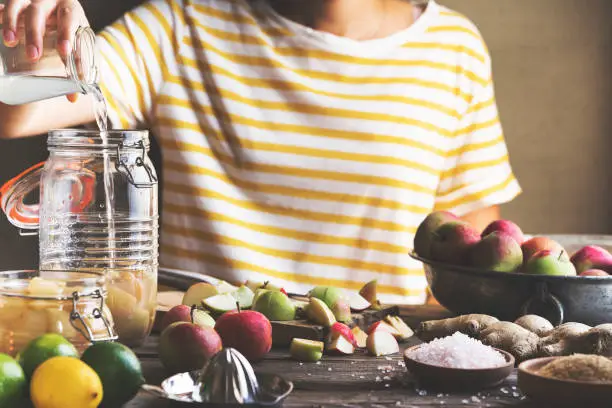
Learning how to make vinegar can help you produce a useful ingredient that is widely used in cooking, food preservation, and cleaning. Vinegar is created through a natural fermentation process in which alcohol is converted into acetic acid by beneficial bacteria. This process gives vinegar its sour taste and strong aroma.
Vinegar can be made from several ingredients including fruits, grains, or sugar solutions. Common examples include Apple cider vinegar and Wine vinegar. Although commercial vinegar is widely available, making it at home allows you to control the ingredients and flavor.
-
Gather the Ingredients and Equipment
Before starting, prepare the necessary ingredients and tools.
- Fruit juice, wine, or diluted alcohol
- 1–2 tablespoons sugar (optional)
- Clean water
- A glass jar or container
- A breathable cloth or paper towel
- A rubber band or string
These items are needed to support the fermentation process.
-
Prepare the Base Liquid
The first step in making vinegar is preparing the liquid that will ferment.
- Pour fruit juice, wine, or another fermented liquid into a clean glass jar
- If using fresh fruit juice, add a small amount of sugar to help fermentation
- Leave some space at the top of the jar
Liquids such as those used for Apple cider vinegar work well because they already contain natural sugars.
-
Allow Alcohol Fermentation
For vinegar to form, the liquid must first contain alcohol.
- Cover the jar with a breathable cloth
- Secure the cloth with a rubber band
- Place the jar in a warm, dark location
During this stage, natural yeast converts sugars into alcohol.
-
Start the Vinegar Fermentation
Once alcohol is present, bacteria begin converting it into vinegar.
- Leave the jar undisturbed in a warm place
- Allow air to reach the liquid through the cloth covering
- Stir gently once or twice a week
This stage encourages the growth of acetic acid bacteria that transform alcohol into vinegar.
-
Wait for the Vinegar to Develop
The fermentation process takes time.
- Allow the mixture to ferment for about 3–4 weeks or longer
- Taste a small amount occasionally to check the sourness
- When the liquid develops a strong sour flavor, the vinegar is ready
The longer the fermentation continues, the stronger the vinegar becomes.
-
Strain and Store the Vinegar
Once the vinegar has reached the desired flavor, strain and store it.
- Remove any solids or sediment using a fine strainer
- Pour the vinegar into clean bottles or jars
- Seal the containers tightly for storage
Proper storage helps maintain the vinegar’s flavor and quality.
-
Use the Homemade Vinegar
Homemade vinegar can be used in many ways.
- Add it to salad dressings and sauces
- Use it for pickling vegetables
- Use it as a natural household cleaner
Different bases can create unique varieties such as Wine vinegar or fruit-based vinegars.
Also Read: How to Make Toast in a Pan

Email your news TIPS to Editor@Kahawatungu.com — this is our only official communication channel
