


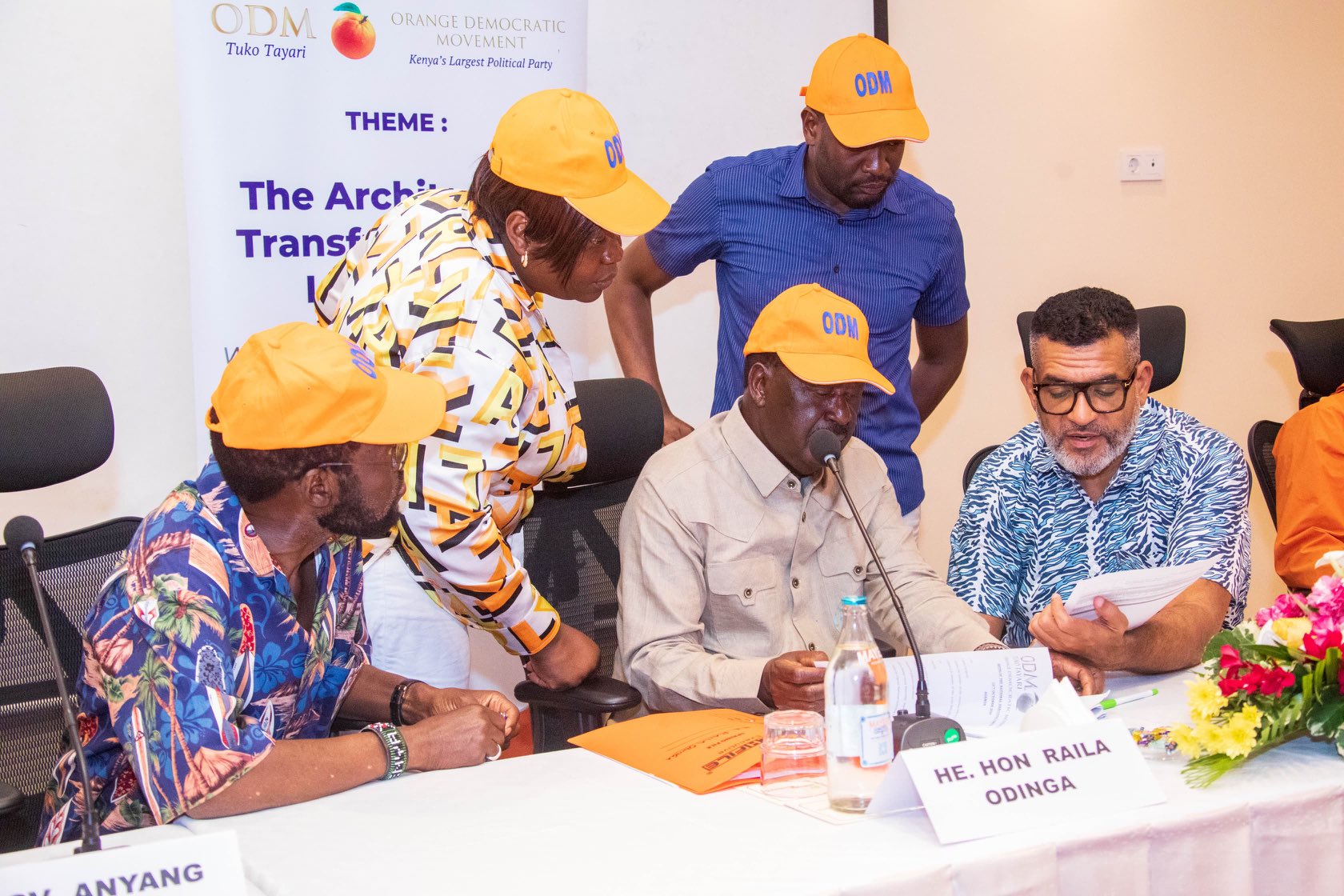
A new survey shows that Western Kenya remains a highly competitive political region despite the cooperation between the Orange Democratic Movement (ODM) and the United Democratic Alliance (UDA).
According to an Infotrak survey released on January 8, 2026, ODM is slightly ahead in the region with 25 per cent support, while UDA follows closely at 20 per cent.
The findings come as political parties prepare for the 2027 General Election, a period marked by shifting alliances and growing competition.
ODM has dominated Western Kenya for nearly 20 years, largely due to its strong support for devolution and its ability to form broad political coalitions. The party gained major influence in the region in 2007 after winning 99 parliamentary seats and appealing to the Luhya community with promises of shared power.
In the 2013 General Election, Raila Odinga, then running under the CORD coalition, won 62.2 per cent of the vote in Western Kenya, beating Musalia Mudavadi, who received 29.1 per cent.
However, ODM is now facing new challenges following the death of Odinga and the departure of senior party figures. On December 31, 2025, former Kakamega Governor Wycliffe Oparanya announced plans to leave ODM and called on leaders in the region to unite under National Assembly Speaker Moses Wetangula.
The Infotrak report notes that even though ODM and UDA are working together at the national level, competition on the ground in Western Kenya remains intense.
The Democratic Action Party of Kenya (DAP-K), led by former Interior Cabinet Secretary Eugene Wamalwa and Trans Nzoia Governor George Natembeya, is also gaining support in the region, increasing pressure on ODM’s long-held dominance.
Email your news TIPS to Editor@Kahawatungu.com — this is our only official communication channel
