Jay Rockefeller Net Worth

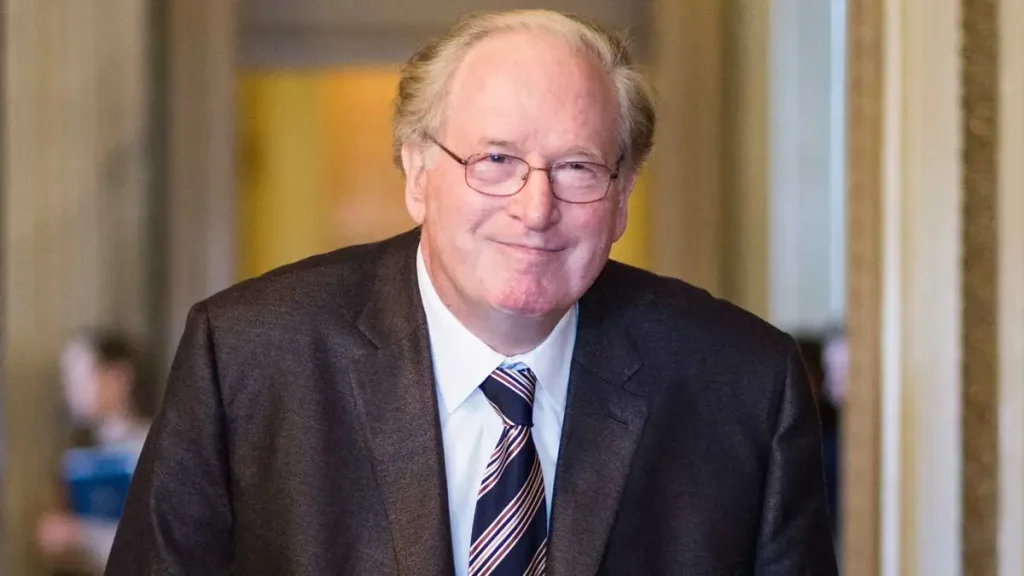
Jay Rockefeller was an American politician and heir to the Rockefeller family fortune who had an estimated net worth of $200 million at the time of his death in November 2026. He was a great-grandson of John D. Rockefeller, the founder of Standard Oil, and remained one of the wealthiest politicians in the United States throughout his career.
Rockefeller’s wealth came primarily from his family’s inherited fortune, investments and trusts. His financial disclosures during his time in the U.S. Senate showed that he held more than $80 million in blind trusts. He also owned valuable residential and rural properties in West Virginia, Washington, D.C., and Wyoming.
Despite his inherited wealth, Rockefeller spent more than five decades in public service, much of it representing West Virginia, a state that faced persistent poverty and economic challenges. He served as the state’s governor from 1977 to 1985 before representing it in the U.S. Senate for 30 years, from 1985 to 2015.
A Democrat in a family traditionally associated with Republican politics, Rockefeller became known for advocating healthcare access, workers’ rights, consumer protection and support for low-income Americans. One of his most significant achievements was helping establish the Children’s Health Insurance Program (CHIP) in 1997.
Rockefeller died at his home in Washington, D.C., on November 5, 2026, at the age of 89.
| Jay Rockefeller Net Worth | $200 Million |
| Date of Birth | June 18, 1937 |
| Place of Birth | New York City |
Inherited Fortune
A substantial portion of Rockefeller’s wealth was held in professionally managed blind trusts. These arrangements allowed independent financial managers to oversee investments without requiring him to make individual investment decisions while serving in public office.
His financial disclosures showed three blind trusts with a combined reported value of more than $80 million. One of the largest was a family trust established in 1934 at JPMorgan Chase, which was valued at more than $50 million.
Other holdings were managed through financial institutions, including Wachovia and United National Bank. The trusts helped preserve and manage wealth accumulated by earlier generations of the Rockefeller family.
Rockefeller’s financial position was unusual among American politicians. While many lawmakers built their wealth through business careers, investments or professional earnings, his fortune was largely inherited.
Early Life
John Davison Rockefeller IV, popularly known as Jay Rockefeller, was born on June 18, 1937, in New York City. He was the only son among the four children of John D. Rockefeller III and Blanchette Ferry Hooker Rockefeller.
His father was a prominent philanthropist who supported cultural institutions and international development. His mother was an arts patron and civic leader.
Rockefeller grew up in one of America’s wealthiest families, surrounded by the privileges and expectations associated with the Rockefeller name. However, his parents also emphasised philanthropy, financial responsibility and public service.
He attended Phillips Exeter Academy in New Hampshire before enrolling at Harvard University. During his university years, he developed an interest in Japan and spent time studying Japanese language and culture at International Christian University in Tokyo.
He graduated from Harvard in 1961 with a degree in Far Eastern languages and history. He later pursued graduate studies in Asian history and Chinese at Yale University.
After completing his education, Rockefeller worked with the Peace Corps and the U.S. State Department. His early government experience helped develop his interest in public service.
Politics
In 1964, at the age of 27, Rockefeller moved to Emmons, a small coal-mining community in West Virginia, to work with Volunteers in Service to America, commonly known as VISTA.
The move was a major departure from his privileged upbringing. Emmons was a remote Appalachian community where many families faced poverty, limited employment opportunities and inadequate access to basic services.
Residents were initially sceptical about why a member of the wealthy Rockefeller family had chosen to live in their community. However, he gradually earned their trust through local projects that included organising a Little League baseball team, supporting community facilities and improving access to health services.
The experience influenced his political beliefs and convinced him that government policies could play an important role in improving the lives of disadvantaged communities.
Rockefeller entered electoral politics in 1966 when he won a seat in the West Virginia House of Delegates as a Democrat. In 1968, he was elected secretary of state.
He later declined an opportunity to be considered for the U.S. Senate seat left vacant after the assassination of Senator Robert F. Kennedy. Instead, he continued building his political career in West Virginia.
Governor of West Virginia
Rockefeller first contested the West Virginia governorship in 1972 but lost to Republican incumbent Arch A. Moore Jr.
After the defeat, he became president of West Virginia Wesleyan College, serving from 1973 to 1976. He returned to electoral politics in 1976 and defeated Moore to win the governorship.
He took office in January 1977 and served two terms, remaining in office until January 1985.
His administration focused on economic development, education, healthcare and employment opportunities. He also worked to attract industrial investment to West Virginia and strengthen economic ties with Japan.
His second term was particularly challenging because of a national recession that severely affected West Virginia’s economy. Unemployment rose sharply, reaching approximately 21%, while the state faced pressure to reduce public spending.
Despite the economic difficulties, Rockefeller maintained a strong political position and became one of the state’s most prominent Democratic leaders.
Spending Millions of His Own Money on Political Campaigns
Rockefeller’s inherited fortune gave him a significant financial advantage in political campaigns. He was willing to use his personal wealth to support his electoral ambitions.
During his 1980 campaign for re-election as governor, he spent millions of dollars of his own money. His spending attracted attention because of the contrast between his wealth and the economic struggles facing many West Virginians.
His 1984 U.S. Senate campaign also involved substantial personal spending. Contemporary reports said he spent approximately $9 million of his own money to defeat Republican businessman John Raese in a closely contested race.
Rockefeller won with approximately 52% of the vote and entered the Senate in January 1985.
His willingness to finance his own campaigns became a recurring subject of political debate. Critics questioned whether his inherited wealth gave him an unfair advantage, while supporters argued that it allowed him to campaign independently.
Thirty Years in the U.S. Senate
Rockefeller served five consecutive terms in the U.S. Senate, representing West Virginia from January 1985 until January 2015.
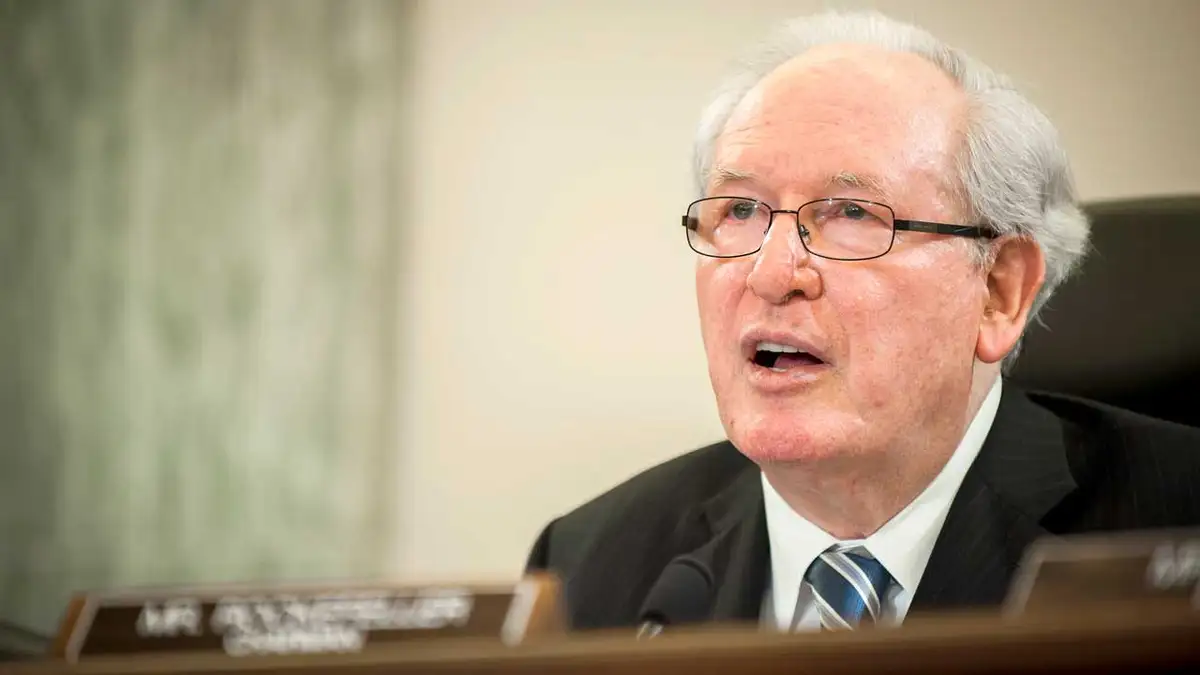
He won re-election in 1990, 1996, 2002 and 2008. During his three decades in Washington, he became an influential figure in healthcare, consumer protection, telecommunications, veterans’ affairs and national security.
He chaired several important Senate committees, including the Commerce, Science and Transportation Committee, the Intelligence Committee and the Veterans’ Affairs Committee.
His work on the Commerce Committee involved telecommunications regulation, broadband access, consumer protection and technology policy. He frequently challenged large companies over practices he believed harmed consumers.
Rockefeller also supported coal miners and their families, advocating for better healthcare and stronger workplace protections.
After the 2010 Upper Big Branch mine explosion in West Virginia killed 29 workers, he supported stronger enforcement and greater accountability for mining companies.
Although he came from a family associated with major business interests, Rockefeller often challenged corporate practices in industries that were central to West Virginia’s economy.

Children’s Health Insurance Program
Healthcare was one of Rockefeller’s most important political priorities. His interest in expanding medical coverage was shaped by his early experiences in West Virginia, where he encountered families struggling to access basic healthcare services.
During the 1990s, he worked with Senator Ted Kennedy to support efforts to expand health insurance coverage for Americans who could not afford private medical care.
One of his most significant achievements came in 1997 when he helped establish the Children’s Health Insurance Program, commonly known as CHIP.
The programme extended federally supported health coverage to children in families whose incomes were too high to qualify for traditional Medicaid but insufficient to comfortably afford private insurance.
CHIP became a major part of America’s public healthcare system and has provided health coverage to millions of children.
Rockefeller continued advocating for expanded healthcare coverage during the debate over the Affordable Care Act in 2009 and 2010. He supported the legislation introduced under President Barack Obama and argued for including a public insurance option, although the proposal was excluded from the final law.
Intelligence Oversight
Rockefeller also played an important role in national security and intelligence oversight.
After the September 11, 2001, terrorist attacks, he supported the authorisation of military force against Iraq in 2002. He later expressed regret over his vote as questions emerged about the intelligence used to justify the invasion.
As chairman of the Senate Intelligence Committee, Rockefeller oversaw an investigation into the Bush administration’s public statements about Iraq’s alleged weapons programmes.
In 2008, the committee released findings that criticised the administration’s presentation of intelligence before the war. The report examined statements made by senior officials and whether they accurately reflected the available intelligence.
The investigation became one of the defining episodes of Rockefeller’s Senate career and demonstrated his influence in congressional oversight.
Real Estate
Beyond his investment holdings and family trusts, Rockefeller owned valuable real estate in several parts of the United States.
His properties included a large home in Charleston, West Virginia, and a mansion in Washington, D.C., near Rock Creek Park. He also maintained an approximately 3,000-acre estate in Pocahontas County, West Virginia, and a ranch in the Jackson Hole area of Wyoming.
The properties reflected the financial privileges associated with his family background. They also highlighted the contrast between his personal wealth and the economic conditions of many people in the state he represented.
Rockefeller was also interested in fine art, following a family tradition of supporting cultural institutions and artistic activities.
The Rockefeller Family Legacy
Jay Rockefeller belonged to one of the most influential families in American business, politics and philanthropy.
His great-grandfather, John D. Rockefeller, founded Standard Oil and became one of the richest people in modern history. His grandfather, John D. Rockefeller Jr., continued the family’s philanthropic activities and supported major projects, including Rockefeller Center in New York.
His father, John D. Rockefeller III, devoted much of his life to philanthropy, cultural institutions and international development.
His uncles also held prominent positions in American public life. Nelson Rockefeller served as governor of New York and later vice president of the United States. David Rockefeller became a leading banker and philanthropist who headed Chase Manhattan Bank.
Unlike most prominent members of his family, Jay Rockefeller became a Democrat. His political beliefs were shaped by his experiences in West Virginia and his interest in social welfare and economic opportunity.
He used his inherited wealth to support his political campaigns but built his public career around issues affecting low-income families, workers and communities facing economic hardship.
Marriage
Rockefeller married Sharon Percy in 1967. She is the daughter of former Republican Senator Charles H. Percy of Illinois.
Their marriage brought together two prominent American political families and attracted national attention. Sharon later developed her own career in public broadcasting and became president and chief executive of WETA, a public television and radio organisation based in Washington, D.C.
The couple had four children: John D. Rockefeller V, Valerie Rockefeller, Charles Rockefeller and Justin Rockefeller. They also had nine grandchildren.
Sharon remained an important figure in public broadcasting, philanthropy and cultural activities throughout their marriage.
Retirement and Death
In January 2013, Rockefeller announced that he would not seek a sixth Senate term. He completed his final term in January 2015, bringing his 30-year Senate career to an end.
His retirement marked the conclusion of nearly five decades in elected public office. He had served in the West Virginia legislature, as secretary of state, as governor and as a U.S. senator.
West Virginia University recognised his contributions by naming its School of Policy and Politics in his honour and establishing a permanent home for his Senate papers and archives.
Jay Rockefeller died on November 5, 2026, at his home in Washington, D.C. He was 89. His death was confirmed the following day, with no cause initially disclosed.
He was survived by his wife, Sharon, their four children and nine grandchildren.
His death marked the passing of one of the last major political figures from the Rockefeller family’s political dynasty. Although he inherited substantial wealth, his public legacy was shaped by his decades of service in West Virginia and his work to expand healthcare access, protect consumers and support disadvantaged Americans.
Also Read: Ro Khanna Net Worth