

José Luis Rodríguez Zapatero Siblings: All About Juan Rodríguez Zapatero

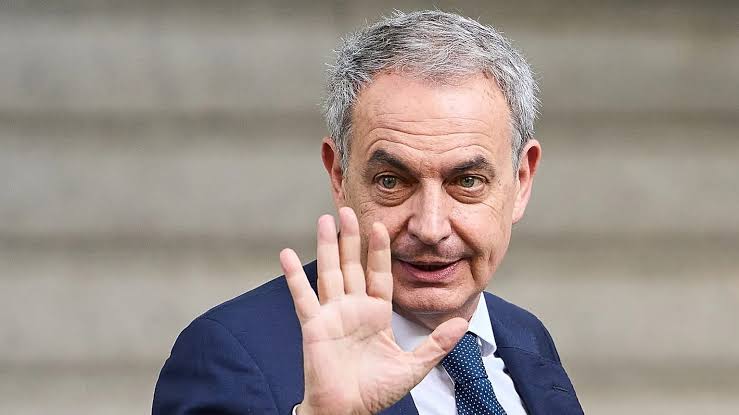
José Luis Rodríguez Zapatero PHOTO/Newsmax
José Luis Rodríguez Zapatero is a Spanish politician and member of the Spanish Socialist Workers’ Party (PSOE).
Born on 4 August 1960 in Valladolid, Castile and León, he grew up in León, the city with which he has long been closely associated.
He served as Prime Minister of Spain from 2004 to 2011, winning general elections in 2004 and 2008.
The son of lawyer Juan Rodríguez García-Lozano and María de la Purificación Zapatero Valero, he comes from a comfortable professional family with roots in León.
His paternal grandfather, Captain Juan Rodríguez Lozano, a Republican Army officer, was executed by Nationalist forces in 1936 for refusing to join the military uprising, an event that later influenced Zapatero’s political outlook.
Siblings
José has one sibling, an older brother named Juan Rodríguez Zapatero.
Born approximately four years earlier, Juan followed the family tradition into the legal profession and has practised as a lawyer in León for more than four decades, specialising in administrative law.
After their father retired, Juan took over the family law firm.
He married in 2009 in a ceremony held at the Consistory of San Marcelo in León, attended by his brother and sister-in-law.
Career
Zapatero studied law at the University of León, graduating in 1982. He then worked as an associate professor of constitutional law at the same university.
He joined the PSOE in 1979 and rose through its ranks, becoming head of the Socialist Youth organisation in León and later secretary-general of the provincial federation.
Also Read: William Lyon Mackenzie King Siblings: All About Isabel, Janet and Dougall Macdougall King
In 1986 he was elected as a deputy to the Congress of Deputies for the province of León, becoming one of the youngest members of parliament at the time, and he held that seat until 2004.
In 2000 he was elected secretary-general of the PSOE, a post he held until 2012.
As party leader he led the PSOE to victory in the 2004 general election, becoming prime minister, and secured re-election in 2008.
During his two terms in office his government withdrew Spanish troops from Iraq, increased Spain’s military presence in Afghanistan, promoted the Alliance of Civilizations initiative at the United Nations, legalised same-sex marriage, reformed abortion legislation, pursued peace negotiations with the Basque terrorist group ETA (which later announced the end of its armed activity), and advanced reforms of several regional statutes of autonomy.
He announced in April 2011 that he would not seek a third term and left office in December of that year.
Accolades
Zapatero has received numerous national and international honours.
In Spain he was awarded the Collar of the Order of Isabella the Catholic in December 2011 and the Grand Cross of the Order of Saint Raymond of Peñafort in 2025.
International distinctions include the Grand Cross of the Order of the Sun of Peru (2004), Grand Officer of the Order of the Three Stars of Latvia (2004), Grand Cross of the Order of the Lithuanian Grand Duke Gediminas (2005), Grand Cross of the Order of Christ of Portugal (2006), Order of the Cross of Terra Mariana First Class of Estonia (2007), Grand Cross of the Order of the Star of Romania (2007), Sash of Special Category of the Order of the Aztec Eagle of Mexico (2008), Grand Cross of the Order of the Liberator General San Martín of Argentina (2009), Star of Honor of the Order of the State of Palestine (2009), and Grand Cordon of the Order of Ouissam Alaouite of Morocco (2016).
He has also been granted honorary doctorates by institutions including the National University of San Marcos and Toulouse Capitole University.

