


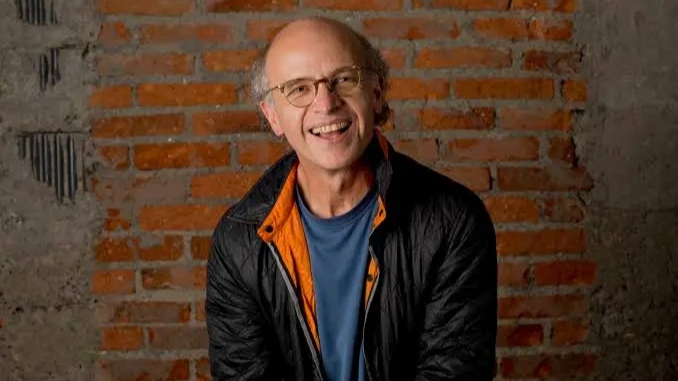
Juan Carlos Rulfo Aparicio, born on January 24, 1964, in Mexico City, is a renowned Mexican filmmaker, screenwriter, and photographer.
As the youngest son of the legendary Mexican author Juan Rulfo—best known for his seminal novel Pedro Páramo and short story collection El Llano en Llamas—and Clara Angelina Aparicio Reyes, Juan Carlos grew up in a family deeply immersed in literature and the arts.
His father’s profound influence is evident in his cinematic storytelling, which frequently draws from the haunting, introspective style of Rulfo’s prose.
Trained in film at the Autonomous Metropolitan University in Xochimilco and the Cinematographic Training Center in Mexico City, Juan Carlos has carved out a distinguished career blending documentary and narrative techniques to capture the essence of Mexican identity.
Siblings
Juan shares a close familial bond with his three older siblings, all of whom were born to the same parents in the years following the couple’s marriage in 1948.
His eldest sister, Claudia Berenice Rulfo, arrived on January 29, 1949, in Mexico City, embodying the quiet resilience often found in their father’s literary world.
Next came Juan Francisco Rulfo on December 13, 1950, in Guadalajara, Jalisco, whose name echoes the patriarchal legacy of the family while pursuing a life away from the public eye.
The second brother, Juan Pablo Rulfo, was born on April 18, 1955, also in Mexico City, adding to the household’s creative undercurrents, though details of his personal endeavors remain more private.
Together, these siblings form the complete quartet of Juan Rulfo’s children, raised amid the echoes of their father’s literary genius and the turbulent socio-political landscape of mid-20th-century Mexico.
Also Read: Alexander Skarsgård Siblings: Meet the Siblings Squad Behind the Swedish Actor
Career
Rulfo’s professional journey began with his graduation thesis, the 1980s documentary Grandfather Cheno and Other Stories, a poignant exploration of his paternal grandfather’s life interwoven with his father’s short story “Tell Them Not to Kill Me.”
This debut work set the tone for a career dedicated to unearthing personal and historical truths through the lens of cinema.
Transitioning into feature-length projects, he gained international acclaim with In the Pit (2006), a raw documentary delving into the lives of Mexico City subway workers, which masterfully captured urban alienation in a style reminiscent of his father’s ghostly rural tales.
Rulfo’s oeuvre spans documentaries like Del Olvido al No Me Acuerdo (2002), which chronicles the Zapatista uprising’s human cost, and narrative hybrids such as Tempestad (2016), a visceral account of two women’s harrowing experiences with Mexico’s justice system.
In 2017, he directed episodes of the miniseries Cien Años con Juan Rulfo, a centennial tribute to his father’s legacy, blending archival footage with contemporary reflections.
More recently, his 2021 documentary Letters from a Distance (Cartas a Distancia) featured an original score by composer Philip Glass, examining migration and emotional separation through intimate correspondence.
Accolades
Rulfo’s breakthrough film In the Pit secured the Grand Jury Prize for Best International Documentary at the 2006 Sundance Film Festival, marking a pivotal moment that elevated Mexican nonfiction filmmaking on the world stage.
For Del Olvido al No Me Acuerdo, he earned two Ariel Awards from the Mexican Academy of Cinematography—the nation’s highest film honors—for Best Editing and Best First Work, alongside nominations for Best Direction and Best Original Screenplay.
Rulfo’s reach extended to Europe with a nomination at the Goya Awards, Spain’s equivalent to the Oscars, further cementing his international reputation.
Additional honors include recognitions at the Guadalajara International Film Festival for his evocative portrayals of social injustice, the Havana Film Festival for contributions to Latin American cinema, the Karlovy Vary International Film Festival for artistic excellence, and the Montréal World Film Festival for documentary innovation.
Email your news TIPS to Editor@Kahawatungu.com — this is our only official communication channel
