


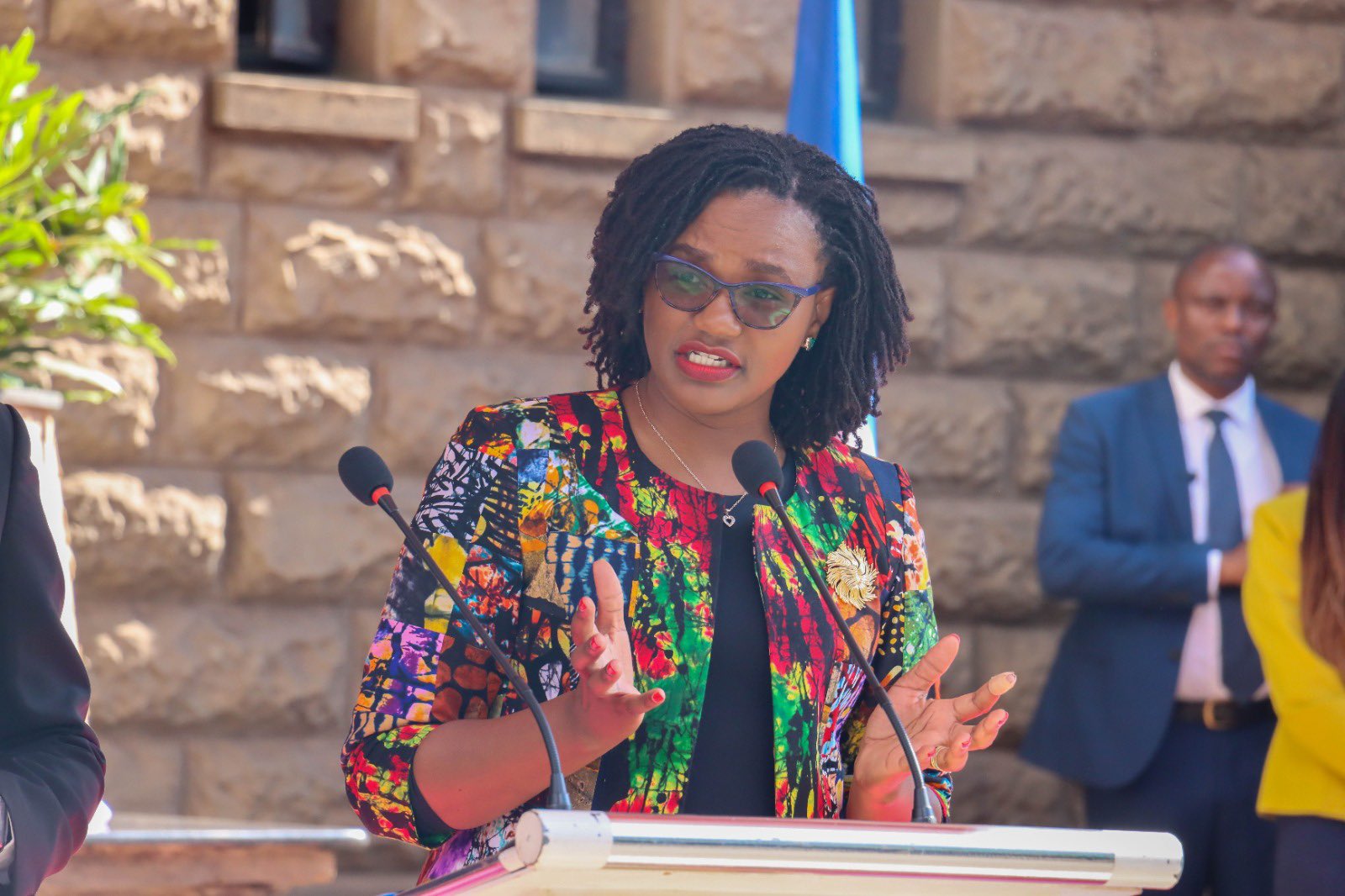
The Government of Kenya has announced a series of interventions aimed at addressing the plight of Kenyan women and their undocumented children living in the Kingdom of Saudi Arabia (KSA), amid ongoing humanitarian and legal challenges.
In a detailed statement issued by Principal Secretary for Diaspora Affairs Roseline Njogu, the Government acknowledged rising concerns over Kenyan single mothers in KSA who are unable to register their children due to stringent Saudi laws on pre-marital relations.
Under Saudi law, sexual relations outside marriage are criminal offences, and children born out of such circumstances cannot be easily issued with birth certificates without a marriage certificate.
The PS explained that fearing legal repercussions such as arrest or deportation, many women opt to give birth at home with the assistance of unqualified midwives, resulting in unregistered children who are left in legal limbo.
Back home, Kenyan law places no restrictions on birth registration based on marital status, and children’s rights are protected regardless of the circumstances of their birth.
However, the conflicting laws between Kenya and Saudi Arabia have complicated documentation for hundreds of Kenyan children abroad.
In 2023, the Government launched the Mwanambugi Mobile Consular Project, a groundbreaking DNA sampling initiative designed to help establish parentage and facilitate the processing of birth certificates and citizenship documents.
Despite wide publicity, turnout remained low. Fewer than 1,000 individuals stepped forward, leading to the collection of 707 DNA samples, including 388 children.
Only 113 birth certificate applications were eventually submitted, with 110 approved.
The Ministry says it contacted all 110 parents—via calls, messages, and community notices—to collect the processed certificates from the Kenyan Embassy in Riyadh, but only a third have shown up.
According to the statement, the Kenya Embassy in Riyadh has established a Joint Interdepartmental Working Group with key Saudi agencies, including the Ministries of Foreign Affairs, Labour, Interior, and the General Directorate of Passports (Jawazat).
This collaboration has created a legal pathway for the repatriation of affected mothers and children.
So far, 59 mothers and 73 children have been safely returned to Kenya.
The Government also negotiated a special amnesty allowing out-of-status Kenyans to regularize their stay or return home without penalties. However, officials say only a handful took advantage of the programme.
The Ministry is now urging all Kenyan single mothers in Saudi Arabia with undocumented children to come forward and use the existing channels for regularization.
Those whose children’s birth certificates are ready at the embassy are being asked to collect them immediately.
Diaspora parents were reminded of their legal responsibility to register births occurring abroad, while all Kenyans overseas were encouraged to register with the Ministry of Foreign and Diaspora Affairs through the portal www.diaspora.go.ke.
Njogu affirmed the Government’s commitment to safeguarding the rights and welfare of Kenyans abroad, calling on those in distress to promptly contact the nearest Kenyan mission.
A New York Times expose has linked top government officials in the saga. The expose says the officials are making money while the women are suffering in Saudi Arabia.
Email your news TIPS to Editor@Kahawatungu.com — this is our only official communication channel
