

Klaus-Michael Kühne Net Worth

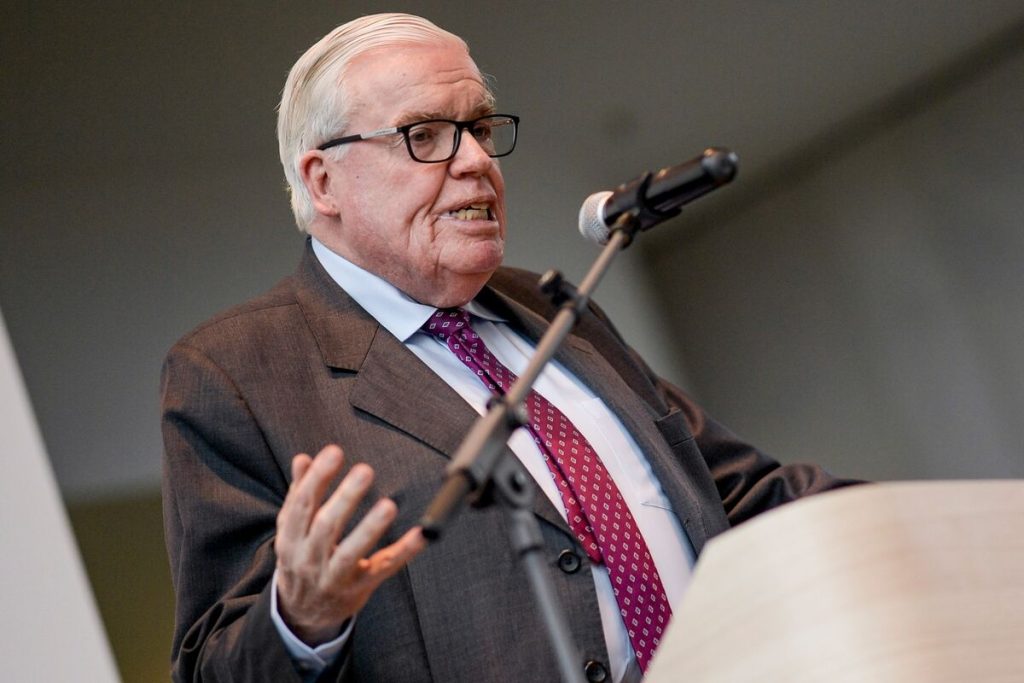
Klaus-Michael Kühne was a German billionaire businessman who had an estimated net worth of $43 billion at the time of his death on August 24, 2026. He built his fortune primarily through Kühne+Nagel, the global logistics company founded by his grandfather, August Kühne, and later expanded his investments into shipping, aviation, chemicals, healthcare, transportation, real estate, and hospitality.
Kühne transformed a family freight-forwarding business into one of the world’s leading logistics companies. He also developed Kühne Holding into a diversified investment group with significant interests in major European businesses. Beyond his commercial activities, he supported education, medical research, humanitarian work, climate initiatives, sports, and cultural institutions.
His wealth placed him among Germany’s richest individuals. In 2023, his fortune briefly surpassed that of supermarket billionaire Dieter Schwarz, making Kühne the richest person in Germany at the time. Following his death, his succession plan was expected to transfer his assets and holding company to the nonprofit Kühne Foundation, preserving his business empire for long-term philanthropic purposes.
| Klaus-Michael Kühne Net Worth | $43 Million |
| Date of Birth | June 2, 1937 |
| Place of Birth | Hamburg, Germany |
Early Life
Klaus-Michael Kühne was born on June 2, 1937, in Hamburg, Germany. He was the only child of Alfred and Mercedes Kühne. His grandfather, August Kühne, co-founded Kühne+Nagel with Friedrich Nagel in Bremen in 1890.
After completing school, Kühne undertook a commercial apprenticeship in banking and foreign trade. He also gained practical experience with freight forwarders, shipping companies, and shipbrokers. This training prepared him to take a leading role in the family business.
Kühne joined Kühne+Nagel in 1958, aged 21. He became a personally liable partner in 1963 and was appointed chairman of the management board in 1966. His early leadership gave him direct responsibility for the company’s development and international expansion.
Building Kühne+Nagel Into a Global Business
Kühne+Nagel was the principal source of Klaus-Michael Kühne’s wealth. When he joined the company, it had already expanded beyond Germany, but it had not yet reached its eventual global scale.
He pursued international growth, particularly in Europe and Asia. He also strengthened the company’s air freight operations as international commerce became increasingly dependent on fast and reliable transportation.
During the late 1960s and 1970s, the group’s operations increasingly shifted toward Switzerland. Kühne+Nagel International AG became the international parent company, and Kühne took over as chief executive in 1975.
Under his leadership, the company expanded across sea freight, air freight, road transportation, contract logistics, and supply-chain management. It grew through acquisitions and the development of new operations in international markets.
Kühne served as chairman of the board from 1992 to 2011. He later remained involved as honorary chairman and a board member until his death.
By the end of 2025, Kühne Holding controlled 55.4% of Kühne+Nagel, while the Kühne Foundation separately owned another 4.7%. The company operated more than 1,300 locations across 100 countries and served approximately 400,000 customers.
The Financial Crisis That Nearly Destroyed the Business
Kühne’s rise to billionaire status was not without setbacks. One of the most difficult periods came when he attempted to expand Kühne+Nagel into ship ownership during the oil crises of the 1970s.
The strategy exposed the company to a sharp decline in shipping values. Kühne+Nagel accumulated more than 100 million Deutsche Marks in debt as the market deteriorated.
Kühne later recalled searching internationally for an investor who could provide the capital needed to save the company without taking complete control.
In 1981, British conglomerate Lonrho, led by businessman Tiny Rowland, agreed to acquire a 50% stake in Kühne+Nagel for 90 million Deutsche Marks. The deal helped stabilize the company while allowing Kühne to retain half of the business.
The company’s position improved over the following decade. In 1992, Kühne bought back Lonrho’s 50% interest for 340 million Deutsche Marks. Kühne+Nagel subsequently went public on the Swiss stock exchange in 1994.
The recovery strengthened Kühne’s position as the company’s dominant shareholder. His stake later became the foundation of his multibillion-dollar fortune.
Klaus-Michael Kühne’s Ownership of Hapag-Lloyd
Kühne diversified his transportation investments by acquiring shares in Hapag-Lloyd, one of the world’s major container-shipping companies. He began investing in 2009 and gradually increased his holdings.
By 2026, Kühne and his holding companies owned approximately 30% of Hapag-Lloyd. This investment gave him substantial exposure to international shipping alongside his interest in freight forwarding.
Hapag-Lloyd operated a fleet of approximately 300 container ships by mid-2026 and maintained a broad international network. Its operations connected Kühne’s investments to the movement of goods between major global markets.
The stake was an important component of his wider investment portfolio. However, its contribution to his net worth depended on the company’s market valuation and the value of his ownership interest.
Investment in Lufthansa
Kühne expanded into commercial aviation in 2022 when he began buying shares in Lufthansa as the airline industry recovered from the COVID-19 pandemic.
His investment grew over the following years. By May 2026, Kühne Aviation GmbH held 20% of Lufthansa’s voting rights, making him the airline’s largest individual shareholder.
The investment complemented his holdings in freight forwarding and container shipping. It also gave him a substantial interest in another major part of the international transportation industry.
Through Kühne Holding and related investment vehicles, his business interests extended across logistics, shipping, aviation, long-distance bus and rail services, and industrial distribution.
Investments in Brenntag, Aenova, Flix and Ottobock
Kühne continued diversifying his wealth through investments in companies outside traditional logistics.
Kühne Holding began acquiring shares in Brenntag in 2021. The company is a major global distributor of chemicals and ingredients. By the end of 2025, the holding company owned more than 20% of Brenntag, making it the company’s largest shareholder.
In 2024, Kühne Holding acquired a majority stake in Aenova Group, a contract manufacturer serving pharmaceutical and healthcare businesses. The investment expanded his portfolio into the healthcare sector.
That year, the holding also acquired a substantial minority interest in Flix, the company behind FlixBus and FlixTrain. The investment added long-distance passenger transportation to his business interests.
In 2025, Kühne Holding became a cornerstone investor in the public offering of Ottobock, a medical-technology company known for its prosthetics business. It acquired a stake of more than 3%.
Together, these investments gave Kühne exposure to several industries and reduced his dependence on a single company. The major businesses in his portfolio collectively generated more than CHF 90 billion in annual revenue and employed nearly 250,000 people, according to the supplied figures.
Real Estate and Luxury Hotels
Real estate was another part of Kühne’s business empire. Kühne Holding developed an international property portfolio spanning three continents and approximately 15 cities.
One of its best-known investments is The Fontenay, a five-star hotel overlooking Hamburg’s Outer Alster lake. Kühne acquired the site of the former InterContinental hotel and financed the development of a new luxury property.
The project required an investment of approximately €100 million and opened in 2018. It features 130 rooms and suites, restaurants, a rooftop spa, and views of Hamburg.
Kühne Holding also owns the Castell Son Claret luxury hotel on the Spanish island of Mallorca. Kühne and his wife, Christine, spent part of their time on the island.
Other property interests included the Kühne Logistics University property in Hamburg and the Hochgebirgsklinik medical complex in Davos, Switzerland.
Kühne lived primarily in Schindellegi, Switzerland, close to the headquarters of Kühne+Nagel, Kühne Holding, and the Kühne Foundation. Despite living abroad for decades, he maintained strong personal and business ties to Hamburg.

Support for Hamburger SV
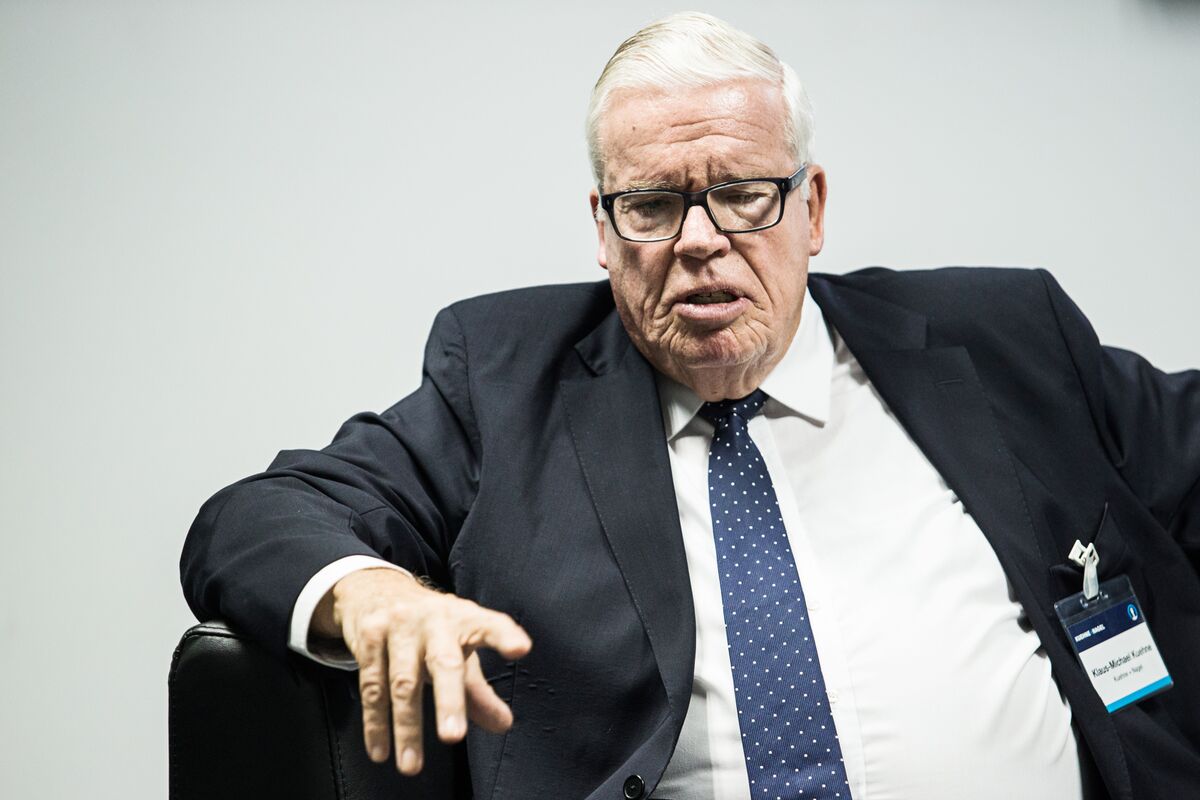
Kühne was a lifelong supporter of Hamburger SV, the professional football club based in Hamburg. Over several decades, he became one of its most important financial backers.
Beginning in the late 2000s, he provided funding to help the club address financial challenges and strengthen its playing squad. In 2010, he paid €12.5 million for economic interests connected to the transfer rights of several players.
He later helped finance the return of Dutch midfielder Rafael van der Vaart and provided a €17 million loan for player acquisitions in 2014.
Kühne also became a shareholder after the club separated its professional football operations into a corporate structure. At various points, he held more than 20% of the professional club, while Kühne Holding remained its second-largest shareholder at the time of his death.
He financed the return of the traditional Volksparkstadion name by acquiring the stadium’s naming rights. Estimates of his total financial support for the club exceeded €100 million.
The relationship was sometimes strained. Kühne publicly criticized club management and sporting decisions. In 2022, he proposed a €120 million investment package linked to structural changes, but the club declined the proposal in its proposed form.
Despite the disagreements, Kühne remained committed to Hamburger SV and celebrated its eventual return to the Bundesliga.
The Kühne Foundation and Philanthropy
Klaus-Michael Kühne and his parents established the Kühne Foundation in Switzerland in 1976. Over the following decades, it developed into a major philanthropic organization supporting logistics, humanitarian assistance, climate science, medicine, education, and culture.
The foundation’s budget for its own spending in 2026 was CHF 65 million. Including third-party funding and income associated with its projects, its total budget reached CHF 135 million.
One of its major educational projects is Kühne Logistics University in Hamburg. Kühne founded the private university in 2010 to focus on logistics, supply-chain management, business, and related disciplines.
The foundation has also supported medical research, humanitarian supply-chain initiatives, climate projects, the Elbphilharmonie, the Zurich Opera House, and the Salzburg Festival.
These initiatives reflected Kühne’s interest in using private wealth to support institutions with long-term public and cultural value.
Plans for a New Hamburg State Opera
Kühne’s philanthropic activities included an ambitious project to develop a new home for the Hamburg State Opera.
In 2025, the Kühne Foundation reached an agreement with the City of Hamburg to develop a new opera house at Baakenhöft in HafenCity. Under the arrangement, Hamburg committed €147.5 million toward site-specific costs, including foundations and flood protection. The foundation agreed to finance the remaining construction costs.
The foundation selected Bjarke Ingels Group to design the building. Under the planned arrangement, the completed opera house and the foundation’s interest in the development company would be donated to the City of Hamburg.
The project reflected Kühne’s longstanding support for music and cultural institutions. It was intended to become a lasting contribution to the city where he was born.
Succession Plan
Klaus-Michael Kühne’s estimated $43 billion net worth was tied largely to his ownership of publicly traded companies and his investments through Kühne Holding. His wealth could fluctuate significantly as the share prices of Kühne+Nagel, Hapag-Lloyd, Lufthansa, Brenntag, and other businesses changed.
His portfolio also included private company investments, property, hotels, and other financial assets. These holdings made his fortune broader than the value of his stake in Kühne+Nagel alone.
Kühne and his wife did not have children. He therefore spent years preparing a succession plan that would transfer his assets and Kühne Holding to the Kühne Foundation after his death.
Before the planned transfer, Kühne Holding owned 55.4% of Kühne+Nagel, while the foundation separately held 4.7%. Together, the two entities controlled more than 60% of the logistics company.
The holding company’s other investments included its interests in Hapag-Lloyd, Lufthansa, Brenntag, Aenova, Flix, and Ottobock, as well as its property portfolio and luxury hotels.
The plan meant that Kühne’s fortune was not intended to follow a conventional inheritance structure in which children or descendants divide the estate. Instead, his business empire was designed to support the nonprofit foundation he had helped build over five decades.
Following his death, the foundation’s board confirmed Thomas Staehelin as president and Jörg Dräger as vice president. Christine Kühne remained a member of its board of trustees.
Controversy Over Kühne+Nagel’s Nazi-Era History
The history of Kühne+Nagel during Nazi rule remained a source of controversy during Kühne’s lifetime.
After August Kühne’s death, the company was controlled by Klaus-Michael’s father, Alfred Kühne, and his uncle Werner. Both joined the Nazi Party in 1933. During the same period, the company’s Jewish co-owner, Adolf Maass, was forced out of the business. Maass was later deported and died at Auschwitz.
During World War II, Kühne+Nagel transported property confiscated from Jewish people and others persecuted by the Nazi regime in occupied Europe. Historians have documented the company’s role in the so-called M-Aktion, which involved transporting furniture and household goods taken from tens of thousands of homes.
Kühne+Nagel acknowledged in 2015 that it had transported confiscated property on behalf of the Nazi government and expressed regret for its activities during that period.
Klaus-Michael Kühne was born in 1937 and was a child during the war. He did not participate in those events. However, he faced criticism later in life for resisting calls for a new comprehensive independent investigation into the company’s wartime activities. He argued that the essential facts were already known.
Awards
Kühne received several business and academic honors during his career. In 2005, he was inducted into the Logistics Hall of Fame in recognition of his contribution to modern logistics.
The Hamburg Senate awarded him the title of honorary professor in 2007 for his work in logistics and education. In 2008, WHU – Otto Beisheim School of Management awarded him an honorary doctorate.
His educational legacy was particularly evident in Kühne Logistics University. The institution developed an international focus on logistics, supply-chain management, business, and sustainability.
Personal Life and Death
Klaus-Michael Kühne married Christine Kühne in 1989. They remained married until his death and had no children.
Although he lived in Switzerland for decades, Hamburg remained central to his personal and business interests. His investments and philanthropic projects in the city included Kühne+Nagel, Hamburger SV, The Fontenay, Kühne Logistics University, and cultural institutions.
Kühne and Christine also spent time in Mallorca. He developed a reputation for personal frugality while committing substantial sums to businesses, sports, hotels, education, and cultural projects.
Kühne died on August 24, 2026, at his home in Schindellegi, Switzerland, following a prolonged illness. He was 89 years old.
At the time of his death, he remained honorary chairman and a board member of Kühne+Nagel. His influence extended through Kühne Holding and its investments in logistics, shipping, aviation, chemicals, healthcare, transportation, and real estate.
Also Read: Stefan Persson Net Worth

