


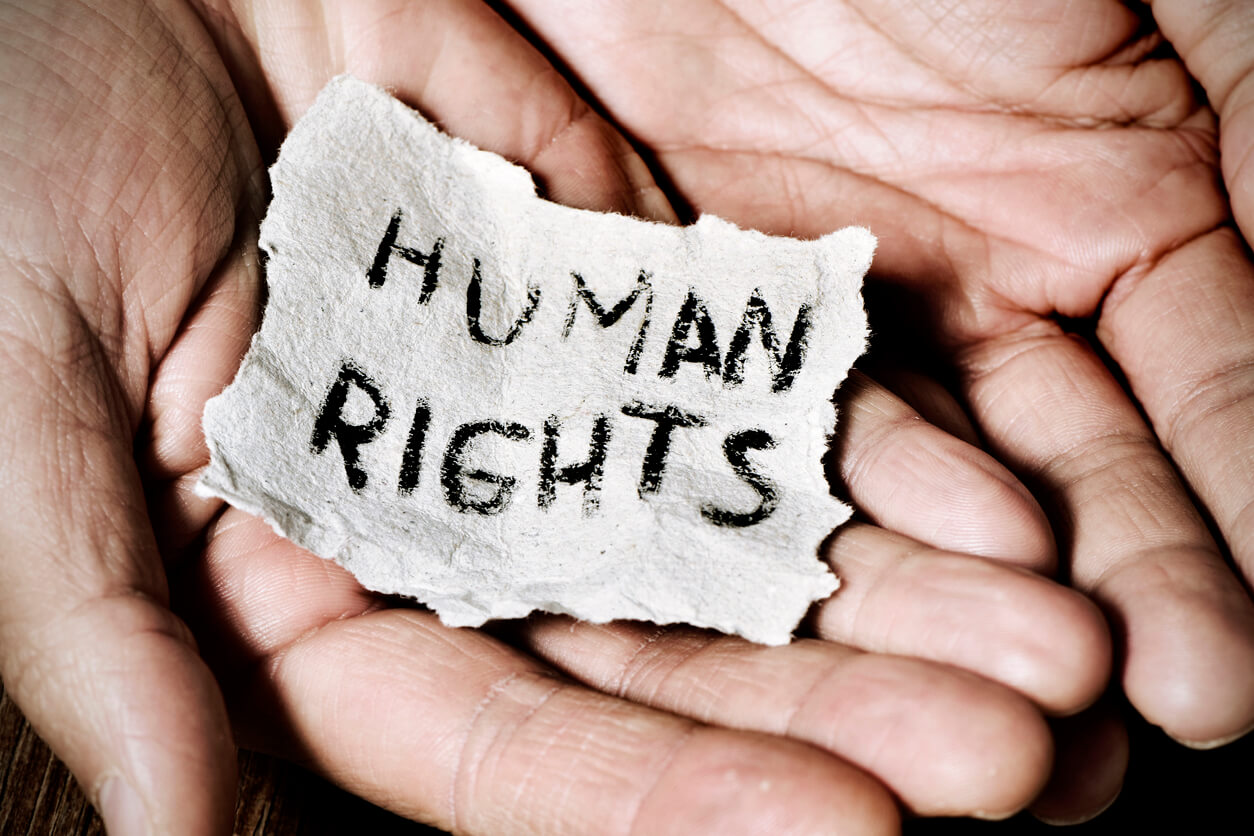
The Kenya National Commission on Human Rights (KNCHR) says complaints related to Economic, Social, and Cultural (ECOSOC) rights have emerged as the largest category of human rights cases over the past year.
According to the KNCHR report on the “State of Human Rights in Kenya,” covering December 2024 to December 2025, the Commission received 2,848 complaints. Of these, 1,381 related to ECOSOC rights, followed by 1,171 complaints on civil and political rights and 299 on group rights.
“The Commission notes that unmet ECOSOC rights, including health, food, education, housing and social protection, did not just mirror economic hardship; they were a key driver of public frustration and youth-led agitation that in turn fueled many of the civil and political rights violations documented in this report,” the report reads.
KNCHR Chairperson Claris Ogangah, while releasing the report on Tuesday, December 9, 2025, said, “It is imperative to read the status of civil and political freedoms in Kenya through the lens of deepening socio-economic inequality and unfulfilled social justice, which continue to undermine the promise of the Constitution’s Bill of Rights.”
On healthcare, Ogangah welcomed the government’s allocation of KSh 138.1 billion for the 2025/2026 financial year but highlighted challenges accessing services under the Social Health Authority (SHA). He urged urgent implementation of the Lipa SHA Pole Pole policy to make health services accessible to vulnerable populations and called for the creation of a centralized, independent human resource agency for the health sector. The Commission also condemned the detention of patients and deceased bodies over unpaid hospital bills.
Regarding food, the report noted improvement in the country’s Self-Sufficiency Ratio from 94.8% in 2023 to 105.5% in 2024. However, residents in arid and semi-arid lands, including Samburu and Tana River, still face poor nutrition due to limited access to diverse diets and health services. Farmers, particularly maize growers, reported low farm-gate prices and high production costs, threatening livelihoods and food security.
In education, KNCHR expressed concern that the New Higher Education Funding Model and unregulated course costs make some programs unaffordable for students from low-income backgrounds, worsening inequality. Delays and inadequate disbursement of school capitation also undermine the right to education.
On housing, the report acknowledged progress in the Affordable Housing Programme but noted challenges including limited public understanding, poor access to information, and cases of forced evictions in informal settlements.
The report documented 57 violations of the right to life, including killings in Molo, Kiambu, Baragoi, and other areas, as well as the killing of security officers in the line of duty. KNCHR also received 661 complaints related to the right to freedom and security of the person, including arbitrary detentions, torture, abductions, and enforced disappearances, some allegedly committed by security officers.
While noting relative calm in North Rift counties previously declared “disturbed and dangerous,” the Commission raised concern over extra-judicial killings under “Operation Maliza Uhalifu” and the use of criminal gangs by politicians and business interests for intimidation. KNCHR also highlighted heavy police deployment during protests in Nairobi, Mombasa, Uasin Gishu, and Embu, which led to injuries, arbitrary arrests, and restrictions on peaceful assembly.
The Commission reported increased violations against journalists, including assaults, threats, and disruption of media operations, alongside concerns over the Computer Misuse and Cybercrimes (Amendment) Act, 2025, which it says risks curbing freedom of expression.
On children’s rights, KNCHR acknowledged progress under the Children Act, 2022, including new rules on foster care and guardianship, but expressed concern over attacks on schoolchildren, including the Butere Girls’ High School play incident.
Persons with disabilities continue to face challenges due to low law implementation and non-compliance with employment quotas. The report also noted a surge in femicide cases, with over 100 reported in the first three months of 2025, prompting the President to set up a Technical Working Group on Gender-Based Violence.
KNCHR highlighted concerns over refugee rights, Indigenous peoples’ rights, and barriers faced by intersex persons in accessing healthcare, legal recognition, and participation in decision-making.
Email your news TIPS to Editor@Kahawatungu.com — this is our only official communication channel
