


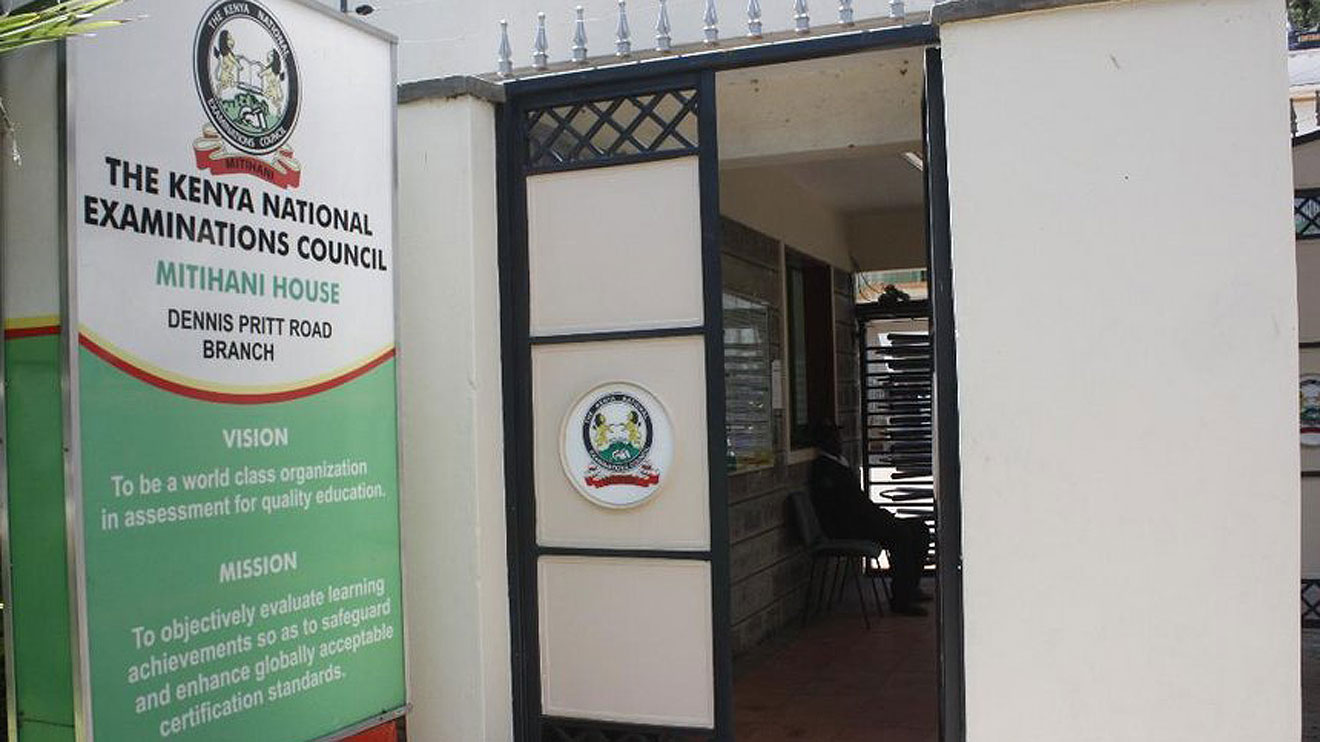
The Kenya National Examinations Council (KNEC) has outlined how learners in Senior School will be assessed under the Competency-Based Curriculum (CBC).
KNEC Chief Executive Officer Dr David Njengere announced the new assessment plan on Friday, January 9, 2026, during the release of the 2025 KCSE examination results.
Dr Njengere said KNEC will issue a circular by January 15, 2026, to guide schools on how learners joining Grade 10 will be assessed as they begin the final phase of basic education in Senior School.
He explained that KNEC has developed a Competency-Based Assessment Framework (CBAF) for Senior School. The framework is available on the KNEC website and explains the purpose of the assessments, the tools to be used, and how results will be reported.
To support schools, KNEC has set up 235 Senior School hubs across all 47 counties. Each county has five hubs drawn from existing secondary schools, representing public, private, rural, urban and special schools. The hubs will help schools implement competency-based assessments and improve coordination with KNEC.
Dr Njengere also said KNEC, through its Educational Assessment Resource Centre (EARC), has launched a free online self-paced training portal for Senior School teachers. The platform is meant to equip teachers with the skills needed to carry out competency-based assessments. Teachers have been encouraged to make use of the opportunity.
From January 26, 2026, after learners have settled into Grade 10, KNEC will open an online portal for heads of Senior Schools to confirm learner details, including the pathways chosen by students. These pathways include Arts and Sports Science.
KNEC will then begin the 2026 Grade 10 School-Based Assessments (SBAs). The assessments will include projects, practical work and written tests. Learners taking the Arts and Sports Science pathway will start their Fine Arts coursework immediately in January 2026.
Other projects and practical assessments will be done between May and July 2026, while the written tests will take place in October 2026.
Dr Njengere said the assessment scores collected from Grades 10, 11 and 12 will be combined and used to issue learners with the Kenya Certificate of Basic Education (KCBE) at the end of Senior School.
“I therefore urge teachers, learners, parents and all relevant players to ensure that all learners sit their School Based Assessments as expected and that all the scores are uploaded onto the KNEC database, to avoid disadvantaging learners at the end of the cycle. This applies also to administration and uploading of SBA scores for Primary and Junior School levels,” Dr Njengere said.
KNEC also plans to pilot a Senior School summative assessment in 2027, when the current Grade 10 learners move to Grade 11.
Dr Njengere said the move towards digital assessment is part of KNEC’s efforts to promote digital literacy and prepare learners for the 21st-century economy.
Meanwhile, KNEC will open the registration portal for the 2026 KPSEA, KJSEA and KCSE examinations in February 2026. Dr Njengere said preparations for the 2026 examination cycle are already underway.
He asked school heads to use January to identify eligible candidates and gather the required documents for registration. He also announced that KNEC will introduce an SMS service to allow parents and guardians to confirm their learners’ registration status.
In addition, President William Ruto revealed that more than 270,000 candidates who sat for the 2025 KCSE examinations qualified for direct entry into universities after scoring a mean grade of C+ and above.
The President said a total of 993,000 candidates sat the 2025 KCSE exams, with girls making up 50 per cent of the candidates.
“We are encouraged that out of the 993,000 candidates, half of whom were girls, 270,000 attained C+ and above, qualifying for direct university entry,” President Ruto said.
Email your news TIPS to Editor@Kahawatungu.com — this is our only official communication channel
