


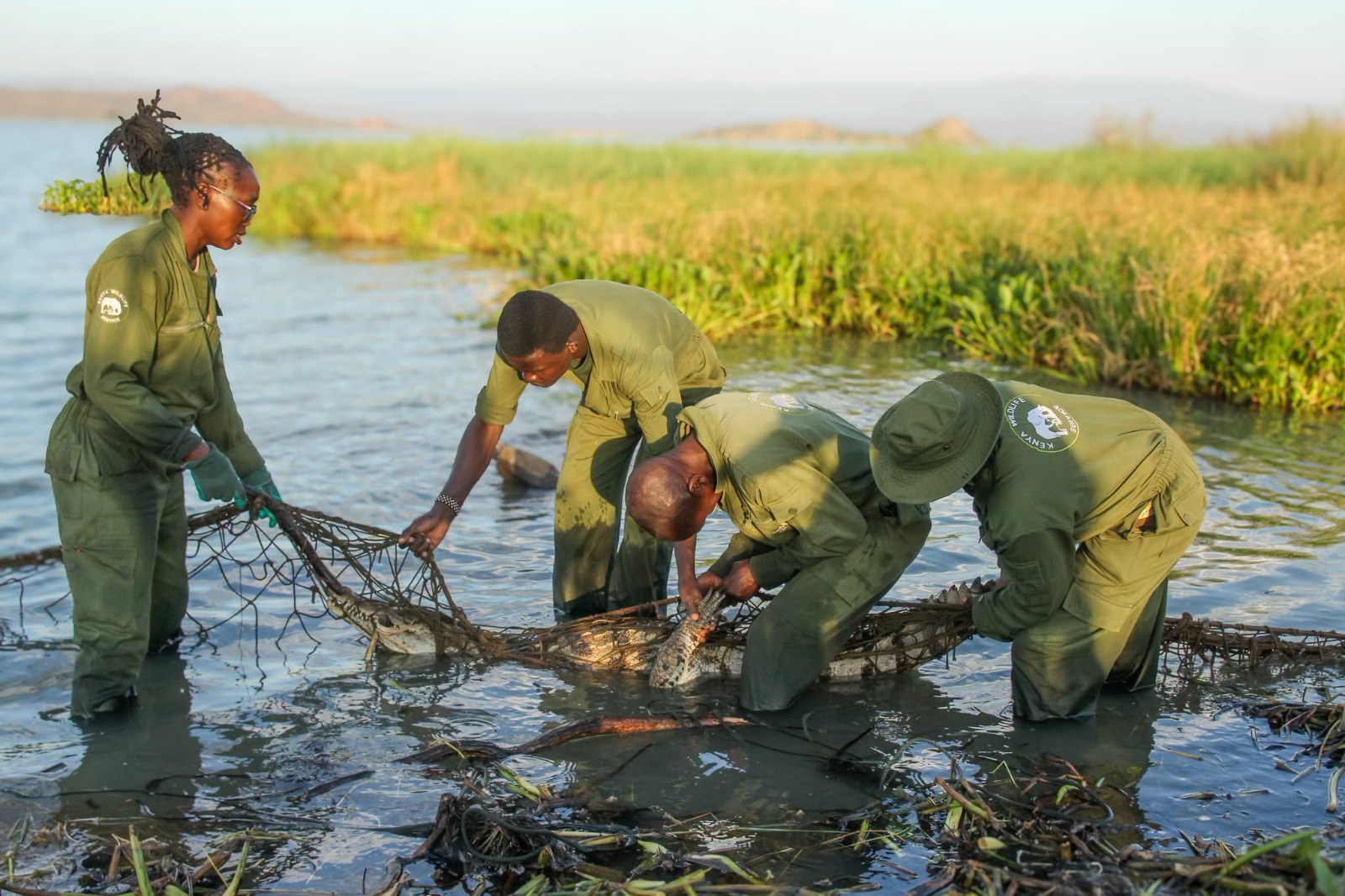
The Kenya Wildlife Service (KWS) has launched an operation to relocate crocodiles from the western shores of Lake Baringo following increased human-wildlife conflict in areas affected by rising lake waters.
In a statement on Monday, KWS said residents of Kampi ya Samaki have for more than a decade watched the rising waters of Lake Baringo take over homes, schools, roads and livelihoods.
The rising water levels have also forced people and wildlife into increasingly smaller spaces, creating new challenges for communities living along the lake.
According to KWS, crocodiles have increasingly come into close proximity with residents, raising concerns over the safety of people and livestock.
Against this backdrop, the KWS Veterinary and Capture Unit has launched a proactive operation to relocate crocodiles from areas where their proximity to people has become increasingly dangerous.
The crocodiles are being moved to KWS-managed parks and reserves with little or no crocodile presence.
The initiative is intended to support the reintroduction and repopulation of crocodiles in suitable habitats while reducing the risk of human-wildlife conflict around Lake Baringo.
KWS said the operation seeks to strike a balance between wildlife conservation and the safety of communities affected by the changing environment around the lake.
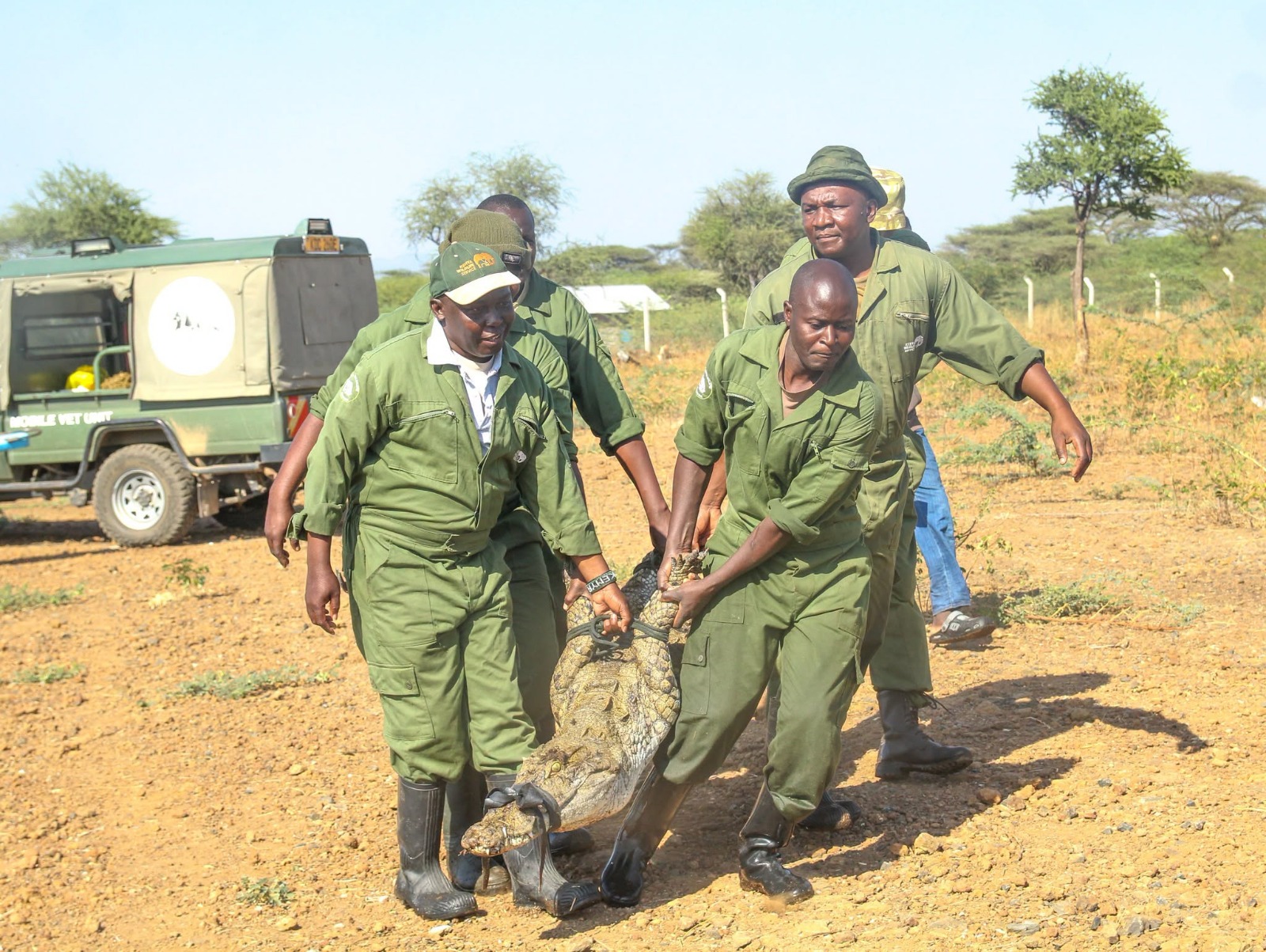
“It is a delicate balancing act, protecting a powerful and ecologically important species while also protecting the people who have been forced, by the advancing waters, to share its shrinking habitat,” KWS said.
The western shores of Lake Baringo have experienced significant changes over the years as rising water levels have affected settlements and infrastructure.
The encroachment of the lake has reduced the space available for both people and wildlife, increasing interactions between the two.
KWS said the crocodile relocation forms part of efforts to manage the growing conflict while ensuring the species continues to thrive in appropriate habitats.
The service said it would continue working with communities to address human-wildlife conflict and promote conservation.
“KWS remains committed to protecting wildlife while working with communities to promote safer and more sustainable coexistence between people and wildlife,” the service said.
Email your news TIPS to Editor@Kahawatungu.com — this is our only official communication channel
