

Maurice Gibb Siblings: A Look at the Musician’s Family Tree


Maurice Gibb PHOTO/Reddit
Maurice Ernest Gibb was a British musician, singer, songwriter, and record producer, best known as a founding member of the pop group the Bee Gees.
He was born on December 22, 1949, in Douglas, Isle of Man, to English parents Hugh and Barbara Gibb.
His early life was shaped by music, influenced by his father’s background as a drummer, and marked by frequent family relocations from the Isle of Man to Manchester and later to Australia in 1958.
Maurice’s career spanned nearly five decades, during which he became known for his versatile musicianship and warm vocal contributions to many classic Bee Gees hits.
He died on January 12, 2003, at age 53 in Miami Beach, Florida, following complications from emergency surgery for a twisted intestine that led to cardiac arrest.
Siblings
The Gibb family had five children: Lesley, born in 1945; Barry, born in 1946; twins Maurice and Robin in 1949; and Andy, born in 1958.
Lesley did not join the Bee Gees but was an important part of the family’s early stability.
Barry became the group’s primary songwriter and frontman, known for his falsetto and leadership.
Robin, Maurice’s twin, shared lead vocals and helped shape the group’s distinctive harmonies.
Andy pursued a solo career in the late 1970s, achieving major success before his struggles with addiction led to his death in 1988 at age 30.
Career
Gibb’s career began as a child performer with his brothers in the skiffle group the Rattlesnakes in Manchester in 1955, where he sang and played accordion.
By 1958, the trio of Barry, Robin, and Maurice became known as the Bee Gees, a name reflecting Barry’s initials and a nod to promoter Bill Goode.
Also Read: Marcus Morris Sr. Siblings: Meet the Siblings Squad Behind the NBA Icon

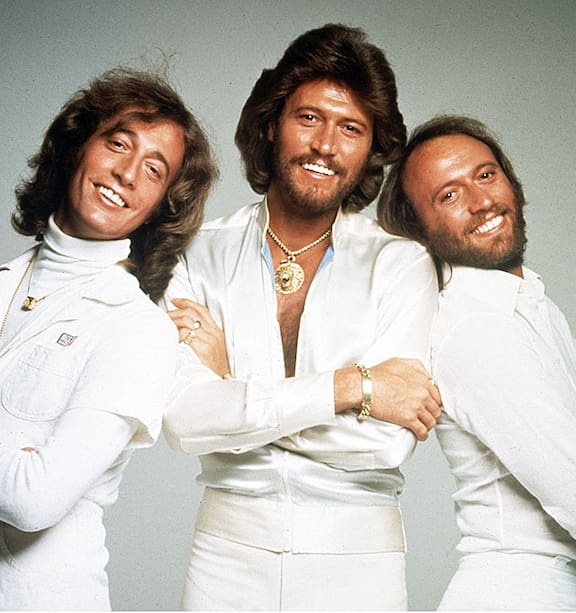
After moving to Australia, the group gained attention through radio and television appearances and released their first single, “The Battle of Neretva,” in 1963.
Their breakthrough came after returning to the UK in 1967 with the hit “New York Mining Disaster 1941,” which led to more successes including “Massachusetts” and albums such as Horizontal and Odessa.
Maurice became the band’s multi-instrumentalist, mastering bass, piano, guitar, and drums while contributing harmonies and occasional lead vocals on songs like “Suddenly” and “Country Woman.”
The Bee Gees reached new heights in the mid-1970s with the rise of disco, driven by the Saturday Night Fever soundtrack and global hits including “Stayin’ Alive” and “How Deep Is Your Love.”
Maurice also explored solo work, releasing the single “Railroad” in 1970 and forming the short-lived group the Bloomfields, though he preferred production work.
He produced for artists such as Lulu and the Osmonds and contributed to projects by musicians including George Harrison.
His final Bee Gees album, This Is Where I Came In in 2001, featured his lead vocal on “Man in the Middle,” providing a fitting closing chapter to his musical journey.
Accolades
In 2002, Maurice and his brothers were appointed Commanders of the Order of the British Empire for their contributions to music.
After his death, his son Adam accepted the award at Buckingham Palace in 2004.
The Bee Gees were inducted into the Rock and Roll Hall of Fame in 1997, recognizing their status as one of the world’s best-selling artists with over 220 million records sold.
Maurice shared in the group’s 1990 induction into the Songwriters Hall of Fame and their 2022 inclusion in the Australian Songwriters Hall of Fame.
The Bee Gees won nine Grammy Awards, including Album of the Year for Saturday Night Fever in 1978.
Maurice’s songwriting contributions helped the group achieve five simultaneous U.S. Top 10 hits in 1978, a record unmatched by any other songwriters.

