

Mike Babcock Siblings: Meet Patricia, Katherine and Karen Babcock

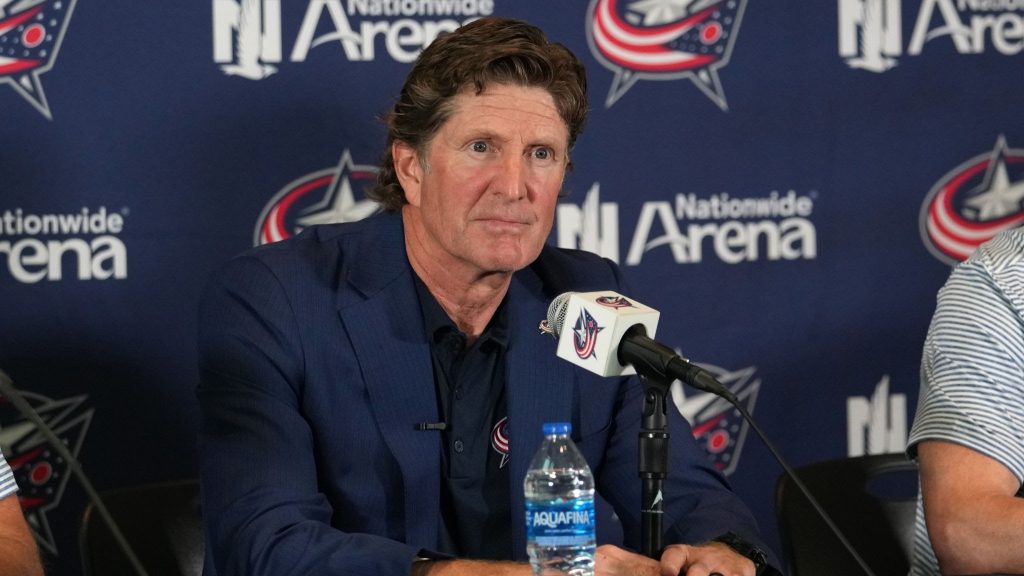
Former Ice Hockey player Mike Babcock PHOTO/Getty Images
Mike Babcock, born Michael Babcock Jr. on April 29, 1963, in Manitouwadge, Ontario, Canada, is a prominent figure in professional ice hockey, renowned for his extensive coaching career in the National Hockey League (NHL) and international competitions.
A former player at McGill University, where he excelled as a defenceman, Babcock transitioned into coaching, establishing himself as one of the most successful yet controversial coaches in hockey history.
His career spans multiple decades, marked by significant achievements and public scrutiny, particularly regarding his coaching methods.
Siblings
Babcock grew up in a close-knit family with three sisters, namely Patricia Babcock, Katherine Babcock, and Karen Babcock.
Born to parents Gail and Mike Babcock Sr., the four siblings were raised in a tight family unit, particularly during their early years in the remote town of Tungsten in the Northwest Territories, where the family lived before relocating to Saskatoon, Saskatchewan, when Mike was around 12 years old.
The Babcock siblings were born within a short span, with Mike’s twin sisters, Patricia and Katherine, being a year younger, and Karen approximately a year and a half older.
Career
Nabcock’s hockey career began as a player, competing at McGill University from 1983 to 1987, where he played 146 games, scoring 22 goals and 85 assists, and graduated as the second-highest-scoring defenceman in the school’s history.
After a brief stint as a player-coach for the Whitley Warriors in the United Kingdom in 1987, Babcock embarked on a coaching career that would define his legacy.
His early coaching roles included head coach at Red Deer College (1988–1991), where he won a provincial championship, and the Moose Jaw Warriors in the Western Hockey League (1991–1993).
Also Read: Jaime Pressly Siblings: Getting to Know Jessica and James Liston Pressly Jr.
After a brief consideration of leaving coaching for business, he led the University of Lethbridge to a national title in 1994.
Babcock’s NHL journey began with the Anaheim Mighty Ducks in 2002, guiding them to the Stanley Cup Finals in 2003.
He then coached the Detroit Red Wings from 2005 to 2015, achieving a Stanley Cup victory in 2008 and setting a franchise record for coaching wins.
In 2015, he signed a lucrative contract with the Toronto Maple Leafs, coaching until his dismissal in 2019 amid a losing streak and allegations of a toxic work environment.
Babcock later served as an unpaid assistant coach at the University of Vermont (2020) and head coach of the University of Saskatchewan Huskies (2021–2022), where he coached alongside his son, Michael Babcock III.
In 2023, he briefly returned to the NHL as head coach of the Columbus Blue Jackets but resigned before the season began due to allegations of misconduct involving players’ personal photos.
Babcock announced his retirement from coaching in August 2022, though he returned briefly for the Columbus role.
Accolades
Babcock’s coaching career is distinguished by a remarkable collection of accolades, most notably his membership in the Triple Gold Club, making him the only coach to win a Stanley Cup (2008 with Detroit Red Wings), an IIHF World Championship gold medal (2004 with Team Canada), and Olympic gold medals (2010 and 2014 with Team Canada).
He also led Canada to gold at the 1997 World Junior Championships and guided the University of Lethbridge to a CIS national title in 1994.
At McGill University, as a player, he was a two-time all-star defenceman, team captain, and recipient of the Bobby Bell Trophy as team MVP.
Babcock earned the Alberta Collegiate Athletic Conference Coach of the Year award in 1989 while at Red Deer College and the Canada West Coach of the Year award in 1993–94 at Lethbridge.
In the NHL, he was a finalist for the Jack Adams Award in 2007–08, finishing third, and achieved 700 career wins, ranking him 12th all-time among NHL coaches as of 2023.
On June 2, 2016, the University of Saskatchewan honored him with an Honorary Doctor of Laws degree, recognizing his contributions to hockey and his community.