


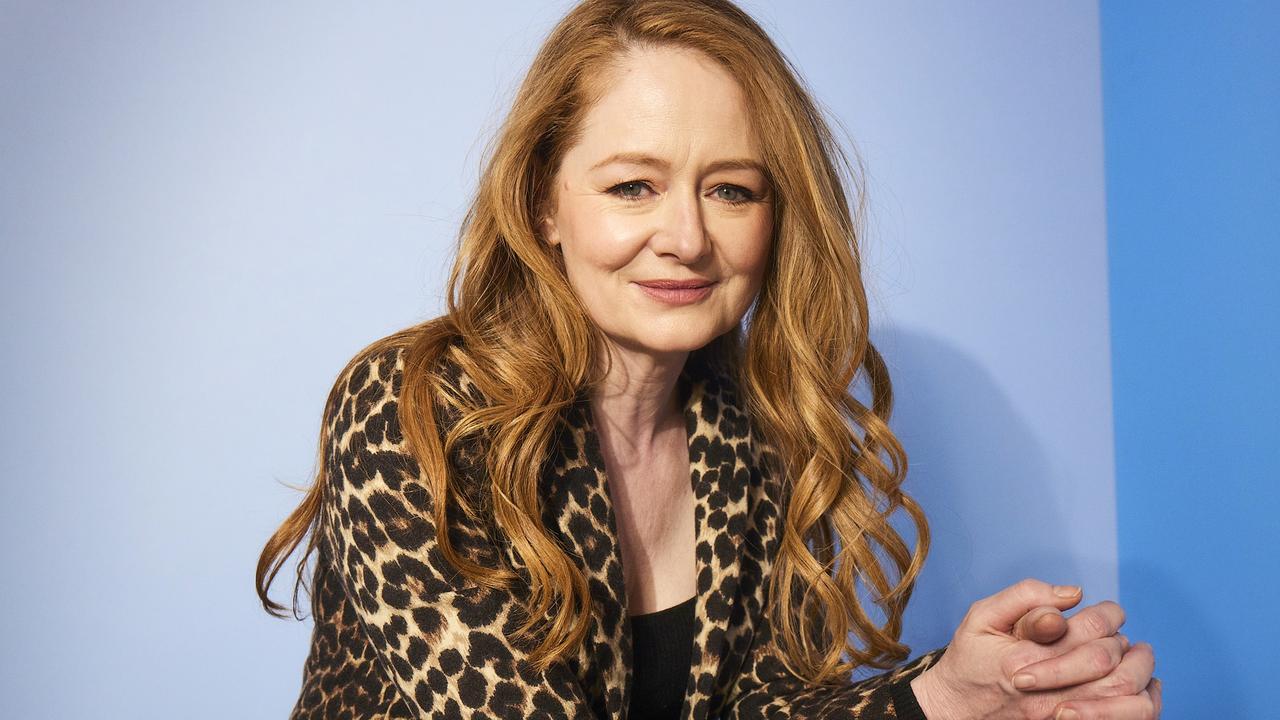
Miranda Otto is a distinguished Australian actress born on December 16, 1967, in Brisbane, Queensland, Australia.
Renowned for her versatile performances across film, television, and theater, she has established herself as a prominent figure in the entertainment industry.
Her father, Barry Otto, is a celebrated Australian actor known for his extensive work in film and theater, while her mother, Lindsay Otto, was also an actress.
Otto graduated from the prestigious National Institute of Dramatic Art (NIDA) in Sydney in 1990, which equipped her with a strong foundation in acting.
Siblings
Miranda has two siblings, a half-sister, Gracie Otto, and a half-brother, Edward Otto.
Gracie Otto, born in 1987, is a filmmaker and actress who has made significant contributions to the Australian entertainment industry.
She is the daughter of Barry Otto and his second wife, Susan.
Gracie is known for her directorial work, including the 2013 documentary The Last Impresario, which premiered at the BFI London Film Festival, as well as films such as Seriously Red, Under the Volcano, and Desert Dash.
Her documentary Revealed: Otto by Otto (2024) is a deeply personal reflection on her relationship with her father, Barry, capturing his life and career amid his battle with Alzheimer’s disease.
Edward Otto, Miranda’s half-brother, leads a private life away from the public eye, and little information is available about his profession or personal endeavors.
Career
Otto began her acting career at the age of 18 in 1986, quickly making her mark in the Australian film and theater scene.
Her major film debut came with Emma’s War (1987), where she played a teenager relocating to Australia’s bush country during World War II.
Also Read: Mel Gibson Siblings: Meet the Siblings Squad Behind the American Actor

Throughout the 1990s, she built a reputation through critically acclaimed roles in Australian films such as The Girl Who Came Late (1991), which marked her breakthrough and earned her an Australian Film Institute (AFI) nomination for Best Actress, and The Last Days of Chez Nous (1992), which garnered her a second AFI nomination for Best Supporting Actress.
Her role in The Well (1997) further solidified her status, earning her a third AFI nomination despite mixed reviews for the film.
Otto’s international breakthrough came with supporting roles in Hollywood films like The Thin Red Line (1998) and What Lies Beneath (2000).
However, her portrayal of Éowyn in Peter Jackson’s The Lord of the Rings trilogy (The Two Towers and The Return of the King, 2002–2003) catapulted her to global fame.
Her performance as the fearless shieldmaiden, including the iconic line “I am no man,” resonated with audiences worldwide and remains one of her most celebrated roles.
Otto has since diversified her portfolio with roles in films like War of the Worlds (2005), Annabelle: Creation (2017), and Talk to Me (2022), as well as television series such as Homeland (2015), where she played Allison Carr, and Chilling Adventures of Sabrina (2018–2020), where she portrayed Zelda Spellman.
Her stage work is equally notable, with performances in productions like Boy Gets Girl (2005) and her theatrical debut in The Bitter Tears of Petra Von Kant (1986) for the Sydney Theatre Company.
Accolades
Otto won the Australian Film Institute Award for Best Supporting Actress for her role in The Daughter (2004), a testament to her ability to deliver powerful performances.
Her work in The Lord of the Rings trilogy earned her multiple nominations and awards, including the Online Film Critics Society Award for Best Cast, the Internet Movie Award for Best Supporting Actress, and the Screen Actors Guild Award for Outstanding Performance by a Cast in a Motion Picture.
Her performance in Homeland garnered a Screen Actors Guild Award nomination for Outstanding Performance by an Ensemble in a Drama Series.
Additionally, Otto received a Critics’ Choice Television Award for Best Supporting Actress in a Drama Series for her role in Homeland.
Email your news TIPS to Editor@Kahawatungu.com — this is our only official communication channel
