


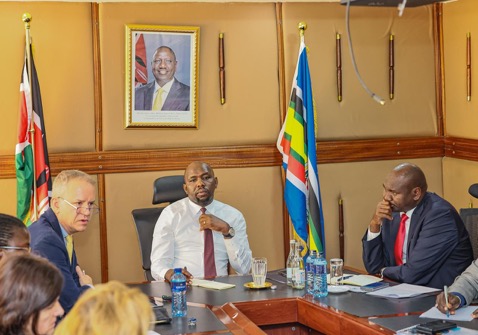
Interior Cabinet Secretary Kipchumba Murkomen called a crisis meeting to discuss mitigation measures following recent aid freezes and budget cuts for humanitarian assistance programs by developed countries on refugees.
He said following the cuts the impact on the country’s ability to host refugees and asylum seekers which number over 800,000 people, has been sudden and severe.
This followed Monday’s incident where refugees in Kakuma, Turkana County protested over the reduction in food portions provided by the World Food Program (WFP) which is now only able to offer 40% of the basic minimum ration.
During the protests, at least three refugees were shot and injured. Three police officers were too injured in the clashes.
The protesters had blocked the main highway in the area saying their food rations, school fees and other funds had been reduced.
Murkomen said Kenya has hosted refugees fleeing conflicts in the region for over three decades.
“We shoulder the burden of healthcare, education, food and security. With the cut in funding for humanitarian assistance programs by the developed world, the socio-economic impact on our country will be unbearable,” he said.
“And yet to turn our backs on the most vulnerable people runs counter to our belief in shared humanity.”
He said it is therefore incumbent on developed countries to shoulder the financial burden as Kenya does its bit.
He added he convened the meeting of humanitarian assistance partners to discuss medium-term and long-term strategies to address anticipated funding shortfalls.
He said Kenya is keen on strengthening humanitarian assistance, security, shelter, education, and protection for refugees residing in Kakuma and Daadab camps in collaboration with donor groups and stakeholders from the banking sector to develop and foster sustainable refugees management strategies.
He added fully onboarding refugees to commercial activities will not only benefit them, but also empower the host communities and the country at large through enhanced economic development and employment opportunities.
“The meeting discussed our ongoing key policy and regulatory reforms around refugee identification and management, which is part of our wider plan to strengthen the socio-economic inclusion of refugees and host communities,” he said.
Also present were banking institutions who attended to discuss ways of fast-tracking financial inclusion of refugees.
The partners were led by the United Nations Resident Coordinator in Kenya Dr. Stephen Jackson, including heads of the United Nations High Commissioner for Refugees (UNHCR), United Nations International Children’s Emergency Fund UNICEF, World Food Programme and International Organization for Migration (IOM).
Also present was the Principal Secretary for Immigration and Citizen Services Prof. Julius Bitok among other ministry officials.
Email your news TIPS to Editor@Kahawatungu.com — this is our only official communication channel
