


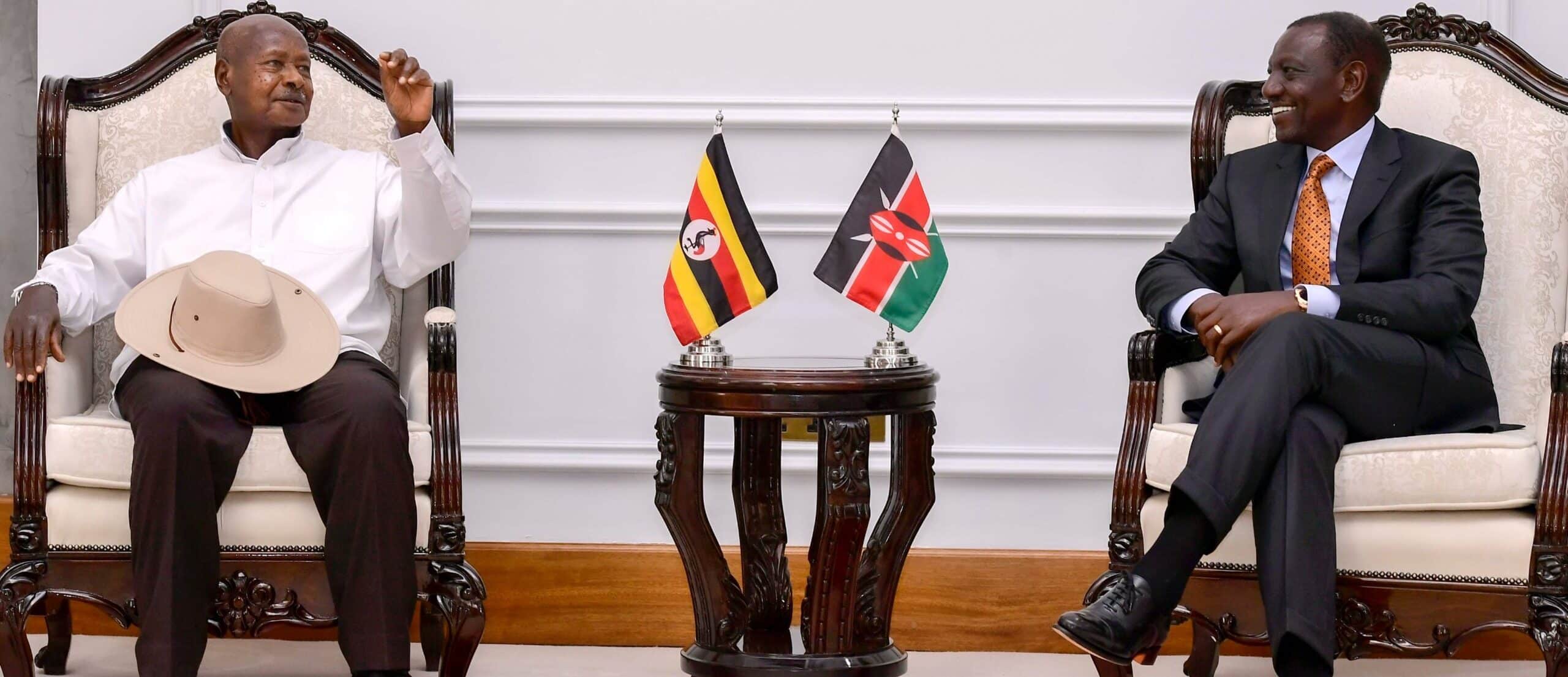
In his 82nd birthday reflections, President Yoweri Museveni did something unusual. He named names. He named a year. And in doing so, he demolished a narrative that has been carefully constructed in sections of the Kenyan media—that Uganda’s fuel troubles were a product of the Government-to-Government (G-to-G) arrangement that Kenya signed in 2023.
They were not. The shortchanging began in 2019, four years before the G-to-G deal existed.
— Yoweri K Museveni (@KagutaMuseveni) September 20, 2026
Museveni’s account is unambiguous. “It was a Kenyan Senator called Jirongo who told me this around 2019,” he wrote. “I immediately tasked the then Minister Irene Muloni to sort out that mess.” The “mess” was that Uganda—a whole country—was buying petroleum products through middlemen in Kenya, by tendering to those middlemen, rather than dealing directly with refineries and bulk suppliers.
This is not a new allegation. It is a 2019 allegation. And it directly contradicts the convenient fiction that Uganda’s fuel woes were somehow caused by a deal Kenya only signed in March 2023.
The timeline is devastating for that narrative. Irene Muloni served as Uganda’s Energy Minister until 2019—well before President Ruto’s administration took office in 2022 and initiated the G-to-G arrangement the following year. The middlemen Museveni is describing were operating during the era of the Open Tender System, not the G-to-G framework. They were Kenyan oil marketing companies selling to Ugandan subsidiaries, marking up prices at every stage, and doing so for years.
Kenya’s G-to-G arrangement, signed on March 10, 2023, was a response to a severe dollar shortage that threatened Kenya’s own fuel supply. Under the deal, Saudi Aramco, ADNOC, and ENOC agreed to supply refined products on 180-day credit terms. The international suppliers then appointed licensed Kenyan counterparties—Gulf Energy, Galana Energies, Oryx Energies, and later others—to handle local logistics.
That is the structure Kenya defends. And it may well have served a purpose for Kenya’s foreign exchange crisis. But it did not create the middleman problem. It inherited it. The middlemen were already there, already extracting their premiums, already costing Uganda hundreds of millions of dollars a year.
When Ugandan officials finally compared the numbers, the scale of the historical rip-off became clear. Under the old arrangement—the one Jirongo exposed in 2019—Uganda was paying a premium of $118 per metric tonne for diesel. Under the new Vitol deal signed on August 18, 2023, that premium fell to $83. Petrol premiums dropped from $97.50 to $61.50. Aviation fuel from $114.25 to $79.25.
These are not retail price fluctuations. These are procurement premiums—the margins extracted before the fuel ever reached a Ugandan pump. A saving of $35 per metric tonne on diesel, multiplied across Uganda’s annual consumption of nearly 3 billion litres, runs into hundreds of millions of dollars.
Museveni’s response to the Kenyan media was characteristically blunt: they had “put pilipili (red pepper)” in what he said. They had, in other words, tried to weaponise his criticism of the middlemen into an attack on President Ruto—when in fact Museveni went out of his way to thank Ruto for prevailing over “some actors in Kenya who were trying to resist” the new arrangement.
That is the crucial distinction the Kenyan media has blurred. Museveni’s target was never Ruto. His target was the entrenched system of Kenyan intermediaries who had been feeding off Uganda’s fuel imports since at least 2019—and who were not magically created by a 2023 agreement.
Former Deputy President Rigathi Gachagua, no friend of the G-to-G deal, immediately recognised what Museveni was saying. He said the remarks had “vindicated” his longstanding concerns about the arrangement, describing it as “a big scheme for William Ruto to take over the marketing of petroleum products in Kenya”. Gachagua’s interpretation is his own. But even he did not claim the middlemen arrived in 2023.
The real story is simpler and more damaging. For years—certainly by 2019, and probably earlier—Uganda was buying fuel through Kenyan middlemen who were adding premiums of up to 42% on diesel compared to what direct bulk suppliers were charging. President Museveni was told about this in 2019. He tasked his minister. Nothing happened. The middlemen continued to feast.
It was only in August 2023, when Uganda bypassed the system entirely and signed directly with Vitol, that the premiums collapsed. Kenya’s G-to-G deal, signed five months earlier, was a separate response to a separate crisis—a dollar shortage that threatened Kenya’s own supply. The two are not the same. The middlemen predate the G-to-G framework by at least four years.

Email your news TIPS to Editor@Kahawatungu.com — this is our only official communication channel
