


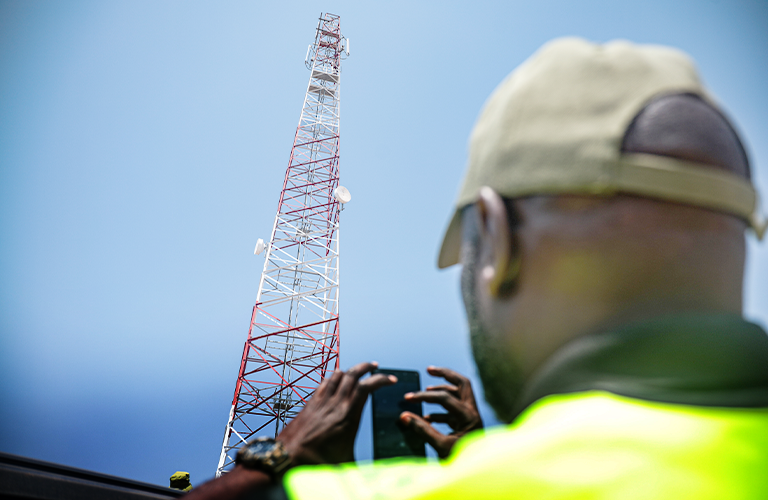
For years, Sabarei — a remote sub-location in Marsabit’s Dukana sub-county — operated in near isolation.
The area, nearly 900 kilometres from Nairobi and just five kilometres from the Ethiopian border, endured frequent bandit attacks and had no mobile network. Security officers and local administrators relied on runners to deliver critical messages to a centre almost 100 kilometres away.
At the heart of Sabarei sits a decades-old police outpost and the home and office of Assistant Chief Gufu Habane.
Together, a small group of officers and administrators has long served as the first line of defense for communities living in a region marked by occasional clashes involving the Gabbra, Borana, and Daasanach.
The lack of communication infrastructure made an already complex security environment even more challenging.
“Security information needs to be relayed immediately. In the past, with no network, it would really delay and become time-barred,” said Assistant Chief Gufu, reflecting on the difficulties faced by officials on the ground.
This has now changed. The recent activation of mobile connectivity under the Universal Service Fund (USF) has provided the area with its first reliable link to the national network.
According to Robert Wanderi, a Safaricom engineer working on the USF rollout, the impact is already visible.
“Our teams monitor the borders and maintain internal peace. Without a phone signal, emergency coordination was extremely difficult. With network coverage, they can call for support instantly — and that can be the difference between life and death,” he said.
Beyond improving security operations, the network has reconnected residents with family and the outside world after years of digital isolation. For many, the ability to make a simple phone call has brought renewed reassurance and a long-awaited sense of belonging.
Email your news TIPS to Editor@Kahawatungu.com — this is our only official communication channel
