


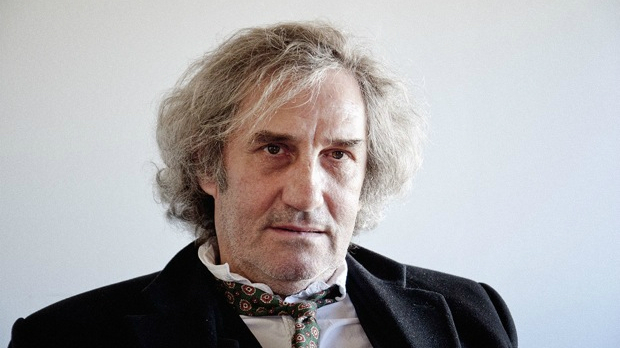
Philippe Garrel, born on April 6, 1948, in Boulogne-Billancourt near Paris, France, stands as one of the most enduring figures of French cinema, deeply intertwined with the revolutionary spirit of the French New Wave.
The son of renowned actor Maurice Garrel, who appeared in over a hundred films, Philippe grew up immersed in the world of acting and storytelling, an environment that ignited his passion for filmmaking from a tender age.
By 16, he had already written and directed his debut short film, Les Enfants Désaccordés in 1964, a work that hinted at the abstract, introspective style that would define his oeuvre.
Influenced by trailblazers like Jean-Luc Godard and François Truffaut, Garrel’s early career positioned him at the heart of the 1960s counterculture, where he explored themes of youthful rebellion, romantic disillusionment, and the fragile boundaries between art and life.
Over the decades, he has evolved into a multifaceted artist — director, screenwriter, cinematographer, editor, and occasional actor — crafting films that blend personal confession with poetic minimalism.
His work often features his family and close collaborators, turning cinema into a familial chronicle that reflects the highs and lows of love, loss, and creative endurance.
Siblings
Philippe had one brother named Thierry Garrel.
Born into the same cinematic household as Philippe, Thierry has supported numerous French productions, often intersecting with his brother’s world through collaborative projects that underscore the Garrel clan’s deep-rooted commitment to cinema.
Career
Garrel’s career spans more than six decades, a testament to his unwavering dedication to the intimate, elliptical language of cinema.
Launching into the fray of the French New Wave as a teenager, he quickly aligned himself with the era’s radical experimentation, directing shorts like Marie pour mémoire (1968) and features such as Le Lit de la Vierge (1969), which captured the hazy euphoria and political fervor of May 1968.
Also Read: Wille Crafoord Siblings: Meet the Siblings Squad Behind the Swedish Actor
His early collaborations with icons like Nico, the enigmatic Velvet Underground singer with whom he shared a decade-long relationship, infused his work with a raw, bohemian edge—films like La Cicatrice intérieure (1972) starring Nico and her son Ari, blending autobiography with avant-garde poetry.
The 1970s and 1980s marked a period of introspective evolution, as Garrel grappled with personal demons and the fallout of utopian dreams in works like Vampyr (1970) and L’Enfant secret (1982), the latter a tender meditation on fatherhood amid emotional wreckage.
By the 1990s, his style matured into crystalline chamber dramas, with J’entends plus la guitare (1991) earning acclaim for its unflinching portrayal of lost love.
Entering the new millennium, Garrel’s films grew increasingly autobiographical, often starring his son Louis Garrel in explorations of jealousy, passion, and artistic inheritance—Les Amants réguliers (2005) reimagined his own revolutionary youth, while later entries like Un été brûlant (2011), La Jalousie (2013), and L’Amant d’un jour (2017) delved into the frailties of modern romance.
His most recent film, Le Grand Chariot (2023), continues this legacy, weaving a tale of puppeteers and familial resilience.
Accolades
In 1982, Garrel received the prestigious Prix Jean Vigo for L’Enfant secret, an honor celebrating independent spirit and original vision, echoing the legacy of the eponymous New Wave precursor.
Two years later, at the Cannes Film Festival, Liberté, la nuit (1983) clinched the Perspectives du Cinéma Award, spotlighting his mastery of nocturnal introspection.
The Venice Film Festival became a recurrent stage for his triumphs during the 1980s and beyond; Sauvage Innocence (2001) garnered a Golden Lion nomination and the FIPRESCI Prize, while Les Amants réguliers (2005) secured the Silver Lion for Best Director, a crowning achievement that validated his epic reimagining of 1968’s upheavals.
Beyond festivals, Garrel’s influence permeates European cinema, earning him the European Film Award for Best Director in 2006 and a lifetime of admiration from peers like Olivier Assayas, who deems him an “underrated genius.”
Email your news TIPS to Editor@Kahawatungu.com — this is our only official communication channel
