

Pierre Trudeau Siblings: All About Charles Elliott and Marie Grace Suzette Emilie Elliott Trudeau

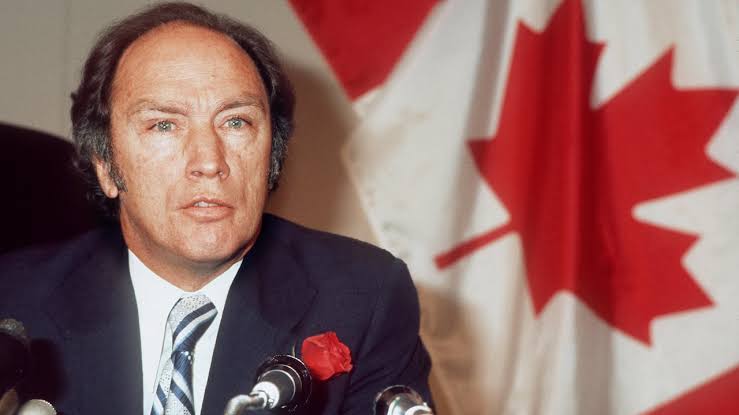
Pierre Trudeau PHOTO/CTV
Joseph Philippe Pierre Yves Elliott Trudeau, known as Pierre Trudeau or Pierre Elliott Trudeau, was a Canadian politician, lawyer, and intellectual who served as the 15th prime minister of Canada from 1968 to 1979 and again from 1980 to 1984.
Born on October 18, 1919, in Montreal, Quebec, he grew up in the affluent Outremont suburb.
His father, Charles-Émile Trudeau, was a successful lawyer and businessman of French-Canadian descent, and his mother, Grace Elliott, had mixed Scottish and French-Canadian heritage.
Trudeau’s father died in 1935 when Pierre was 15, leaving the family financially secure.
Trudeau studied at the elite Jesuit Collège Jean-de-Brébeuf, earned a law degree from the Université de Montréal in 1943, and pursued further studies at Harvard University, the Institut d’Études Politiques in Paris, and the London School of Economics.
He practiced law, taught constitutional law, and became involved in progressive intellectual circles in Quebec before entering federal politics.
He died on September 28, 2000, in Montreal.
Siblings
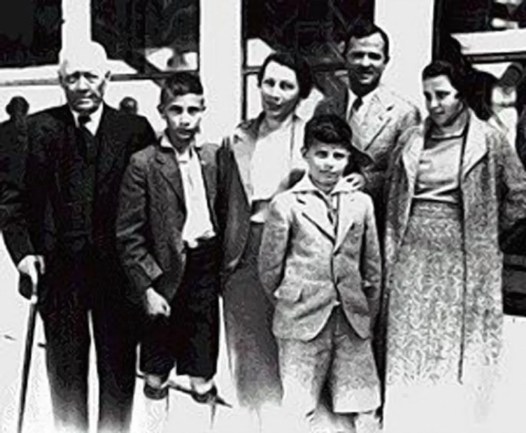
Pierre had two surviving siblings with whom he remained close throughout his life.
His older sister, Marie Grace Suzette Emilie Elliott Trudeau, was born on April 23, 1918, in Montreal.
She married dentist Pierre Rouleau in 1945 and lived a relatively private life away from the political spotlight, though she supported her brother and once compared the enthusiasm around his 1968 Liberal leadership victory to the popularity of the Beatles.
Suzette died on February 9, 2008, in Longueuil, Quebec, at the age of 89.
His younger brother, Charles Elliott Trudeau (often called Charles Jr. or Tip by the family), was born on May 14, 1922, in Outremont.
He worked as an architect, married Andrée Lavigne in 1945, and died on August 8, 1994, in Montreal at the age of 72.
Also Read: Paul Martin Siblings: Getting to Know Mary-Anne Bellamy

Career
Trudeau’s professional path began in law and academia.
After early work as a desk officer in the Privy Council Office, he practiced labour and civil liberties law in the 1950s and co-founded the influential intellectual journal Cité Libre, which criticized the conservative Union Nationale government in Quebec.
He taught constitutional law at the Université de Montréal from 1961 to 1965.
In 1965 he entered federal politics as a Liberal, winning election to the House of Commons for the riding of Mount Royal.
He quickly rose through the ranks, serving as parliamentary secretary to Prime Minister Lester B. Pearson and then as Minister of Justice and Attorney General from 1967 to 1968.
In that role he modernized divorce laws and liberalized aspects of the Criminal Code related to homosexuality, abortion, and other social issues.
In 1968 he won the Liberal Party leadership and became prime minister amid a wave of public enthusiasm known as Trudeaumania.
He led the party to successive election victories, governing until 1979, briefly losing power, and returning from 1980 to 1984.
His governments promoted official bilingualism through the Official Languages Act, advanced multiculturalism, confronted the October Crisis of 1970 by invoking the War Measures Act, opposed Quebec separatism (notably helping defeat the 1980 sovereignty referendum), and patriated the Canadian Constitution in 1982 with the addition of the Charter of Rights and Freedoms.
He also pursued a more independent foreign policy, including establishing diplomatic relations with China.
Trudeau retired from politics in 1984.
Accolades
Trudeau received numerous honours recognizing his contributions to Canadian public life and international affairs.
He was made a member of the Queen’s Privy Council for Canada in 1967.
In 1984 he was awarded the Albert Einstein Peace Prize and appointed a Companion of Honour.
The following year he was named a Companion of the Order of Canada.
He was also a Fellow of the Royal Society of Canada.
His intellectual and political legacy is widely regarded as transformative: he is remembered for strengthening Canadian federalism, embedding individual rights in the constitution, and fostering a bilingual and multicultural national identity.

