


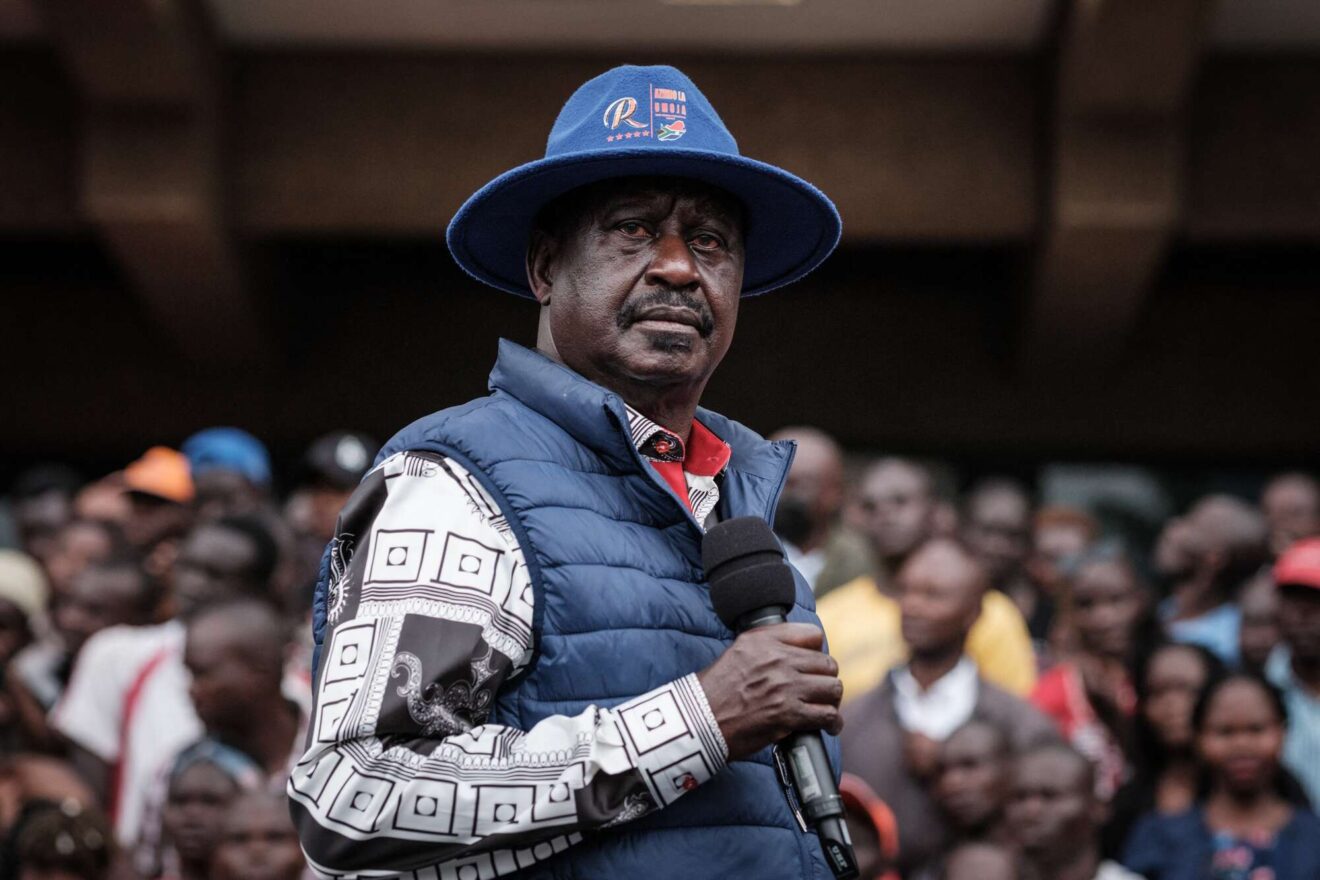
Raila Amolo Odinga was one of Kenya’s most consequential and polarizing political figures of the post-independence era: a veteran opposition leader, former Prime Minister, and perennial presidential contender whose career shaped Kenya’s politics for more than four decades.
This profile looks at his background, political trajectory, family, controversies, and recent role on the regional stage.
Early life and education
Raila Amolo Odinga was born on 7 January 1945 in Maseno, in what was then the Kenya Colony.
He is the son of Jaramogi Oginga Odinga, a leading independence figure who became Kenya’s first vice-president — a lineage that placed Raila in the centre of Kenyan politics from an early age. He attended primary and secondary school in western Kenya before completing technical studies in the former German Democratic Republic, where he trained in engineering and welding.
Business and early career
After returning to Kenya in 1970, Odinga worked in the public and private sectors — including a period at the Kenya Bureau of Standards — and founded East Africa Spectre, a company involved in manufacturing LPG cylinders and other engineering ventures. He entered public service in the late 1970s and early 1980s, rising to positions in government before his first long turning point: detention.
Detention, dissent and re-emergence
Odinga’s political life was dramatically affected by the aftermath of the failed 1982 coup in Kenya. He was arrested and detained without trial for several years during the repressive Moi era — an experience that hardened his reputation as an opposition icon and helped found his later pro-democracy credentials. He re-emerged in the 1990s as multiparty politics returned to Kenya and became a central figure in the struggle for political reform.
National political career and the 2007–2008 crisis
Raila Odinga led and co-led a series of opposition groupings through the 1990s and 2000s and emerged as leader of the Orange Democratic Movement (ODM). His challenge to the 2007 presidential result — which he and many supporters said was rigged — set off the 2007–08 post-election violence. The crisis was ended through mediation that produced a power-sharing accord; Odinga became Kenya’s prime minister in April 2008, serving in that role until 2013. The episode cemented his standing as both a major national leader and a divisive figure.
Presidential bids and continued opposition role
Odinga contested multiple presidential elections — most notably in 1997, 2007, 2013, 2017 and 2022 — building a mass political following, especially in parts of Kenya’s Western and Nyanza regions and among urban supporters.
Though he did not succeeded in becoming president, his campaigns have repeatedly reshaped alliances and Kenyan political debate. He has also led umbrella coalitions such as the Coalition for Reforms and Democracy (CORD) and the Azimio la Umoja coalition.
Institutional and regional roles
Beyond Kenyan electoral politics, Odinga held regional and continental roles. He served as the African Union’s High Representative for Infrastructure Development (a role he held from 2018 until early 2023), and he has been called on as a regional troubleshooter — for example, to help defuse tensions in neighbouring South Sudan in 2025. These appointments reflect his standing as a senior statesman in some regional capitals, even as he remains an opposition leader at home.
Political style and reputation
Odinga was widely seen as a populist and a mobiliser with strong grassroots reach. Supporters praised his fight for democracy, advocacy for constitutional reform and ability to galvanise voters; critics accuse him of fomenting confrontational politics and of contesting electoral outcomes rather than working within state institutions.
Over decades he has alternated between confrontation and negotiated settlements with rivals, exemplified by both the 2008 power-sharing deal and subsequent pacts and dialogues with sitting presidents.
Family and personal life
Raila Odinga was married to Ida Odinga, a schoolteacher, entrepreneur and public figure in her own right. The couple had several children; the late Fidel, Rosemary, Winnie and Raila Odinga Jr.
He was also the son of the late Oginga Odinga, and his family ties extend into Kenyan political networks.
Controversies and legal disputes
Throughout his career Odinga has been enmeshed in controversies common to high-profile political actors: allegations and counter-allegations around electoral integrity, occasional legal challenges, and public disputes with rivals and state institutions. His detention in the 1980s and his central role in the 2007–08 crisis are the most consequential episodes that continue to shape how Kenyans remember and evaluate him.
Recent developments (2024–2025)
In the past two years Odinga continued to be politically active while also playing roles in diplomacy and institutional engagement. In March 2025, Kenya dispatched him as part of a diplomatic push to defuse a crisis in South Sudan.
He and ODM engaged in cooperative pacts with the ruling administration on certain national priorities — moves that drew both praise for seeking collaboration and criticism from those who see them as weakening opposition oversight.
Earlier this month, his camp addressed speculation about his health, saying he was recuperating abroad; ODM spokespeople and family members issued statements to clarify his condition amid heightened public interest.
At close to eight decades of life in public view, Odinga’s influence rests on a mix of liberation-era pedigree, long opposition credentials, mass mobilisation capacity, and experience in both national and continental roles. Whether as kingmaker, opponent or mediator, his choices continue to reverberate through Kenya’s party alignments, electoral strategies and governance debates.

Email your news TIPS to Editor@Kahawatungu.com — this is our only official communication channel
