


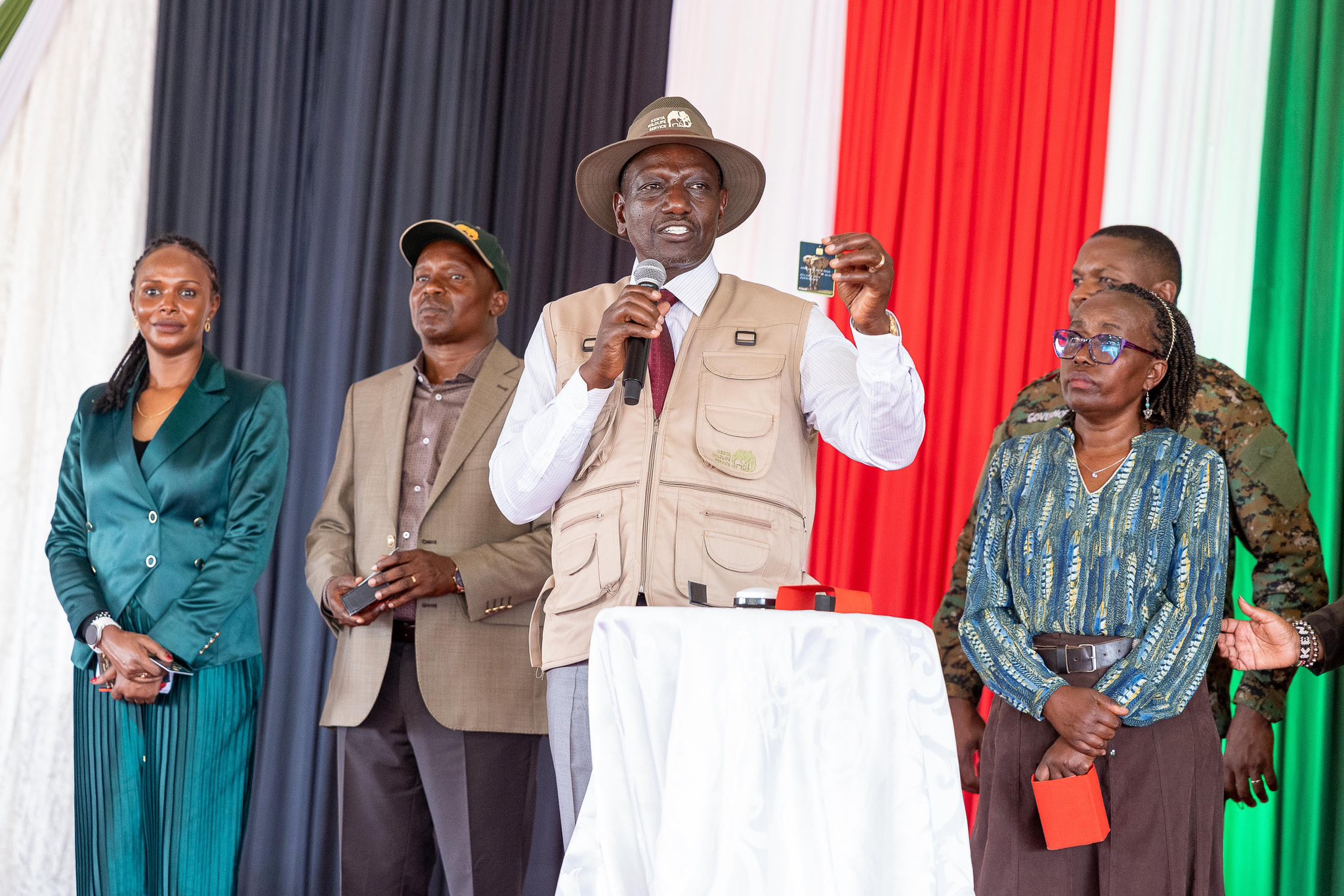
President William Ruto has given the green light for the construction of three new hotels inside Meru National Park as part of a major initiative to boost tourism and create economic opportunities for local communities.
The move is also aimed at finding new ways for people and wildlife to coexist peacefully.
Speaking at the park during the launch of the third phase of the National Human-Wildlife Conflict Compensation Programme, President Ruto said the hotels would help unlock the region’s tourism potential while offering jobs and business opportunities to surrounding communities.
“This is about turning conflict into opportunity,” the President said.
“Through community-led tourism and infrastructure like fencing, we are creating a future where both people and wildlife can thrive.”
During the event, President Ruto handed over a cheque of Sh950 million to the Ministry of Tourism and Wildlife to fund this year’s compensation for victims of human-wildlife conflict.
Eleven residents of Meru County also received their individual cheques, with a total of Sh3.47 million to be paid to 460 claimants in the county. Nationally, Sh44.8 million is being disbursed this month to 1,355 verified claimants from Meru, Baringo, Taita Taveta, Kajiado, Laikipia, and Narok.
A desk was set up at the event to help affected families confirm their compensation status, with claims under Sh100,000 to be paid via M-Pesa and larger amounts by cheque.
In a new effort to involve citizens directly in wildlife conservation, President Ruto also unveiled Kenya’s first prepaid Wildlife Conservation Card. Developed with KCB Bank, the card comes in three designs—Elephant, Lion, and Cheetah—and contributes a small donation from each transaction to the Wildlife Conservation Trust Fund. The initiative allows both Kenyans and international supporters to support wildlife protection through their everyday spending.
To further support tourism in Meru, the government has set aside Sh250 million to renovate Meru Mulika Airstrip and committed to providing more funding if needed. President Ruto urged local investors to take advantage of emerging opportunities in eco-tourism and conservation-related businesses as part of the Bottom-Up Economic Transformation Agenda (BETA).
The government is also strengthening its efforts to reduce human-wildlife conflict. This includes building 200 kilometers of electric fencing in high-risk areas, deploying 1,500 more Kenya Wildlife Service rangers, and acquiring 100 vehicles for rapid response. Thanks to new digital systems, compensation claims are now processed within 90 days.
These actions are guided by the Kenya Wildlife Service Strategic Plan 2024–2028 and the National Human-Wildlife Coexistence Strategy 2024–2033. Pilot projects in the country include installing beehive fences to deter elephants, using predator-proof livestock enclosures (bomas), and supporting alternative income sources such as beekeeping, eco-tourism, and conservation farming.
Tourism and Wildlife Cabinet Secretary Rebecca Miano said the program reflects Kenya’s development goals under the Bottom-Up agenda.
“This shows that conservation can bring real benefits to our people while protecting the environment,” she said.
Kenya Wildlife Service Director General Prof. Erustus Kanga noted that nearly 4,000 cases of human-wildlife conflict were handled in the last three months alone. “We are committed to protecting lives, property, and wildlife. We thank the President for making this a national priority,” he said.
Email your news TIPS to Editor@Kahawatungu.com — this is our only official communication channel
