

Sergei Fedorov Siblings: All About Fedor Viktorovich Fyodorov

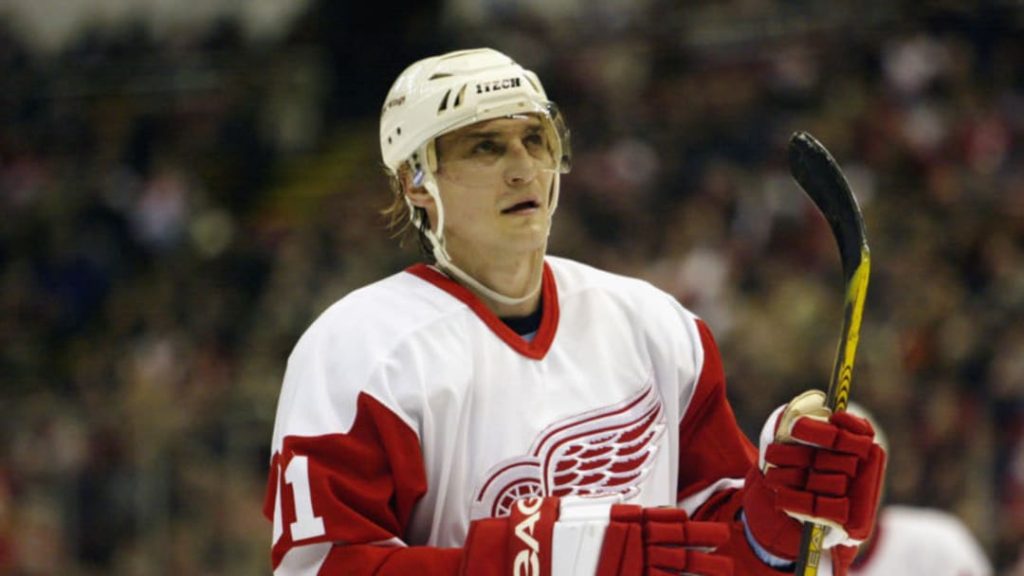
Former Ice Hockey player Sergei Fedorov PHOTO/X
Sergei Viktorovich Fedorov, born on December 13, 1969, in Pskov, Russia, is widely regarded as one of the greatest ice hockey players in NHL history.
A versatile forward who could also play as a winger or defenseman, Fedorov’s exceptional skill, speed, and hockey IQ made him a dominant force on the ice.
His 18-year NHL career, primarily with the Detroit Red Wings, showcased his ability to influence games offensively and defensively, earning him a place in the Hockey Hall of Fame in 2015.
Beyond his playing career, Fedorov has served as the general manager of CSKA Moscow in the Kontinental Hockey League (KHL), further cementing his legacy in the sport.
Siblings
Sergei Fedorov has one sibling, his younger brother Fedor Viktorovich Fyodorov, born on June 11, 1981.
Fedor, also a professional ice hockey player, followed in Sergei’s footsteps but carved out a more modest career.
A forward, Fedor played in the NHL for the Vancouver Canucks and New York Rangers, appearing in a total of 18 NHL games.
His career was primarily spent in the Kontinental Hockey League (KHL) and other minor leagues, including stints with teams like Nizhnekamsk Neftekhimik, Metallurg Magnitogorsk, and SKA Saint Petersburg.
Notably, Fedor signed with the New Jersey Devils in 2008 but was released after declining to report to their AHL affiliate, the Lowell Devils.
Career
Fedorov’s professional career began in the Soviet Union with CSKA Moscow, where he played alongside future NHL stars like Pavel Bure and Alexander Mogilny.
His talent was evident early, as he led the Soviet team to gold medals at the 1989 World Junior Championships and the 1990 World Championships.
Also Read: Jaime Pressly Siblings: Getting to Know Jessica and James Liston Pressly Jr.


In 1990, Fedorov defected to the United States to join the Detroit Red Wings, a move facilitated by Red Wings owner Mike Ilitch.
His NHL debut in the 1990-91 season was impressive, with 31 goals and 79 points in 77 games.
Over his 13 seasons with Detroit, Fedorov became a cornerstone of the team’s success, playing a pivotal role in their Stanley Cup victories in 1997, 1998, and 2002.
His versatility allowed him to excel as a center, winger, or even defenseman when injuries forced lineup changes, earning praise from coaches like Scotty Bowman, who once called him the best defenseman in the league for a six-week period.
Fedorov later played for the Anaheim Mighty Ducks, Columbus Blue Jackets, and Washington Capitals before finishing his career in the KHL with Metallurg Magnitogorsk, where he served as captain.
His international career was equally distinguished, representing Russia in three Olympics and earning a reputation as one of the best playoff performers in NHL history.
Fedorov’s ability to dominate games drew comparisons to legends like Wayne Gretzky and Mario Lemieux, with Gretzky himself noting in 1994 that he had never seen a player control a game as Sergei did during a matchup against the New York Rangers.
Accolades
Fedorov was the first Russian player to reach 1,000 points in the NHL, finishing his career with 1,179 points (483 goals, 696 assists) in 1,248 games.
Fedorov won the Hart Memorial Trophy as the NHL’s most valuable player in 1994, a season in which he scored 56 goals and 120 points, finishing second in league scoring.
That same year, he also claimed the Lester B. Pearson Award (now Ted Lindsay Award) and the Frank J. Selke Trophy for his exceptional defensive play as a forward.
He won the Selke again in 1996, solidifying his reputation as a two-way superstar.
A six-time NHL All-Star, Fedorov was named to the NHL First All-Star Team in 1994 and was included in the NHL’s 100th Anniversary Team in 2017.
His three Stanley Cup championships with Detroit (1997, 1998, 2002) highlight his clutch performance in the playoffs, where he was considered one of the league’s best.
Internationally, Fedorov’s gold medals at the 1989 World Junior Championships and 1990 World Championships added to his legacy.
His induction into the Hockey Hall of Fame in 2015 and the Detroit Red Wings’ decision to retire his No. 91 jersey in January 2026 underscore his lasting impact on the sport.