


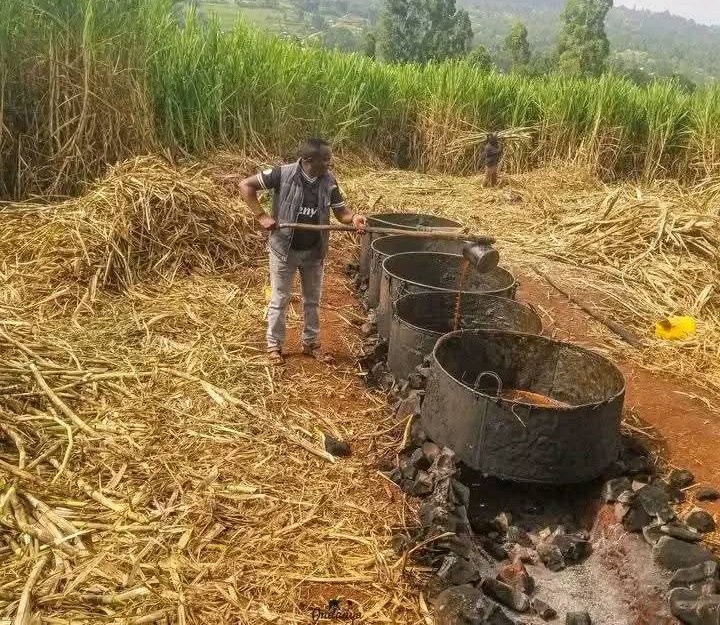
For decades, sugarcane farming has been portrayed as a key economic pillar away from soapstone of South Mugirango in Kisii County.
Blessed with fertile soil and reliable rainfall, the region embraced the crop as a pathway to prosperity.
Though officially classified as a sugarcane-growing zone, the region lacks a single operational sugar factory.
This has made thousands of households that had invested their land, labor, and savings into sugarcane, convinced that steady returns would transform livelihoods slowly sink into despair.
The pain is acute and largely compounded by a stalled plan by an investor to set up a sugarcane factory at Nyangweta Forest.
This has forced the farmers to rely on processing plants in the neighbouring Migori and Narok County’s Transmara region.
Feeling abandoned, the farmers, in swelling numbers, report maturing cane in their farms and delays by the factories to send in trucks on time.
Thomas Kerage, a farmer, said in an interview the residents have resigned after seeing the promises for improved livelihoods steadily collapse into frustration and loss.
“They must rely on mills located far outside the county, some more than 100 kilometres away, a distance that has created fertile ground for exploitation,” Kerage said.
He said transporters and middlemen now determine harvesting schedules and prices, leaving farmers with little bargaining power.
Cane frequently overstays in the fields, losing weight and quality, while payments, when they come are often delayed for months.
“Sometimes you wait three or four years for cane that should mature in two, years,” added John Kerama ,a farmer at Suguta area, the bastion of sugarcane farming.
Cane farming is expensive.
Land preparation, seedlings, fertilizer, and weeding require heavy investment, usually funded through loans or savings.
When returns delay or disappear, families here struggle to pay school fees, medical bills, and basic household needs.
In some areas, some angry farmers have begun replacements cane for food crops such as maize and bananas
Others have abandoned farming entirely.
The lack of a factory initially proposed during Governor James Ongwae’s regime also continue to rob the region of employment opportunities- but most importantly the opportunity to crash their cane.
According to Ongwae, construction of the cane milling plant was set to be completed in 2024, two years after paperwork was finalized .
It could have created 600 jobs directly according to the former county boss with cane farmers reaping huge benefits from the venture .
Had it been finalised, local sugar officials said it would had significantly reduced transportation costs incurred ferrying the produce to millers in neighouring Migori and Narok Counties
It would have also created jobs for youth in harvesting, transport, processing, and support services.
It is still not clear why Kanoria Investor from India pulled out of the proposed Sh2.4 billion sugar factory
Today, with no factory on sight six years later, unemployment continued to soar, forcing young people to migrate to urban centres in search of casual work.
Small businesses that depend on farmers’ income—from shops to transport operators—continue to suffer.
Questions still linger on what happened long after the feasibility studies ended, the Senate Committee granted a go ahead , public engaged and and groundbreaking ceremonies held.
The residents now accuse the local leaders of turning the project into a campaign slogan rather than a development priority.
The farmers are especially now demanding decisive action from both county and national governments.
They want either a local factory or investment in alternative value-addition options such as jaggery processing and cooperative-owned mills.
Without intervention, South Mugirango’s sugarcane belt risks total collapse, leaving behind idle fields and a community betrayed by broken promises.
Email your news TIPS to Editor@Kahawatungu.com — this is our only official communication channel
