


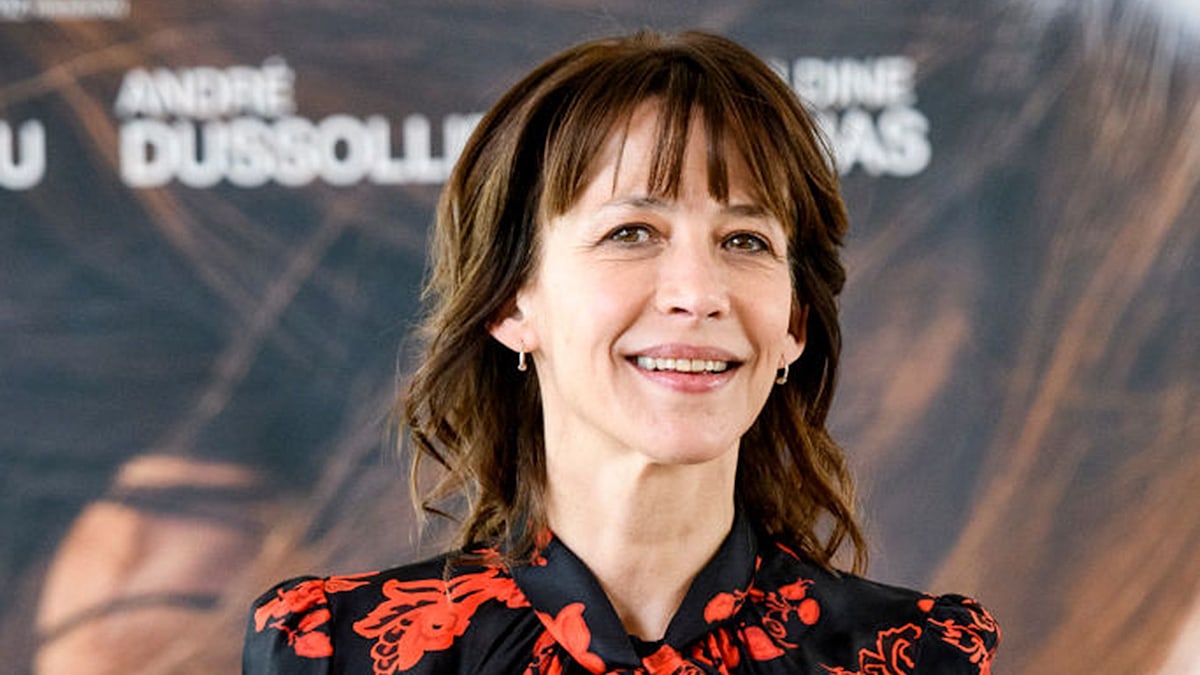
Sophie Marceau, born Sophie Danièle Sylvie Maupu on November 17, 1966, in Paris, France, stands as one of the most enduring icons of French cinema.
Emerging from a modest background in the suburb of Gentilly, she transformed into a global sensation at the tender age of 13, captivating audiences with her natural charm and emotional depth.
Known for her versatility across genres, from lighthearted teen comedies to intense historical dramas and even James Bond thrillers, Marceau has built a career spanning over four decades.
Beyond acting, she has ventured into directing, screenwriting, and authorship, showcasing a multifaceted artistry that resonates with themes of love, rebellion, and personal growth.
At 58, Marceau continues to select roles that challenge her, embodying a timeless elegance that has made her a cultural symbol in France and beyond.
Siblings
Born to Benoît Maupu, a truck driver, and Simone Morisset, a shop assistant, Sophie grew up in a close-knit household that faced upheaval when her parents divorced during her childhood at age nine.
Marceau is the second child in her family and shares a sibling bond with her brother, Sylvain Maupu, who has quietly pursued a path in acting.
Career
Marceau’s career ignited like a comet in 1980 when, at just 13, she was discovered through a modeling agency and cast as the spirited Vic Beretton in Claude Pinoteau’s teen comedy La Boum.
The film’s massive success—selling over 4 million tickets in France—propelled her into the spotlight, turning her into a household name overnight and spawning a sequel, La Boum 2, in 1982 that further solidified her as the face of youthful exuberance.
Eager to shed the ingénue label, Marceau swiftly pivoted to more mature fare, starring alongside luminaries like Gérard Depardieu and Catherine Deneuve in the epic historical drama Fort Saganne (1984), where she portrayed a resilient woman amid colonial turmoil.
Also Read: Robert Schwartzman Siblings: Meet the Siblings Squad Behind the American Artist
The mid-1980s saw her delving into edgier territory with films like Maurice Pialat’s gritty Police (1985) and Andrzej Żuławski’s surreal L’Amour Braque (1985), showcasing her range in blending sensuality with psychological intensity.
Her international breakthrough arrived in 1995 with Mel Gibson’s Oscar-sweeping Braveheart, where she played the enigmatic Princess Isabelle, a role that introduced her sultry allure to American audiences and earned her widespread acclaim.
This paved the way for high-profile Hollywood ventures, including a luminous Anna Karenina in the 1997 adaptation of Tolstoy’s classic and a memorable turn as the seductive Elektra King in the James Bond installment The World Is Not Enough (1999), opposite Pierce Brosnan.
Returning to her French roots, Marceau balanced commercial hits like Fanfan (1993) with auteur-driven works, such as William Sherman’s romantic Firelight (1997).
In a bold expansion, she made her directorial debut in 2002 with Speak to Me of Love, a poignant exploration of familial bonds that starred Judith Godrèche and highlighted her empathetic storytelling.
Subsequent directorial efforts, including the introspective Trivial (2007) and Mrs. Mills (2018), affirmed her command behind the camera.
Marceau’s stage work, notably in Jean Anouilh’s Eurydice and George Bernard Shaw’s Pygmalion, added theatrical depth to her resume.
Even into the 2020s, she remains selective, delivering nuanced performances in films like Une Femme de Notre Temps (2022) and serving as a Cannes jury member in 2015, ensuring her legacy evolves with quiet authority rather than chasing trends.
Accolades
Marceau’s breakout performance in La Boum 2 garnered the prestigious César Award for Most Promising Actress in 1983, a nod to her prodigious talent at just 16.
This early triumph was echoed in 1988 when she received the Cabourg Romantic Film Festival’s Best Actress award for her fiery role in Chouans!, celebrating her command of historical romance.
Venturing into theater, Marceau earned the Molière Award for Best Female Newcomer in 1994 for her dual portrayals in Eurydice et Pygmalion, a testament to her seamless transition between screen and stage.
As a director, she was honored with the Best Director prize at the 2002 Montreal World Film Festival for Speak to Me of Love, recognizing her assured entry into filmmaking’s creative helm.
France’s government further acknowledged her impact by promoting her to Officer of the Ordre des Arts et des Lettres in 2003, with Minister of Culture Jean-Jacques Aillagon praising her as a “female conqueror” in the lineage of icons like Catherine Deneuve.
Notably, Marceau has turned down accolades like the Légion d’Honneur in 2016, citing ethical concerns over France’s diplomatic ties, a decision that underscored her principled stance.
Email your news TIPS to Editor@Kahawatungu.com — this is our only official communication channel
