


It is possible to plan a space exactly the way you want and then be disappointed after it is constructed. That frustration, however, is usually based on the little things.
In many projects, the aspect of safety, particularly bollards, is often introduced at the end of the process. As a result, they are not aesthetically mindful but meet regulations. Consequently, the outcome seems detached and incomplete.
That approach, however, is no longer rational. In fact, in modern site planning, the safety infrastructure is a part of the visual experience. Considering that, Bollards have developed to become versatile design items, rather than primitive steel posts. Today, they contribute to traffic management, the safety of people, and architectural ornamentation simultaneously.
This article describes the available design profiles of modern decorative bollards and the impact of those profiles on appearance, usefulness, and long-term service.
Material Options That Shape Appearance
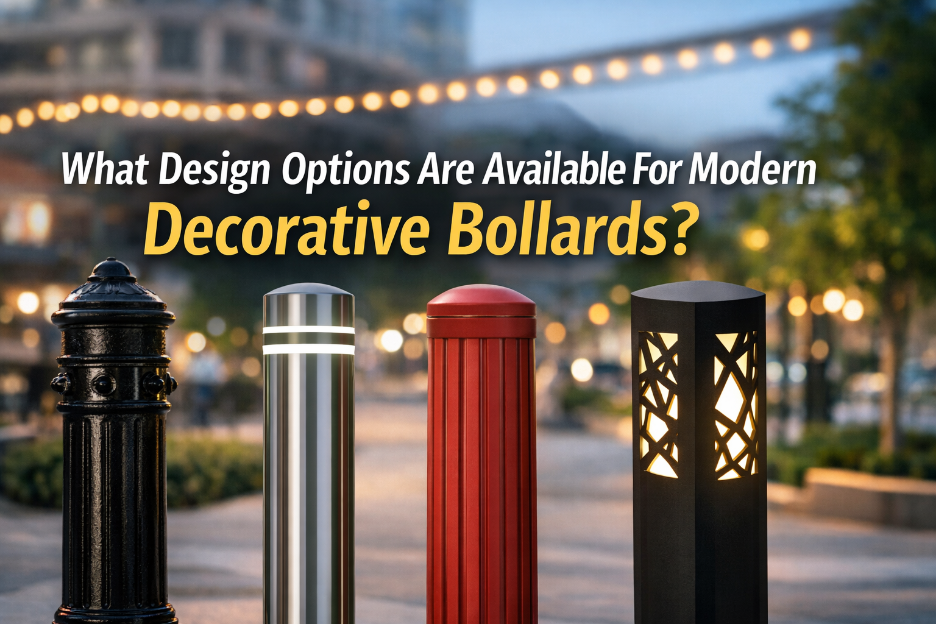
The choice of the material lays down the groundwork of the performance of the decorative bollards in terms of aesthetics and functionality. Moreover, the use of decorative bollards in present-day applications goes well beyond simple steel and bare concrete.
That said, designers are currently choosing materials in line with architectural style, climate, and maintenance expectations.
Common material options include:
- Carbon steel for strength and industrial appeal
- Clean and contemporary stainless steel
- Aluminum for corrosion resistance and lighter weight
- Architectural concrete for bold, grounded expressions
- Composite or polymer sleeves for finish flexibility
Each material carries a different visual weight. Steel feels solid and authoritative. Aluminum appears lighter and more refined. Concrete conveys permanence. Composite materials enable textures and colors that otherwise would be awkward or costly with solid metals.
Material selection also affects lifecycle costs. Aluminum does not rust in coastal or winter environments, while stainless steel is a material that does not require much maintenance. Moreover, composite exteriors offer internal protection to cores but can also be artistically customized. Therefore, the selection of the appropriate material will provide visual consistency as well as help in managing the maintenance requirements in the long run.
Profile Choices That Match Design Language
Bollard profiles have a bigger impact on perception than the majority of individuals would imagine. The shape conveys the purpose prior to the reality of action. A thoughtfully selected profile will fit in the space. An incompatible one attracts unwarranted attention.
Typical profile options include:
- Cylindrical profiles for neutral or traditional settings
- Square or rectangular profiles for modern architecture
- Tapered profiles for refined urban environments
- Decorative fluted profiles for historic districts
Consistency in the profile is important. The environment is deliberate when the bollard shapes are reflecting on neighboring light poles, railings, or lines on the facade. Blended profiles are prone to visual clutter and bewilderment. Consistent geometry helps users understand boundaries without conscious effort.
Moreover, consistent vertical forms reduce visual clutter and improve spatial comfort. Pedestrians navigate spaces more confidently when design language remains coherent rather than fragmented.
Finish Treatments That Control Visibility
Finish treatments affect the aging of bollards and the performance of the bollards during the day. The effects of time on appearance include sun glare, surface wear, and environmental exposure. The right finish balances durability with visual control.
Common finish treatments include:
- Matte coatings to minimize glare
- Satin or brushed finishes for subtle refinement
- Gloss finishes for high-visibility areas
- Textured finishes to conceal scratches and wear
Powder coating dominates modern applications due to durability and color consistency. It resists chipping, fading, and corrosion better than traditional paint. Textured powder coatings also help mask scuffs in high-traffic areas, extending visual lifespan.
The final decisions must be based on usage trends. Low-glare finishes are used in pedestrian-intensive areas. Access points on vehicles are usually more reflective. Hence, considerable choice leads to fewer maintenance, conserves the design purpose long post-installation.
Color Strategies That Influence Behavior
Color is essential in the interaction of people with space. Bollards have the ability to direct traffic, indicate the limits, or even blend into the background upon choice of color. Such choices are not only about the aesthetics but also about the safety and comfort.
Effective color approaches include:
- Neutral tones for plazas and pedestrian areas
- Bright colors in areas of vehicle access points
- Dark finishes for minimal visual intrusion
- Light finishes for improved nighttime visibility
Color contrast improves recognition, especially in shared-use zones. High-contrast bollards alert drivers and pedestrians without signage. Neutral palettes support architectural continuity in civic or commercial spaces.
Behavioral research supports these strategies. It has been found that color contrast in urban fixtures improved hazard recognition and reduced hesitation in mixed-use environments. Color becomes a silent guide that shapes behavior without instruction.
Lighting Features That Improve Safety
The integration of lighting has changed the design of bollards. As a result, bollards are no longer dependent only upon outer streetlights. Furthermore, in-built lighting improves navigation, comfort, and enhances safety when driving in the dark.
Popular lighting features include:
- Internal LED illumination for pathway guidance
- External light bands for edge definition
- Pedestrian-friendly warm color temperatures
- Cooler color temperatures near vehicle zones
Integrated lighting reduces the need for additional fixtures. This simplifies layouts and reduces visual clutter. Bollard-mounted lighting also improves depth perception at ground level, which is critical for accessibility and fall prevention.
Urban design studies show that cohesive lighting strategies improve perceived safety and encourage the nighttime use of public spaces. Moreover, integrated lighting results in reduced nighttime incidents and increased pedestrian confidence.
Custom Detailing That Builds Identity
Customization allows bollards to support identity rather than fade into the background. Decorative detailing can be subtle or expressive, depending on context. These details help infrastructure feel intentional instead of generic.
Common customization options include:
- Decorative grooves or fluting
- Custom caps or top profiles
- Laser-cut patterns or wraps
- Surface textures that echo local materials
Wayfinding and zoning are supported through custom detailing. There can be different designs for identity entrances, exclusive areas, or walking passages. Consistent detailing across a site reinforces spatial memory and orientation.
Planning-wise, custom infrastructure is usually less resistant. Safety features that show local character are the most likely to be responded to by people. Hence, thoughtful detailing turns functional elements into contributors to placemaking and civic pride.
Conclusion
Ornamental bollards in modern design have a much larger selection of designs than simple safety posts. Specifically, the durability and tone are determined by the choice of materials. Additionally, profiles are in line with architectural language, while finishes regulate glare and wear. Moreover, behavior is directed by color strategies, and lighting is incorporated to enhance safety. Finally, personal extension strengthens identity.
The practical takeaway is simple. Treat bollards as design assets from the start. Evaluate material, profile, finish, color, lighting, and detailing together. When these elements are coordinated with each other, they secure the safety of the people and enhance the visual and functional beauty of the space.

Email your news TIPS to Editor@Kahawatungu.com — this is our only official communication channel
