

Wojciech Jaruzelski Siblings: All About Teresa Jaruzelska

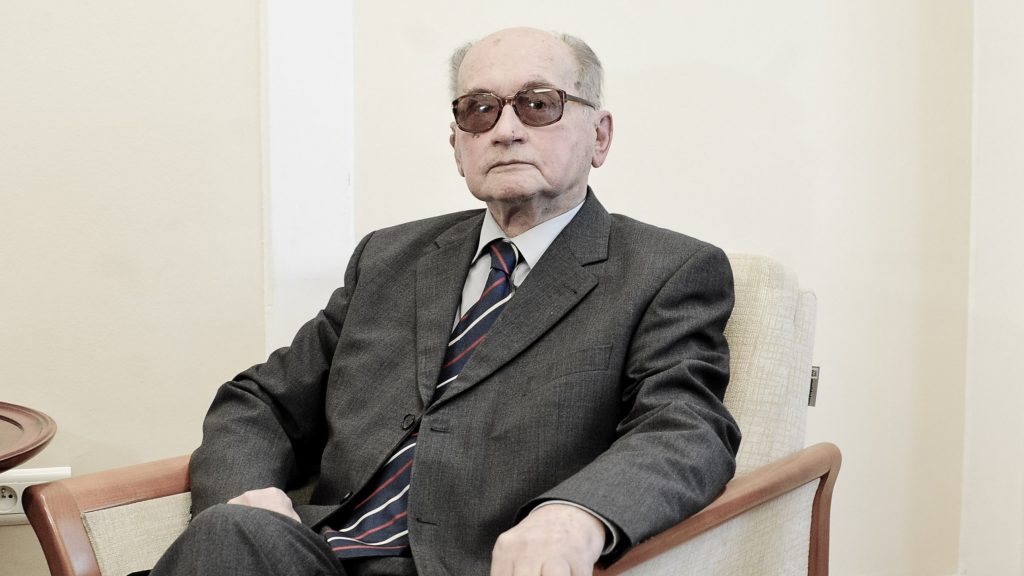
Wojciech Jaruzelski PHOTO/VOA
Wojciech Witold Jaruzelski was a Polish military general and politician born on 6 July 1923 in Kurów, eastern Poland, and who died on 25 May 2014 in Warsaw.
He came from a family of Polish gentry of the Ślepowron coat of arms with roots in the Mazovia-Podlasie border region.
His father, Władysław Mieczysław Jaruzelski, was an agronomist educated in Czechoslovakia who had fought in the Polish-Soviet War of 1920 and worked as an estate administrator.
During the Second World War the family was deported by Soviet authorities to Siberia; Jaruzelski suffered permanent eye damage from snow blindness while working in the forests, which is why he wore dark glasses for the rest of his life.
He joined the Polish forces formed in the Soviet Union, fought on the Eastern Front, and later rose through the ranks of the Polish People’s Army and the communist Polish United Workers’ Party.
He became the dominant political figure in Poland in the 1980s, serving as Prime Minister, First Secretary of the Party, Chairman of the Council of State, and briefly as President.
Siblings
Wojciech had one sibling, a younger sister named Teresa Jaruzelska, born in 1928.
The two children grew up together on the family estate before the wartime upheavals.
When the family was deported to Siberia in 1941, Teresa remained with their mother while their father was sent separately to a labour camp, where he died in 1942.
Teresa and their mother survived the war and later returned to Poland. She lived a private life and is not known to have played any public or political role.
Career
After surviving deportation and forced labour in Siberia, Jaruzelski joined the First Polish Army formed under Soviet auspices in 1943.
He took part in the fighting on the Eastern Front, including the liberation of Warsaw and the Battle of Berlin, and was decorated for bravery.
Also Read: Olaf Scholz Siblings: Get to Know Jens and Ingo Scholz
After the war he remained in the army, joined the communist party, and advanced rapidly.
He became the youngest general in the Polish army in the mid-1950s, later headed the Main Political Administration of the armed forces, served as Chief of the General Staff, and was appointed Minister of National Defence in 1968.
He entered the party Politburo in the early 1970s.
In February 1981 he became Prime Minister, and in October of the same year he was elected First Secretary of the Polish United Workers’ Party, concentrating the highest military, governmental, and party posts in his hands.
On 13 December 1981 he imposed martial law through the Military Council of National Salvation, suppressing the Solidarity movement and detaining thousands of its activists.
Martial law was gradually lifted, and in the late 1980s, under pressure from economic crisis and changing Soviet policy, he authorised negotiations with the opposition.
These led to the Round Table Talks of 1989, partially free elections, and the formation of the first non-communist government.
Jaruzelski was elected President by the National Assembly in July 1989 and held the office until December 1990, when he was succeeded by Lech Wałęsa.
He then withdrew from active politics.
Accolades
Jaruzelski received numerous military and state decorations during the communist period.
Among the most important Polish awards were the Silver Cross of the Virtuti Militari, the Officer’s Cross and Knight’s Cross of the Order of Polonia Restituta, the Order of the Builders of People’s Poland, the Order of the Banner of Labour (First Class), the Order of the Cross of Grunwald (Third Class), the Cross of Valour (twice), and various medals for wartime service, including those for the battles of Warsaw, Berlin, and the Oder-Neisse-Baltic campaigns.
From the Soviet Union he received the Order of Lenin (twice), the Order of the October Revolution, the Order of the Red Banner, and several commemorative medals linked to the Second World War and Soviet anniversaries.
After 1989 his public standing remained deeply polarised in Poland because of the imposition of martial law.

