


The government has reaffirmed its intention to strengthen network infrastructure and improve communication services in underserved and high-risk areas of the country, including Todonyang, Merikuka, Natete, Lopeimukat and Natira in Turkana County.
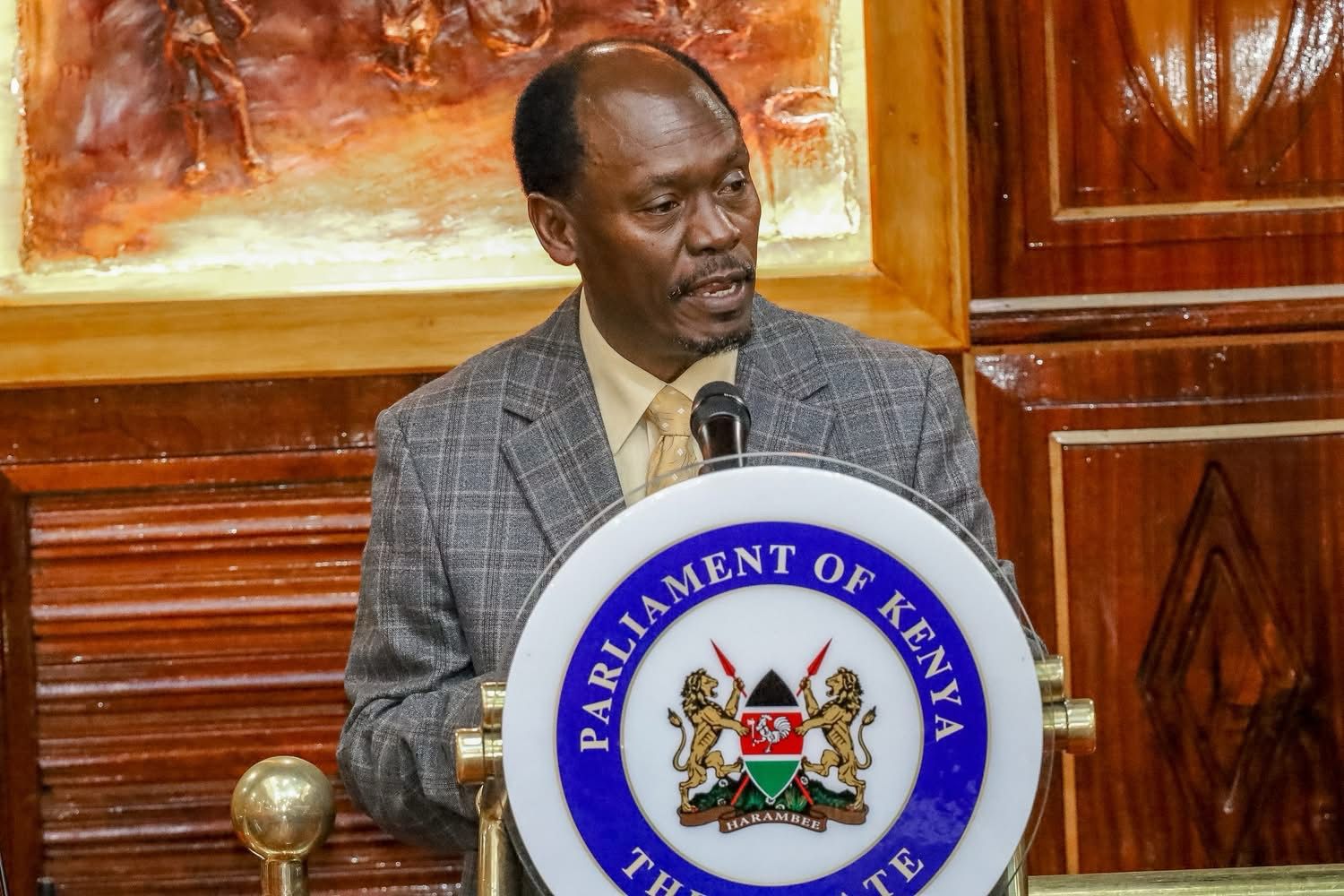
This commitment was reiterated on Wednesday during a Senate Plenary session, where Cabinet Secretary for Information, Communication and the Digital Economy, William Kabogo responded to a series of questions raised by Senators, led by James Lomenen (Turkana).
Senator Lomenen sought clarification on the Ministry’s concrete steps toward improving network connectivity to support timely security response and service delivery for the Kenya Defence Forces (KDF), National Police Reservists (NPR) and the broader local communities in Turkana and other border counties.
𝐶𝑆 𝑐𝑖𝑡𝑒𝑠 𝑝𝑟𝑜𝑔𝑟𝑒𝑠𝑠 𝑡ℎ𝑟𝑜𝑢𝑔ℎ 𝑈𝑛𝑖𝑣𝑒𝑟𝑠𝑎𝑙 𝑆𝑒𝑟𝑣𝑖𝑐𝑒 𝐹𝑢𝑛𝑑
In his response, CS Kabogo highlighted efforts by the Communications Authority of Kenya (CA) through the Universal Service Fund (USF), which facilitated the establishment of a mobile cell tower in Todonyang.
According to the CS, the tower is operational and providing mobile services to surrounding areas with Natira Sub location now enjoying over 80 percent area coverage.
“To secure our borders and protect communities in high risk areas, we must ensure uninterrupted communication. That is why we are prioritising connectivity in Turkana through initiatives like the Universal Service Fund,” he told the House.
The CS added that additional efforts are ongoing, including planned Quality of Service (QoS) assessments in the identified regions.
The assessments, he noted, will guide future engagement with Mobile Network Operators (MNOs) to address service delivery gaps and improve connectivity.
𝑆𝑒𝑛𝑎𝑡𝑜𝑟𝑠 𝑐𝑎𝑙𝑙 𝑓𝑜𝑟 𝑓𝑎𝑠𝑡𝑒𝑟 𝑎𝑐𝑡𝑖𝑜𝑛 𝑎𝑛𝑑 𝑏𝑟𝑜𝑎𝑑𝑒𝑟 𝑐𝑜𝑣𝑒𝑟𝑎𝑔𝑒
While acknowledging the government’s efforts, several Senators questioned the pace and scope of implementation, particularly in regions where network access remains limited or unreliable.
They urged the Ministry to act more swiftly in ensuring that border counties receive adequate coverage, especially in areas affected by insecurity and poor infrastructure.
Senators Danson Mungatana (Tana River), Fatuma Dullo (Isiolo), Wafula Wakoli (Bungoma), Enoch Wambua (Kitui) and Julius Murgor (West Pokot) joined Senator Lomenen in emphasising the urgency of deploying reliable communication systems in underserved areas. Their concerns were echoed by Dr. Lelegwe Ltumbesi (Samburu), Okoiti Omtatah (Busia) and Mohamed Abass (Wajir), all of whom cited persistent connectivity challenges in their respective counties.
𝐸𝑛𝑔𝑎𝑔𝑒𝑚𝑒𝑛𝑡 𝑤𝑖𝑡ℎ 𝑇𝑒𝑙𝑒𝑐𝑜𝑚 𝑝𝑟𝑜𝑣𝑖𝑑𝑒𝑟𝑠 𝑜𝑛𝑔𝑜𝑖𝑛𝑔
In response to a question from Senator Lomenen regarding engagement with major telecom providers such as Safaricom and Airtel, Kabogo confirmed that the Communications Authority has been working with licensed operators to fulfil their universal service obligations as stipulated in their licensing conditions.
He disclosed that under the USF Phase II project, 10 out of 18 targeted sub-locations in Turkana County, including Todonyang, now have operational mobile infrastructure. This, he said, is helping to expand mobile coverage and improve access to essential communication services for both civilians and security agencies.
“For security teams to act swiftly and communities to feel protected, communication cannot be a luxury it is a necessity. We are making it a reality for Turkana,” he noted.
𝑆𝑒𝑐𝑢𝑟𝑒 𝑓𝑟𝑒𝑞𝑢𝑒𝑛𝑐𝑖𝑒𝑠 𝑎𝑙𝑙𝑜𝑐𝑎𝑡𝑒𝑑 𝑓𝑜𝑟 𝑠𝑒𝑐𝑢𝑟𝑖𝑡𝑦 𝑎𝑔𝑒𝑛𝑐𝑖𝑒𝑠
On the issue of secure communication for KDF and NPR units, Kabogo explained that the Authority allocates exclusive frequencies to security agencies upon formal request.
The frequencies are intended to ensure reliable and interference free communication channels for national security operations.
To support communication in the short term while long term infrastructure is being deployed, Kabogo said the Authority will conduct field assessments to determine specific needs in affected areas.
The aim, he said, is to provide interim solutions that support both community and security functions until permanent infrastructure is in place.
𝑀𝑖𝑛𝑖𝑠𝑡𝑟𝑦 𝑑𝑒𝑓𝑒𝑛𝑑𝑠 𝐹𝑖𝑏𝑟𝑒 𝑂𝑝𝑡𝑖𝑐 𝑟𝑜𝑙𝑙𝑜𝑢𝑡 𝑠𝑡𝑟𝑎𝑡𝑒𝑔𝑦
During the supplementary questions segment, Senators raised concerns about the perceived delay in expanding network access particularly in border regions.
In response, Kabogo reiterated the government’s ongoing plan to roll out 100,000 kilometres of Fibre Optic cable across the country.
He said the initiative will significantly enhance national connectivity and reduce the communication challenges highlighted by Senators.
“Through Fibre Optic, we shall manage to provide a high speed and quality network to Kenyans across the country,” Kabogo said.
When pressed by Members on how the Ministry is addressing security challenges related to communication lapses, the CS explained that the government is also working with satellite service providers such as Starlink to expand mobile connectivity, particularly in remote and insecure locations.
𝑆𝑒𝑛𝑎𝑡𝑜𝑟𝑠 𝑠𝑒𝑒𝑘 𝑎𝑐𝑐𝑜𝑢𝑛𝑡𝑎𝑏𝑖𝑙𝑖𝑡𝑦 𝑜𝑛 𝑝𝑢𝑏𝑙𝑖𝑐 𝑓𝑢𝑛𝑑𝑠 𝑎𝑛𝑑 𝑠𝑡𝑟𝑎𝑡𝑒𝑔𝑦
Senator Edwin Sifuna (Nairobi) raised concerns over the Ministry’s continued reliance on private firms to carry out major connectivity projects, asking why Telkom Kenya was not given the responsibility to roll out the National Fibre Optic network.
“There was a time we were told that Telkom Kenya would be in charge of rolling out the National Fibre Optic network. Why is the Ministry still relying on private firms to carry out the rollout?” Sifuna posed.
In his response, Kabogo noted that a different firm had been engaged due to operational challenges within Telkom Kenya, which he said would have hindered their capacity to deliver on the mandate.
Senators Boni Khalwale (Kakamega) and Julius Murgor (West Pokot) also raised the issue of high communication costs.
The CS acknowledged the concern and assured the House that a comprehensive response would be provided in due course.
Deputy Speaker and Meru Senator Kathuri Murungi pressed for clarity on the usage and accountability of the Universal Service Fund, asking for a breakdown of its expenditure and geographic distribution.
“How is the Authority utilizing the Universal Service Fund? How is it distributed across the country? That fund is deducted from Kenyans every minute they make a call is it being used prudently?” asked Murungi.
Kabogo assured the Senate that the funds are secure and will be used lawfully for the benefit of all Kenyans.
𝐼𝑛𝑐𝑜𝑟𝑝𝑜𝑟𝑎𝑡𝑖𝑜𝑛 𝐴𝐼 𝑖𝑛 𝑡ℎ𝑒 𝑐𝑢𝑟𝑟𝑖𝑐𝑢𝑙𝑢𝑚
Senators Karungo Thang`wa (Kiambu) and Richard Onyonka (Kisii) raised questions regarding the integration of Artificial Intelligence and platforms like ChatGPT in the national education curriculum.
Kabogo said the Ministry is working with the Ministry of Education to incorporate new technologies into learning programmes.
He explained that the aim is to prepare learners to adapt to global technological advancements and ensure Kenya is not left behind in the digital revolution.
Email your news TIPS to Editor@Kahawatungu.com — this is our only official communication channel
