


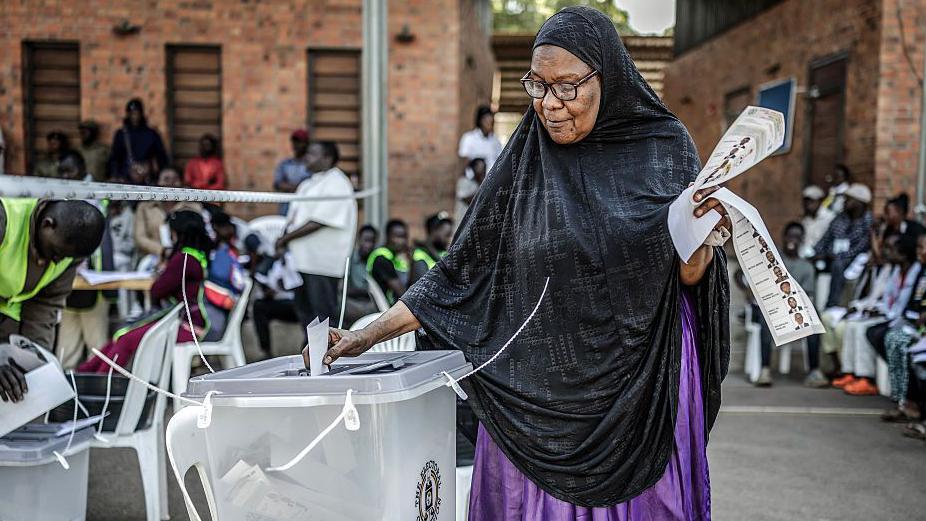
Logistical problems delayed voting in many parts of Uganda amid an internet shutdown.
The BBC observed growing frustration among voters queuing at some polling stations in the capital, Kampala, where voting had yet to start in the general election.
The delays have been blamed on failures of biometric identification kits, which some have linked to the network outage, as well as a lack of equipment in some places.
The electoral agency has apologised for the “technical glitches” and said officials were working to resolve them.
In the presidential race, Yoweri Museveni, 81, in power since 1986, is seeking a seventh successive victory as he faces a challenge from Bobi Wine, a charismatic pop star, aged 43.
Where voting has been taking place, there are reports that the biometric machines used to verify voters’ identities are still malfunctioning in some areas.
“Some biometric machines are not working. I don’t know if it’s the internet,” a ruling party official told AFP news agency.
Delays have also been caused by polling materials and equipment failing to arrive at some stations on time.
Casting his vote in his native Rwakitura Village in the western Mbarara region, Museveni said he had also experienced difficulties.
“I put my thumbprint on the machine but it did not accept it. However, my face was accepted instantly by the machine. The machine works,” he said.
Asked if he would accept the election outcome, the president said: “This is one of the manipulations – we have to find out why, what was the problem?”
“We are now verifying whether this was deliberate,” he added.
Election chief Simon Byabakama ordered the use of the national voters’ register where biometric machines failed to function.
“It is the primary duty of the Electoral Commission to ensure that no citizen is disenfranchised due to machine failure,” he said.
The problems appear to be affecting both areas seen as pro-government as well as those seen as opposition strongholds.
The country’s law allows polling hours to be extended if challenges disrupt the voting process.
“Polling stations will remain open until all registered voters in the queue by 4:00 pm (13:00 GMT) have cast their votes,” said Byabakama.
The presidential poll is essentially a two-horse race between Museveni and Wine, but given the president has won the six previous elections, analysts say he is likely to further extend his time in power.
Wine has promised to tackle corruption and impose sweeping reforms, while Museveni argues he is the sole guarantor of stability and progress in the country.
The result of the presidential vote will be announced by 16:00 local time (13:00 GMT) on Saturday, the electoral commission has said. The campaign period was marred by the disruption of opposition activities – security forces have been accused of assaulting and detaining Wine’s supporters.
Police spokesperson Kituuma Rusoke dismissed these complaints, accusing opposition supporters, particularly those belonging to Wine’s National Unity Platform (NUP) party, of being disruptive.
Internet access was suspended ahead of voting day, with Uganda’s Communications Commission saying the blackout was necessary to prevent misinformation, fraud and the incitement of violence – a move condemned by the UN human rights office as “deeply worrying”.
The NUP has rejected this explanation, accusing the regulator of trying to stop the opposition from mobilising and sharing evidence of election fraud.
The former leader of a guerrilla army, Museveni has benefitted from two constitutional amendments – removing age and term limits – that have allowed him to keep running for office.
Wine, real name Robert Kyagulanyi, lost to the president in the 2021 elections. According to the electoral commission, he gained 35% of the vote compared to Museveni’s 59%, although Wine dismissed the results, alleging fraud.
Alongside Museveni and Wine, six other presidential candidates are on this year’s ballot papers.
Voters will also chose a new parliament, with 353 seats up for grabs.
For many of those voting on Thursday, the economy is the key issue.
The majority of the population is under 30 and although the average income is steadily rising, there are not enough jobs for all the young people looking for work.
There are also concerns about poor infrastructure and disparities in access to quality education and healthcare.
During the campaign period, opposition supporters have faced escalating harassment, including arrest on politically motivated charges, according to both the United Nations and Amnesty International.
Wine’s rallies, unlike those of Museveni, have been disrupted by security forces.
Amnesty has described the use of tear gas, pepper spray, beatings and other violent acts as “a brutal campaign of repression” ahead of the vote.
In addition, the head of Uganda’s electoral body told the BBC he has received threats warning him against declaring certain results.
The 2021 elections were also characterised by violence – dozens of people were killed in protests and the security forces were responsible for at least some of these deaths, a BBC investigation found.
Since Saturday, security has been heightened in Kampala, Uganda’s capital city.
Officers have been marching in formation and conducting patrols, while armoured vehicles have been stationed at various locations.
Some Kampala residents have travelled to rural areas, saying they believe it is safer there during the election period.
“Because Ugandan elections are often violent, I decided to re-register my polling centre in my home village,” one man told the BBC. He wished to remain anonymous.
“I’m glad I made that decision, because as you can see now, there is a heavy and intimidating security presence in the city. So while I will still vote in my village, I am also staying away from this security scare.”
By BBC News

Email your news TIPS to Editor@Kahawatungu.com — this is our only official communication channel
