


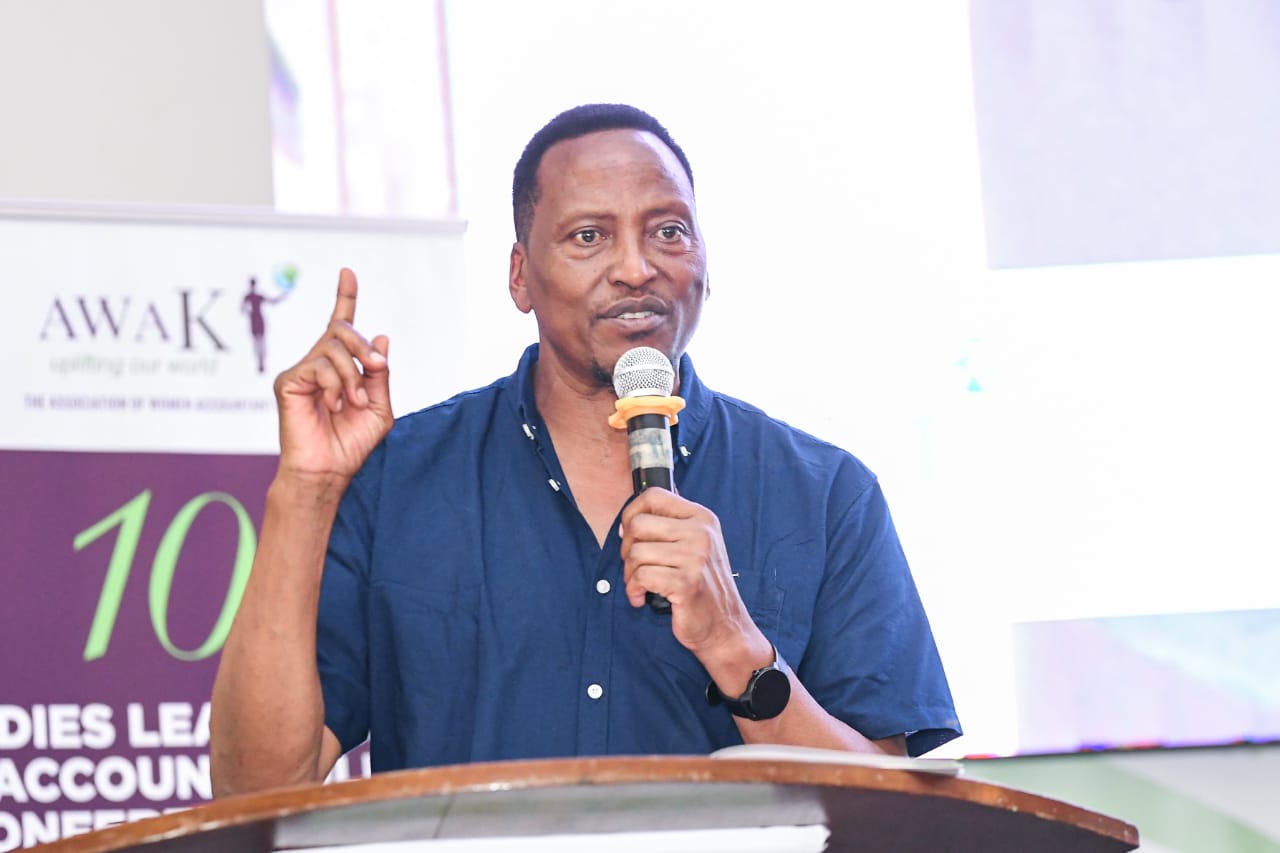
Kisii County’s political landscape is undergoing a significant shift, setting the stage for a high-stakes gubernatorial contest that could redefine leadership in the region.
The decision by Richard Onyonka to enter the race is more than a routine candidacy—it is a calculated political move that signals an intensifying battle for control of the county.
Speaking exclusively to Kahawa Tungu on Wednesday, Onyonka framed his bid as a response to public demand rather than personal ambition.
“Leadership is not about comfort—it is about responsibility,” he said. “When the people call, you don’t negotiate—you answer.”
However, beneath the measured tone lies a more pointed political reality.
For months, Onyonka has been among the most vocal critics of incumbent Governor Simba Arati. His entry into the race effectively transforms that criticism into a direct challenge for power.
“I have not been critical for the sake of noise,” Onyonka asserted. “I have been critical because Kisii deserves better—better planning, better services, better leadership.”
A seasoned figure in Kenyan politics, Onyonka previously served as Member of Parliament for Kitutu Chache South before his election to the Senate. Over the years, he has built a reputation as an outspoken legislator, often taking firm positions on governance, accountability, and economic empowerment.
His longevity in public service has earned him both grassroots networks and national visibility—assets that could prove decisive in a tightly contested race.
His message also taps into a growing sentiment among sections of the electorate who feel the county has underperformed—an argument likely to feature prominently as campaigns gain momentum.
Heavyweight challengers enter the fray
Onyonka will not have a clear path to the governor’s office.
The race is already attracting formidable contenders, including former Education Cabinet Secretary Ezekiel Machogu and former Kisii Teaching and Referral Hospital chief executive Enock Ondari.
Machogu brings extensive political and administrative experience. Before joining the Cabinet, he served as Member of Parliament for Nyaribari Masaba, where he earned recognition for constituency development and legislative engagement.
His tenure as Education Cabinet Secretary placed him at the center of key national reforms, giving him a technocratic edge and exposure to high-level government operations.
“Leadership must be felt in the classroom, in the hospital, and in the marketplace,” Machogu has previously said.
Ondari, in contrast, represents a technocratic approach rooted in healthcare management. During his tenure at Kisii Teaching and Referral Hospital, he oversaw one of the region’s most critical medical institutions.
“Systems don’t fail by accident—they fail when leadership looks away,” he has said, positioning himself as a results-driven administrator rather than a traditional politician.
He argues that the county needs a manager, not a career politician.
Arati on the defensive
Facing mounting pressure, Governor Simba Arati has begun consolidating his base through renewed grassroots engagement.
In recent days, he has hosted meetings with pastors and boda boda operators at his Motonto home in Bobasi, while also engaging public service vehicle operators in Kisii town—moves that signal a return to retail politics.
Yet his re-election bid faces notable headwinds.
As deputy party leader of the Orange Democratic Movement (ODM), Arati must navigate shifting political loyalties in a region where the party’s influence appears to be waning.
Complicating matters further is the evolving national political dynamic involving Raila Odinga and President William Ruto, with critics suggesting Arati’s perceived alignment with Ruto’s second-term ambitions could alienate sections of the electorate.
Jubilee factor and 2027 calculations
The emerging contest also underscores the growing strategic importance of the Jubilee Party in Kisii politics.
Onyonka, Machogu, and Ondari are all expected to vie for the party ticket—widely seen as the likely political vehicle for Fred Matiang’i in a possible 2027 presidential bid.
Securing Jubilee’s backing could elevate any of the aspirants into a regional kingmaker while linking county politics to broader national ambitions.
Development versus discontent
Arati, however, is banking on his development record to steady his campaign.
His administration has highlighted investments in road infrastructure and plans to upgrade Gusii Stadium, alongside efforts to operationalize the Mother and Child Hospital initiated under former Governor James Ongwae.
Plans are also underway to deploy road maintenance equipment across sub-counties to repair infrastructure damaged by ongoing heavy rains.
A defining contest
Each contender now presents a distinct proposition: Onyonka with political experience and a governance-focused critique; Machogu with national administrative expertise; Ondari with technocratic efficiency; and Arati with an incumbent’s development record.
As political activity intensifies, the battle for Kisii is shaping up to be more than a contest of personalities—it is a referendum on leadership, service delivery, party alignment, and the county’s place in Kenya’s evolving national politics.
Onyonka remains resolute: “Kisii must decide whether to settle or to rise.”

Email your news TIPS to Editor@Kahawatungu.com — this is our only official communication channel
