


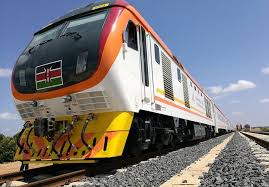
The Government of Kenya, in partnership with the World Bank, is set to finance the implementation of the Kenya Urban Mobility Improvement Project (KUMIP), aimed at easing congestion and improving commuter rail services within the Nairobi Metropolitan Area.
In a notice issued on June 2, 2026, Kenya Railways said the project seeks to enhance urban mobility and strengthen land-use planning along key commuter corridors in the capital region.
According to the agency, the initiative will support policy development, institutional capacity building, and major upgrades to commuter rail infrastructure, including station access roads and transit-oriented development (TOD) around railway hubs.
“The project will support urban policy formulation, institutional strengthening, and improvement of commuter rail services, station access roads and transit-oriented development around railway stations,” the notice stated.
The project includes several major components designed to modernise Nairobi’s commuter rail system. These include the development of the Nairobi Central Station–Thika commuter line, electrification of the commuter rail network, and acquisition of new rolling stock, including electric and diesel-electric multiple units.
Other planned interventions involve the development of transit-oriented developments along the Nairobi Central Station–Thika corridor, construction of maintenance workshops for new train units, and establishment of a manufacturing facility for rail spare parts and permanent way components.
Additional works will include construction of priority access roads to commuter stations, development of multi-modal transport transfer facilities, and the Likoni Road over-railway bridge and its associated approaches.
Kenya Railways also plans to develop a concrete sleeper manufacturing plant and acquire maintenance rolling stock such as locomotives, ballast hopper wagons, low-sided wagons, and low loaders.
Private sector engagement and procurement process
Kenya Railways Corporation, working with other implementing agencies and county governments within the Nairobi Metropolitan Area, will oversee implementation of the project.
The procurement process will follow the World Bank Procurement Regulations for Investment Projects Financing (IPF) borrowers, ensuring competitive and transparent contracting procedures.
As part of early stakeholder engagement, Kenya Railways has invited private sector players and industry stakeholders to a consultative meeting scheduled for June 24, 2026, at the Railway Training Institute in South B, Nairobi, from 9:00am to 1:00pm (EAT).
According to the notice, the meeting will serve as a platform to share project details and gather feedback from potential suppliers and contractors on procurement packages, implementation arrangements, and market conditions.
The session will also seek input on pricing trends, supply chain risks, available technologies, and alternative goods and services, as well as broader market dynamics that could influence project delivery.
“The consultation will also serve as a market sounding exercise to obtain industry feedback for the preparation of Project Procurement Strategy,” the notice read.
Stakeholders have been urged to participate in the engagement, which Kenya Railways says will be strictly non-binding and intended solely for consultation purposes. The agency emphasised that all resulting procurement will be conducted through competitive bidding.
Interested participants are required to confirm attendance by emailing procure@krc.co.ke by June 21, 2026 at 5:00pm EAT, with provisions made for online participation.
Email your news TIPS to Editor@Kahawatungu.com — this is our only official communication channel
