


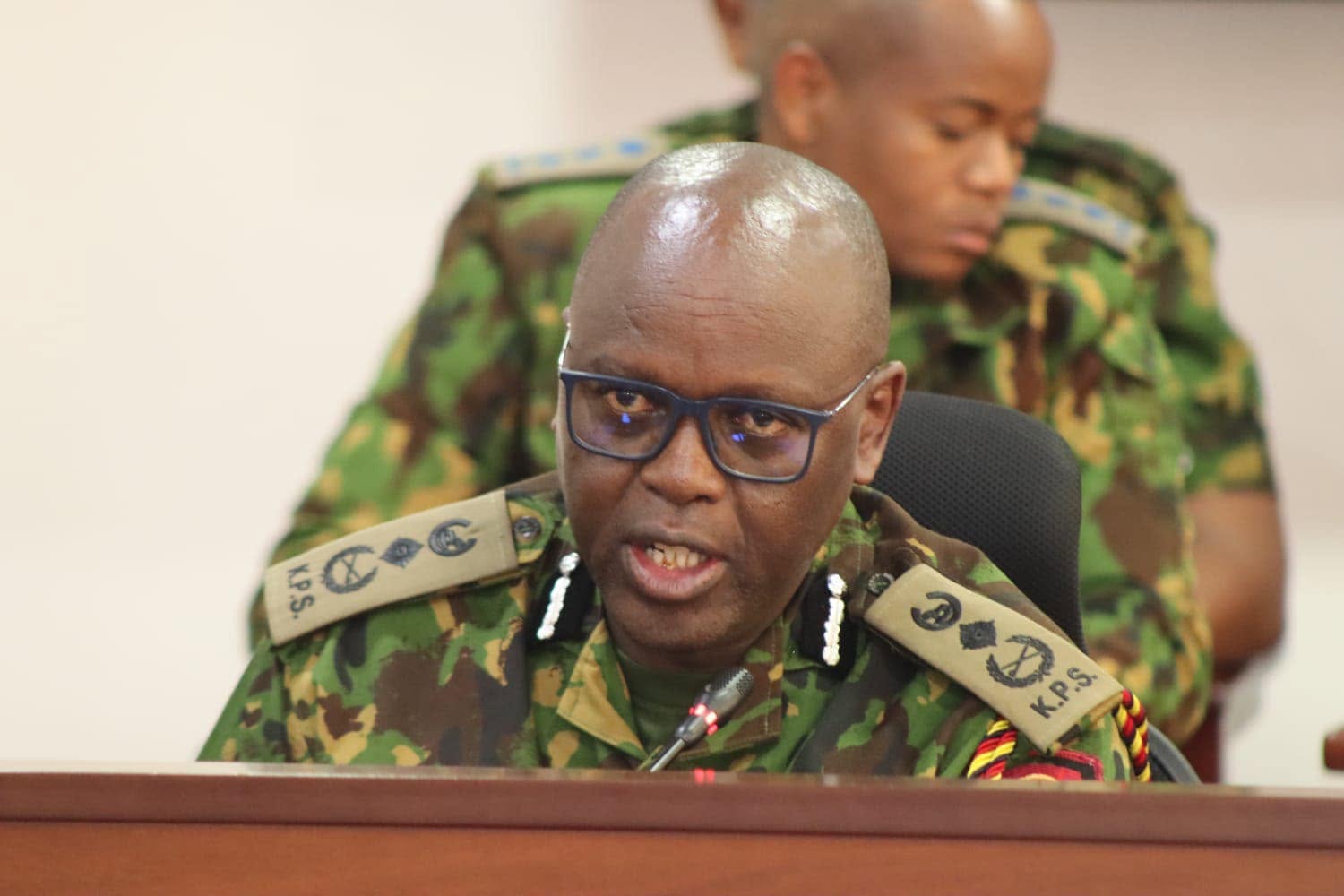
The Rift Valley region has recorded the highest volume of illicit alcoholic brews seized in the country between January 2024 and May 2026, with close to 500,000 litres confiscated, according to data presented to Parliament.
Deputy Inspector General of Police Eliud Lagat told the Public Petitions Committee that security agencies recovered 254,272 litres of illicit alcohol in 2024, 189,293 litres in 2025, and a further 49,508 litres between January and May 2026.
Appearing before the Committee on behalf of the Inspector General of Police, Lagat also disclosed that thousands of suspects have been arrested over the same period, though arrest numbers have declined significantly in recent years.
According to the data, 16,040 suspects were arrested in 2024, compared to 2,104 arrests in 2025 and 532 arrests between January and May 2026.
Despite leading in seizures, Lagat noted that the declining figures indicate progress in the national crackdown on illicit alcohol.
“Rift Valley is very expansive and close to the borders where this smuggling happens, but we are happy there is a decline in numbers over the last two years,” he said.
However, he cautioned that the menace remains widespread across the country, with Western and Nyanza regions recording rising cases of illicit alcohol production and distribution. Authorities seized 134,463 litres in Western Kenya and 160,389 litres in the Nyanza region during the review period.
A case study on Uasin Gishu County showed mixed enforcement outcomes. The county recorded 56 arrests in 2024, which rose sharply to 505 in 2025 before declining to 111 between January and May 2026.
Similarly, seizures stood at 4,417 litres in 2024, increased to 37,524 litres in 2025, and dropped to 4,442 litres so far this year. Of the quantities seized, 1,407 litres were destroyed in 2024, 35,667 litres in 2025, and 820 litres in 2026 to date.
To strengthen the fight against illicit alcohol, the Deputy Inspector General proposed the establishment of a coordinated, well-funded multi-agency framework.
“The National Police Service firmly holds that no single agency can effectively address the multi-dimensional challenge of illicit alcohol. A coordinated whole-of-government approach is imperative,” he said.
He proposed collaboration between the National Police Service, Kenya Revenue Authority, Kenya Bureau of Standards, NACADA, Anti-Counterfeit Authority, county governments, Ministry of Health, Office of the Director of Public Prosecutions, Ethics and Anti-Corruption Commission, and National Government Administration Officers.
Members of the Committee raised concerns over alleged corruption among some law enforcement officers, saying bribery continues to undermine the fight against illicit alcohol.
In response, Lagat acknowledged the challenge and pledged internal reforms.
“Corruption should not be entertained. I admit there is a small percentage of officers who engage in corruption. As a Service, we have no room for people to engage in corruption,” he said.
He added that the service is working with the Ethics and Anti-Corruption Commission to develop mechanisms for detecting and prosecuting officers implicated in protection rackets.
Lawmakers also raised concern over the growing popularity of “Park and Chill” events among young people, citing links to alcohol and drug abuse.
Committee Vice-Chairperson Janet Sitienei called for closer scrutiny of such events, a position supported by other members.
In response, Lagat said the matter would be investigated in collaboration with relevant security agencies and stakeholders.
Email your news TIPS to Editor@Kahawatungu.com — this is our only official communication channel
