


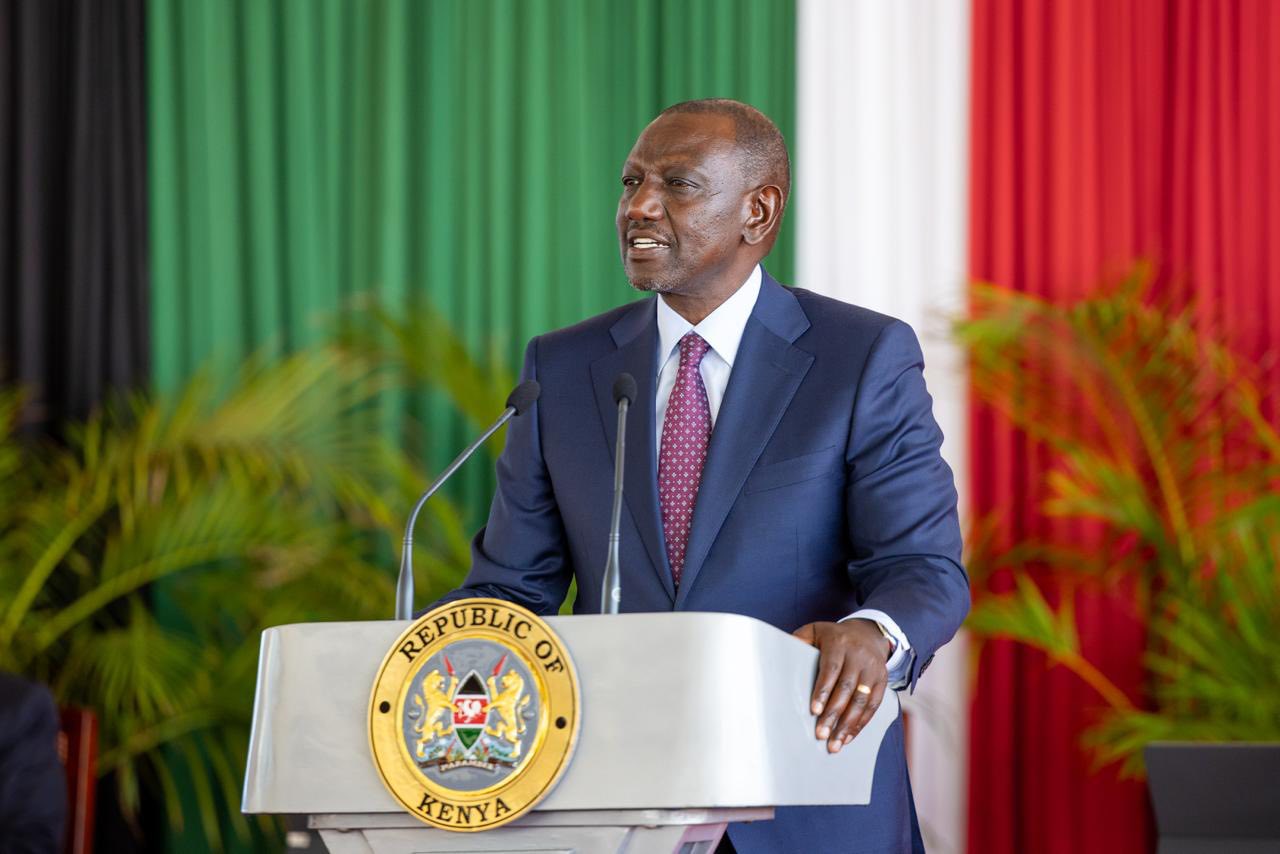
Kenya has secured a Sh22 billion financing package from Japan to support local vehicle assembly, reduce energy losses and strengthen government reforms as the country seeks to accelerate industrialisation and diversify its sources of funding.
The financing agreement between the Government of Kenya and Nippon Export and Investment Insurance (NEXI) was signed at State House, Nairobi, with the largest portion of the funds set to support the automotive sector.
Under the agreement, Sh13.1 billion will be directed towards the implementation of Kenya’s National Automotive Policy, which aims to expand local vehicle assembly, promote value addition and reduce dependence on imported fully built vehicles.
President William Ruto said the initiative would create jobs, enhance manufacturing capacity and ensure more economic value is retained within the country.
“For too long, Africa has imported what it could build and exported the jobs that come with it,” President Ruto said during the signing ceremony.
The agreement was signed on behalf of Kenya by Treasury Cabinet Secretary John Mbadi and NEXI Chairman and Chief Executive Officer Atsuo Kuroda.
President Ruto said strengthening local vehicle assembly would help develop technical skills, expand industrial capacity and improve Kenya’s trade balance by reducing reliance on imported vehicles.
He linked the financing deal to engagements held during his 2024 visit to Japan and Kenya’s participation in the Tokyo International Conference on African Development (TICAD).
Kuroda said the financing arrangement originated from a memorandum of understanding signed between NEXI and the National Treasury during the President’s Japan visit, before culminating in the agreement reached in March 2026.
He said the investment would support industrialisation, job creation, adoption of Japanese technology and Kenya’s efforts towards decarbonisation.
Another Sh5 billion from the financing package will support the Reduction of Energy Losses Programme, which seeks to reduce electricity losses within the national grid and lower energy costs.
President Ruto said access to affordable and reliable electricity remains critical to industrial growth and economic transformation.
A further Sh4 billion will support Kenya’s wider reform agenda, including improving public service delivery and protecting social investments.
The financing arrangement also marks Kenya’s entry into Japan’s capital markets through a Samurai bond structure, which the government says will help expand funding sources beyond traditional development partners.
Treasury Cabinet Secretary John Mbadi said the government is increasingly pursuing concessional financing with lower interest rates to reduce borrowing costs and ease pressure on public finances.
Trade Cabinet Secretary Lee Kinyanjui said the facility would help address longstanding challenges facing Kenya’s ambition to establish a competitive local automotive manufacturing industry.
Email your news TIPS to Editor@Kahawatungu.com — this is our only official communication channel
