


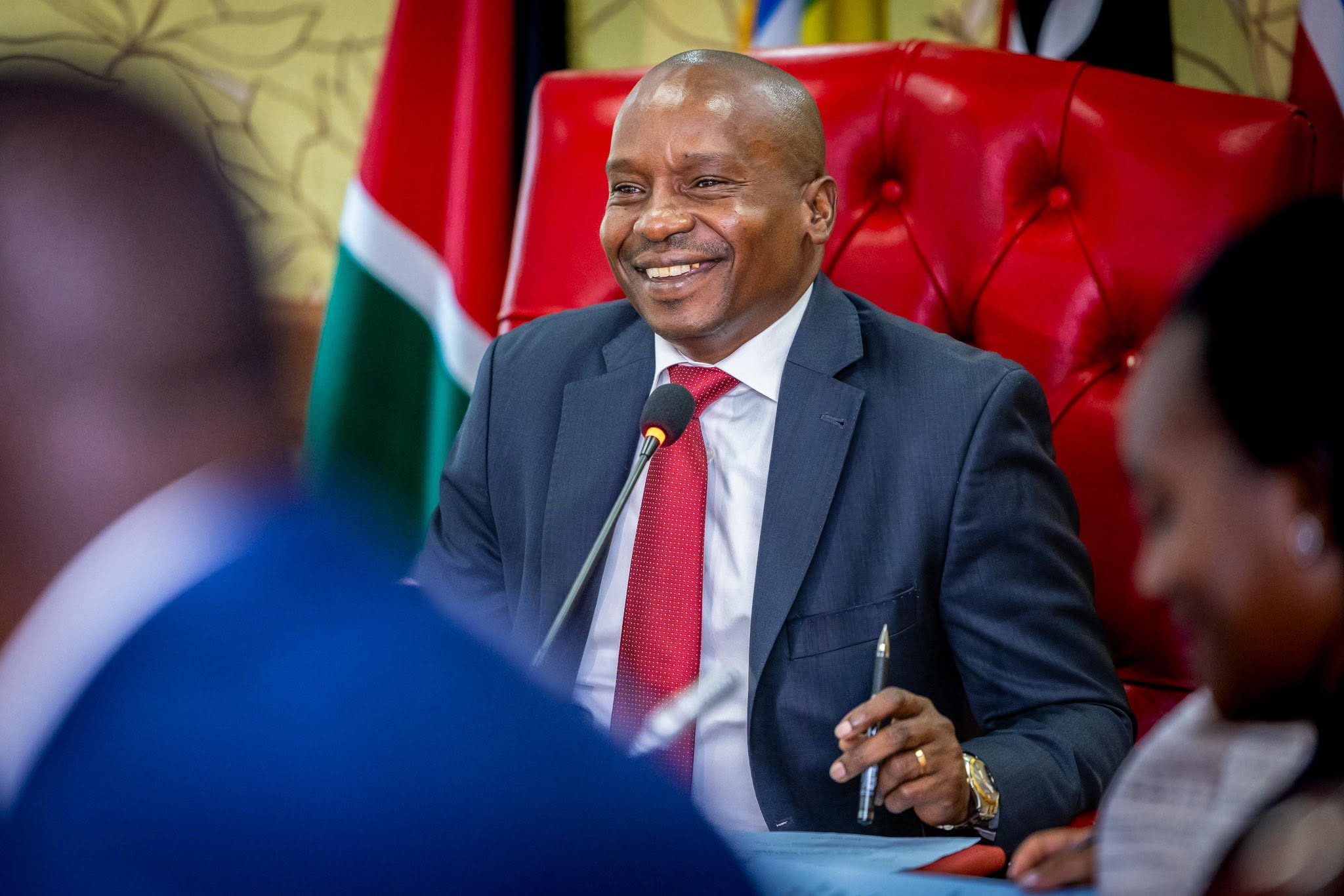
Deputy President Kithure Kindiki is the most preferred running mate for President William Ruto under the broad-based government arrangement ahead of the 2027 General Election, according to a new opinion poll released by Infotrak Research and Consulting.
The Voice of the People Poll, conducted between June 22 and June 26, 2026, across all 47 counties, found that 34 percent of respondents would prefer Kindiki to remain Ruto’s deputy in the next election.
Homa Bay Governor Gladys Wanga ranked second with 11 percent support.
According to the survey, Kindiki enjoys equal support among both male and female respondents, each standing at 34 percent, and leads across all age groups.
Regionally, the Deputy President recorded his strongest support in North Eastern Kenya, where he scored 44 percent, followed by the Rift Valley at 43 percent and the Eastern region at 39 percent.
However, his support was comparatively lower in the Central region, where he attracted 22 percent, and the Coast region, where he scored 23 percent.
The poll also found high levels of uncertainty among respondents in some regions, particularly in Nairobi, where 48 percent were undecided on their preferred running mate, and the Central region, where 46 percent had not settled on a choice.
Wanga’s strongest support was recorded in Nyanza, where she garnered 21 percent, while she also enjoyed notable popularity among respondents aged 18 to 26 years, attracting 19 percent support.
At the Coast, respondents showed a clear preference for Mining, Blue Economy and Maritime Affairs Cabinet Secretary Hassan Joho as a potential running mate.
The survey further showed that Wanga leads in Nyanza, while Prime Cabinet Secretary Musalia Mudavadi emerged as the preferred choice in the Western region.
Ruto still leads presidential race
The same survey found that President Ruto remains the country’s most popular presidential hopeful.
According to the poll, 32 percent of respondents said they would vote for Ruto if a presidential election were held today.
Former Vice President Kalonzo Musyoka came second with 13 percent support.
Nairobi Senator Edwin Sifuna and former Interior Cabinet Secretary Fred Matiang’i tied for third place with 12 percent support each.
The poll found that 18 percent of respondents remain undecided on their preferred presidential candidate.
Former Deputy President Rigathi Gachagua was backed by 4 percent of respondents, while Embakasi East MP Babu Owino and former Chief Justice David Maraga each received 2 percent support.
Former Justice Minister Martha Karua garnered 1 percent, while Trans Nzoia Governor George Natembeya, DAP-K leader Eugene Wamalwa, Kiharu MP Ndindi Nyoro, Busia Senator Okiya Omtatah, Ekuru Aukot, Roots Party leader George Wajackoyah, and businessman Jimmy Wanjigi collectively accounted for the remaining one percent.
Regional and demographic trends
The survey indicates that Ruto enjoys his strongest regional support in North Eastern Kenya, where he scored 59 percent, followed by the Rift Valley at 46 percent and Nyanza at 40 percent.
In the Western region, Ruto leads with 35 percent support, ahead of Sifuna, who garnered 26 percent.
The Central region remains largely undecided, with 26 percent of respondents yet to settle on their preferred presidential candidate.
Within the region, 13 percent supported Kalonzo Musyoka, 12 percent backed President Ruto, while 11 percent preferred Sifuna.
Kalonzo recorded his strongest support in the Eastern region, where he remains the leading presidential choice.
Infotrak further found that Ruto leads among both male and female voters and across all age groups, recording his strongest support among respondents aged 46 to 55 years.
Sifuna enjoys his highest popularity among young voters aged 18 to 26 years, where he attracted 20 percent support, while Matiang’i recorded his strongest performance among respondents aged 36 to 45 years, with 14 percent support.

Email your news TIPS to Editor@Kahawatungu.com — this is our only official communication channel
