


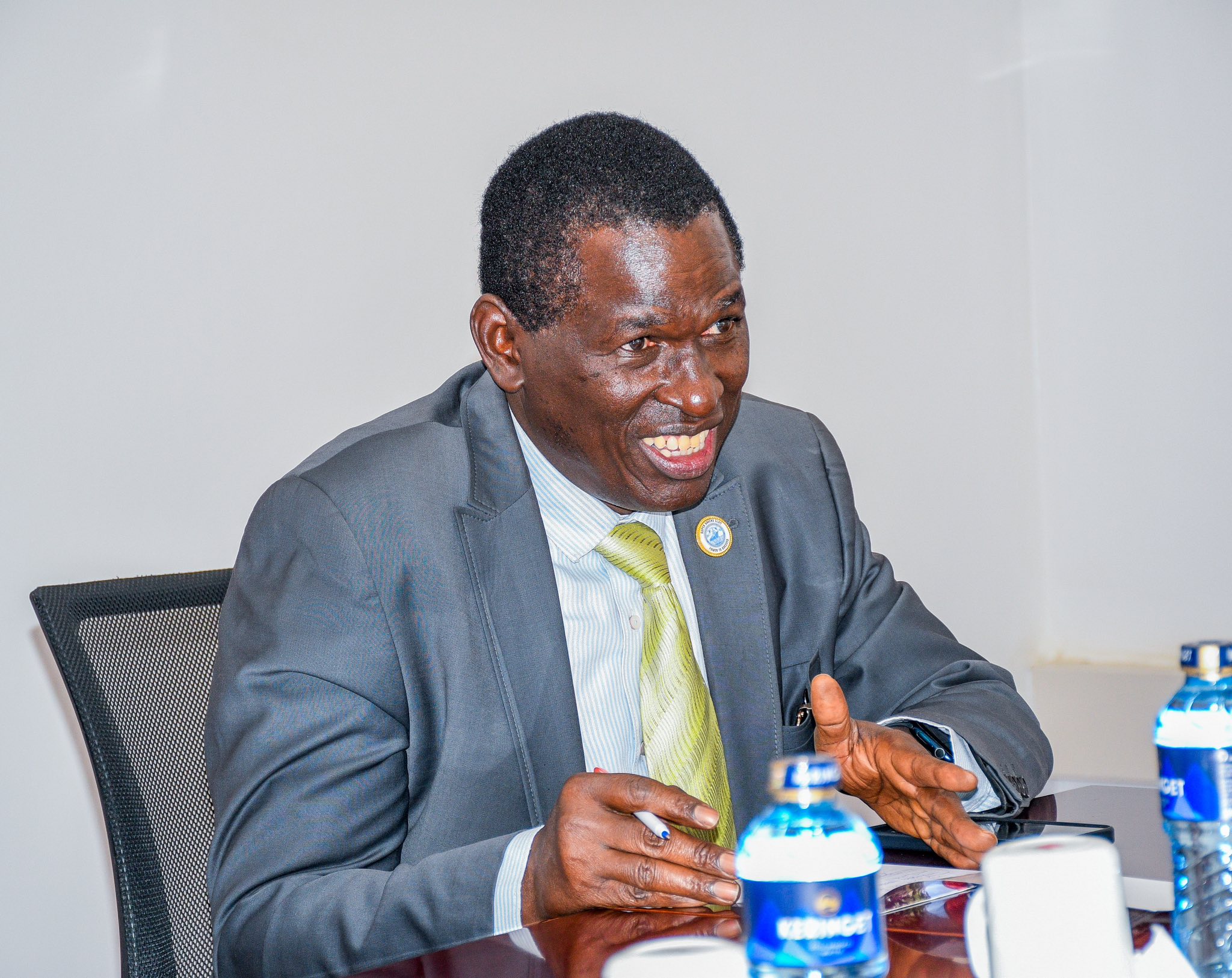
The Senate Standing Committee on Trade, Industrialization and Tourism has intensified its oversight of the cooperative sector after questioning the Commissioner for Cooperative Development, David Obonyo, over governance failures, regulatory oversight and financial accountability at the Kenya Union of Savings and Credit Cooperatives (KUSCCO).
During the committee session, senators sought answers on how significant financial irregularities at KUSCCO went undetected despite the Commissioner’s representation on the union’s board as an ex officio member.
Committee member Jackson Mandago questioned the effectiveness of the oversight role played by the Commissioner’s representative on the board.
“KUSCCO is the apex of the cooperative movement and its Board should be the best of the best. If the Commissioner’s representative was on the Board to strengthen governance and ensure regulatory compliance, where was that oversight when these governance failures occurred?” Mandago asked.
Responding to the concerns, Obonyo said he appointed Anne Mutinda as his representative after assuming office in September 2021.
He explained that KUSCCO appeared to be operating in compliance with legal requirements by holding annual general meetings, conducting elections and presenting audited financial statements. However, complaints from members who were unable to access their investments prompted his office to launch an inspection.
“The financial statements looked healthy, but I realized something was wrong. That prompted me to deploy an inspection team, which uncovered the irregularities,” Obonyo said.
He added that preliminary findings pointed to possible collusion among senior officials, including the Chief Executive Officer, Internal Auditor and Finance Manager.
The Commissioner told the committee that a 2023 inspection established that KUSCCO’s loan book had been overstated by more than Sh7.6 billion, despite the union reporting deposits exceeding Sh18.9 billion and a loan portfolio of about Sh13.9 billion.
He said the findings prompted forensic investigations by Grant Thornton LLP and PricewaterhouseCoopers LLP, which uncovered extensive governance, accounting and financial management failures.
Busia Senator Okiya Omtatah questioned the effectiveness of the Commissioner’s oversight, arguing that regulators should undertake independent verification instead of relying solely on audited financial statements.
“As a regulator, you don’t just receive audited accounts; you must go out of your way to undertake proper oversight,” Omtatah said.
Obonyo acknowledged the concern, explaining that while the Directorate of Audit reviews financial statements submitted by licensed audit firms to ensure compliance, the KUSCCO case involved deliberate manipulation of financial records that could only be detected through verification of primary source documents.
“The financial statements balanced, but they did not present the true picture. We have since strengthened our oversight beyond routine compliance reviews,” he said.
Committee Vice Chairperson Esther Okenyuri also sought clarification on whether the Directorate of Audit had complied with the requirements of the Accountants Act during its verification of KUSCCO’s audited accounts.
She questioned whether auditors had requested and examined the necessary source documents as required under the law.
In response, Obonyo explained that the Institute of Certified Public Accountants of Kenya (ICPAK) is the primary regulator of audit firms, while the Commissioner’s office vets and approves audit firms in good standing that wish to audit cooperative societies.
The committee also examined the appointment of KUSCCO’s statutory auditors and was informed that auditors are appointed during the Annual General Meeting from a list approved by the Commissioner in consultation with ICPAK.
According to the Commissioner, Omenye & Associates CPA(K) served as KUSCCO’s statutory auditors for the 2020, 2021 and 2022 financial years.
Senators further requested a list of other SACCOs audited by the same firm to determine whether similar concerns had emerged elsewhere in the cooperative sector.
Obonyo named Poly Sacco Society Ltd, Alarms Sacco Society Ltd, Belle Vue Sacco Society Ltd and Siginon Sacco Society Ltd, adding that available records indicated compliance during the respective audit periods.
The committee also reviewed the Commissioner’s statutory responsibilities in the liquidation of cooperative societies, service delivery timelines and broader challenges affecting regulation of the sector.
Among the issues raised were overlapping functions between the national and county governments, inadequate funding for inspections, shortage of technical personnel and weak ICT infrastructure.
Obonyo informed senators that the review of audited financial statements takes an average of eight days, while the registration of a Savings and Credit Cooperative Society takes about two weeks, provided all the required documents have been submitted.
The committee reaffirmed its commitment to strengthening the legislative and regulatory framework governing cooperative societies, enhancing accountability within SACCOs and improving oversight mechanisms to safeguard members’ savings, restore public confidence in the cooperative movement and promote transparency across the sector.
Email your news TIPS to Editor@Kahawatungu.com — this is our only official communication channel
