


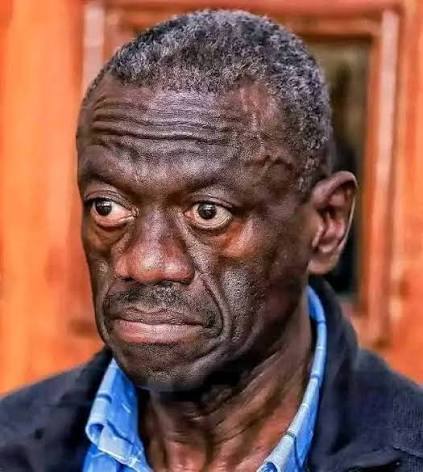
Kenyan activist Boniface Mwangi has called for the unconditional release of detained Ugandan opposition leader Kizza Besigye, warning that the veteran politician could die in prison unless he is allowed to access specialised medical treatment.
Mwangi claimed Besigye was critically ill and being held in poor conditions at Luzira Maximum Security Prison, alleging that his health had deteriorated because of torture and prolonged detention.
“If he is not released immediately to receive specialised treatment, he will die in prison,” Mwangi said in a statement released to journalists on Sunday.
The activist also raised concerns over the detention of Besigye’s former personal assistant, Sam Mugumya, whom he alleged had been tortured and left wheelchair-bound after refusing to betray the opposition leader.
Mwangi claimed Mugumya was being held at an undisclosed location and warned that the Kenyan government would bear responsibility if Besigye died in custody.
“If Besigye dies in prison, Ruto is to blame for abducting him in Nairobi and handing him over to his torturers,” he said.
Mwangi also accused Ugandan President Yoweri Museveni’s government of systematic human rights violations, including alleged abductions, torture and killings of opposition supporters.
Besigye has spent more than a year in detention after disappearing in Nairobi in November 2024, triggering an uproar over allegations of cross-border abduction and the treatment of political opponents in Uganda.
The four-time presidential candidate and longtime critic of Museveni was in Nairobi on November 16, 2024, when he was reportedly abducted alongside fellow opposition figure Haji Obeid Lutale.
The two resurfaced four days later in Kampala, where they were presented before Uganda’s General Court Martial.
According to Amnesty International, they were charged with offences relating to national security and unlawful possession of firearms and ammunition.
Besigye denied the allegations, while his lawyers challenged the jurisdiction of the military court, arguing that he was a civilian and therefore should not have been subjected to a military trial.
He was subsequently remanded at Luzira Maximum Security Prison in Kampala.
The case took a major legal turn in January 2025 when Uganda’s Supreme Court ruled that military courts did not have constitutional authority to try civilians.
The court directed that ongoing cases involving civilians be stopped and transferred to ordinary courts.
Human rights organisations subsequently called for Besigye’s immediate release, arguing that his continued detention after the ruling lacked a legal basis.
Instead, his legal troubles escalated.
In February 2025, prosecutors brought a treason case against Besigye, an offence that carries the death penalty in Uganda.
His lawyers and political allies have described the charges as politically motivated, while the Ugandan government has maintained that the case relates to alleged attempts to destabilise the state.
Besigye has repeatedly sought bail, but his applications have been denied.
In July 2026, he reportedly collapsed in court during proceedings in the treason case, prompting the court to postpone the hearing. His supporters and family have since intensified calls for his release on medical grounds.
On Sunday, Mwangi questioned why Museveni’s government had, despite what he described as decades of human rights abuses, escaped significant international sanctions.
“Museveni has been in power for 40 years yet faces no sanctions,” Mwangi said, linking Uganda’s continued international support to its oil concessions and military role in regional operations.
Mwangi also turned his criticism to General Muhoozi Kainerugaba, Uganda’s Chief of Defence Forces, accusing him of intimidating opposition supporters and making death threats online.
He further alleged that hundreds of opposition supporters were being held in secret detention facilities and tortured, and accused Muhoozi of publicly sharing images linked to the alleged abuse.
The allegations come amid continued scrutiny of Uganda’s treatment of political opponents and growing calls from rights groups for greater accountability over the detention and prosecution of opposition figures.
Email your news TIPS to Editor@Kahawatungu.com — this is our only official communication channel
