


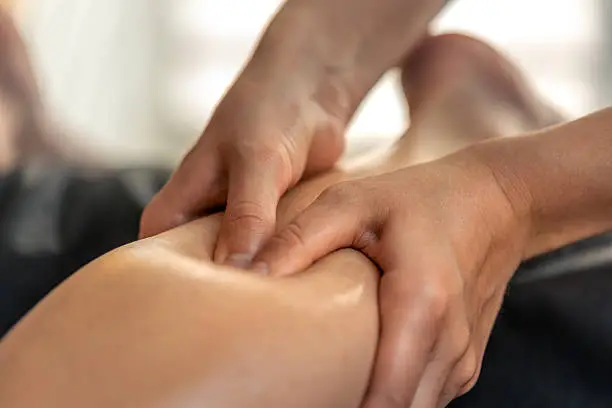
Learning how to tell if your legs need lymphatic drainage starts with understanding why your legs are swollen, heavy or uncomfortable. Lymphatic drainage is a specialised gentle massage technique that may be used to help manage lymphoedema and certain types of fluid build-up. However, not every swollen leg needs lymphatic drainage because swelling can have many different causes. Knowing the signs can help you decide when it is appropriate to seek professional assessment.
-
Check for Persistent Leg Swelling
One of the main signs of lymphoedema is swelling in part or all of a leg.
The swelling may initially come and go and can sometimes become more noticeable during the day. If swelling continues or gradually becomes worse, it is important to have the cause assessed.
-
Notice a Heavy or Tight Feeling
A leg affected by lymphatic swelling may feel heavy, tight, full or uncomfortable.
You may notice that the affected leg feels different from the other leg, particularly after standing or sitting for long periods.
-
Check Whether the Skin Leaves a Dent
Some types of swelling can leave a temporary indentation when you gently press the skin.
This is known as pitting. Although it can occur with lymphoedema, it can also happen with other forms of swelling, so it should not be used alone to determine whether you need lymphatic drainage.
-
Notice If Shoes or Clothing Feel Tighter
Changes in the size of your leg, ankle or foot can make shoes, socks or clothing feel tighter than usual.
If this happens repeatedly without an obvious explanation, consider speaking to a healthcare professional about the swelling.
-
Look for Changes in the Skin
Long-term lymphatic swelling can cause changes in the affected skin.
The skin may become firmer, tighter or thicker. Folds can also develop as swelling increases.
-
Consider Your Medical History
Lymphatic problems may be more likely if you have previously had damage to your lymphatic system.
This can occur after certain cancer treatments, lymph-node surgery, injuries or infections. Your medical history can help a healthcare professional determine whether lymphatic swelling may be contributing to your symptoms.
-
Do Not Assume Every Swollen Leg Needs Lymphatic Massage
Leg swelling does not automatically mean that your lymphatic system is the problem.
Swelling can also be associated with prolonged sitting or standing, pregnancy, certain medicines, varicose veins, injuries and conditions affecting the heart, kidneys or other organs.
This is why persistent or unexplained swelling should be assessed before starting lymphatic massage.
-
Get a Professional Assessment
If you suspect that you have lymphoedema, arrange an assessment with a healthcare professional.
The assessment may involve discussing your symptoms and medical history, examining the affected leg and measuring the size of the limb. Additional tests may sometimes be needed to identify the cause of swelling.
-
Understand What Lymphatic Drainage Involves
Manual lymphatic drainage is a specialised form of gentle massage designed to encourage lymph fluid to move through functioning lymphatic pathways.
It is different from deep or vigorous massage. A trained lymphoedema therapist can determine whether it is appropriate and can teach you suitable techniques if needed.
-
Watch for Signs of Infection
Swelling accompanied by redness, warmth, pain or increasing discomfort may indicate a skin infection.
You may also develop a fever or feel unusually hot, cold or shivery. These symptoms require prompt medical attention rather than routine lymphatic drainage.
-
Be Careful With Sudden One-Sided Swelling
Sudden swelling in one leg without an obvious explanation should be medically assessed.
A blood clot is one possible cause of sudden one-sided swelling. Do not attempt to treat unexplained sudden swelling with massage before receiving medical advice.
-
Seek Urgent Help for Serious Symptoms
Leg swelling accompanied by sudden shortness of breath, chest pain, coughing up blood, faintness or severe light-headedness requires urgent medical attention.
These symptoms can be associated with a serious blood clot complication and should not be treated with lymphatic massage at home.
-
Know When Lymphatic Drainage May Be Appropriate
If a healthcare professional identifies lymphoedema, lymphatic drainage may form part of a broader management plan.
Other approaches can include appropriate compression, regular movement and exercise, elevation and careful skin care. Treatment should be tailored to the underlying cause and severity of the swelling.
Also Read: How to Improve RAM in Laptop

Email your news TIPS to Editor@Kahawatungu.com — this is our only official communication channel
