


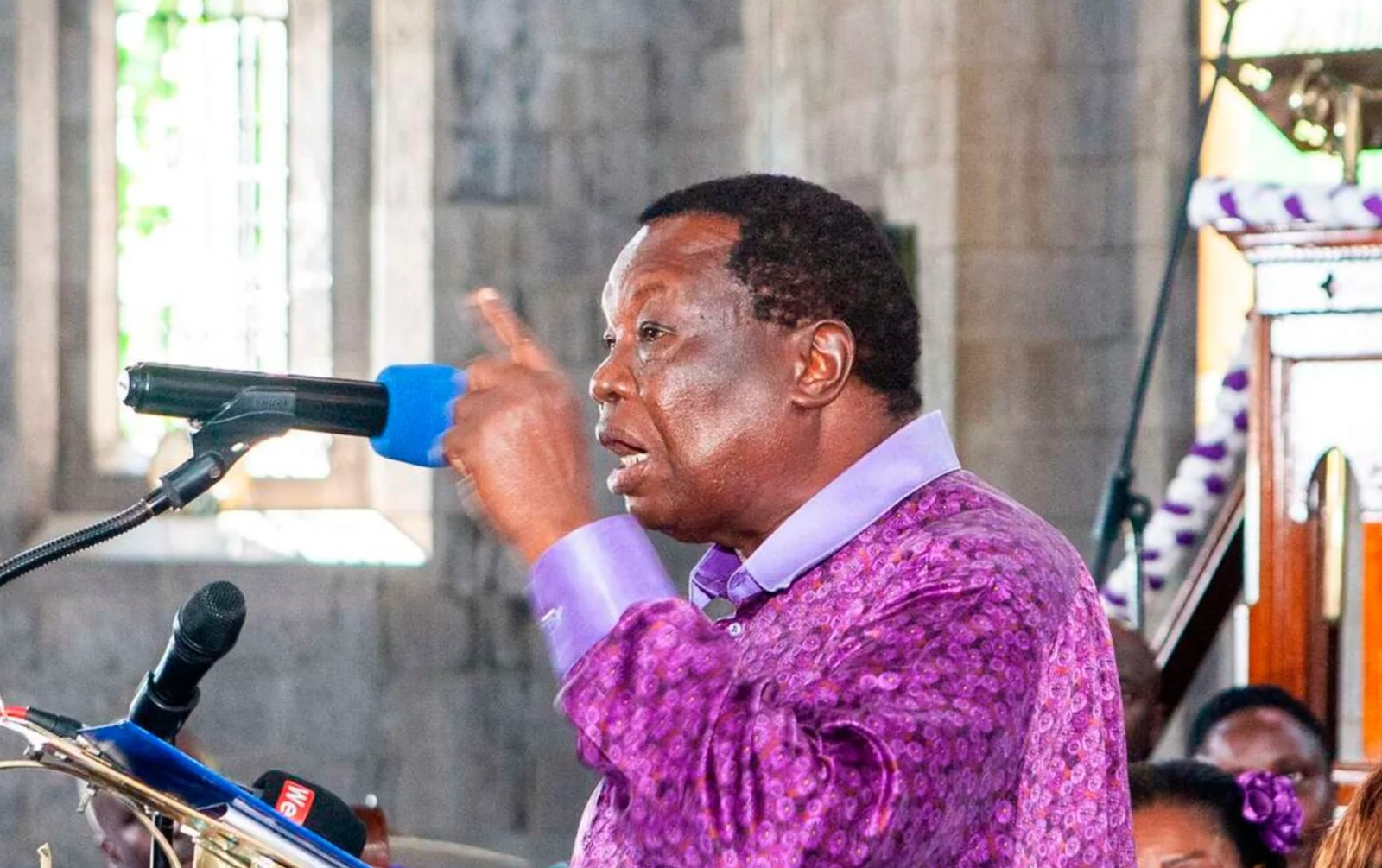
The Central Organization of Trade Unions (COTU) has welcomed the government’s decision to establish a Sh5 trillion National Infrastructure Fund, saying it will help transform Kenya’s economy and improve workers’ welfare.
In a statement issued on Tuesday, COTU Secretary General Francis Atwoli said Kenya has delayed key reforms needed to build a modern, competitive and dignified society. He said the new fund is a bold step in the right direction.
Atwoli criticised those opposing the fund, saying they are blocking the country’s progress.
“As Kenyan workers, we refuse to be held hostage by short-term thinking and reactionary politics meant to undermine the welfare of workers and the economic development of our country,” Atwoli said.
He also thanked President William Ruto for what he described as a bold and timely decision.
On Monday, the Cabinet approved the establishment of the Sh5 trillion National Infrastructure Fund as part of Kenya’s long-term plan to speed up economic growth and move the country closer to first-world status.
In a Cabinet dispatch dated December 15, the government also announced the approval of a Sovereign Wealth Fund to help mobilise local resources and strengthen the country’s financial position.
The National Infrastructure Fund has been approved as a limited liability company and will be used to mobilise and invest money in priority infrastructure projects.
“Approved as a limited liability company, the National Infrastructure Fund will serve as the central engine for aligning the administration’s financial resources with national development priorities,” the Cabinet said.
Unlike traditional taxation, the two funds will rely on creative financing methods, including tapping into domestic savings, selling mature public assets and attracting foreign investors through capital markets.
Under the new framework, all money raised from privatisation will be set aside strictly for infrastructure development.
The Sovereign Wealth Fund will provide a clear structure for managing revenues from minerals and petroleum, dividends from public investments and part of privatisation proceeds. It is meant to promote fiscal discipline, protect national wealth and save for future generations.
The government says the two funds will support key development areas such as food security, transport and logistics, and energy expansion.
To boost food security, the government plans to build 50 mega dams, 200 mini-dams and more than 1,000 micro-dams. This is expected to bring an additional 2.5 million acres under irrigation and improve rural livelihoods.
In the transport sector, the government plans to dual 2,500 kilometres of highways, tarmac about 28,000 kilometres of roads and extend the Standard Gauge Railway to Malaba. Oil pipelines will also be expanded, while the ports of Mombasa and Lamu, as well as major airports, will be upgraded.
In the energy sector, the government aims to add at least 10,000 megawatts of power over the next seven years to support manufacturing, digital growth, e-mobility and new technologies. This will be done by expanding geothermal, hydro, solar, wind and nuclear energy.
The two funds will be professionally and independently managed. The National Infrastructure Fund will be overseen by a competitively appointed board and chief executive officer, while the Sovereign Wealth Fund will operate under a strong policy and governance framework.
Email your news TIPS to Editor@Kahawatungu.com — this is our only official communication channel
