


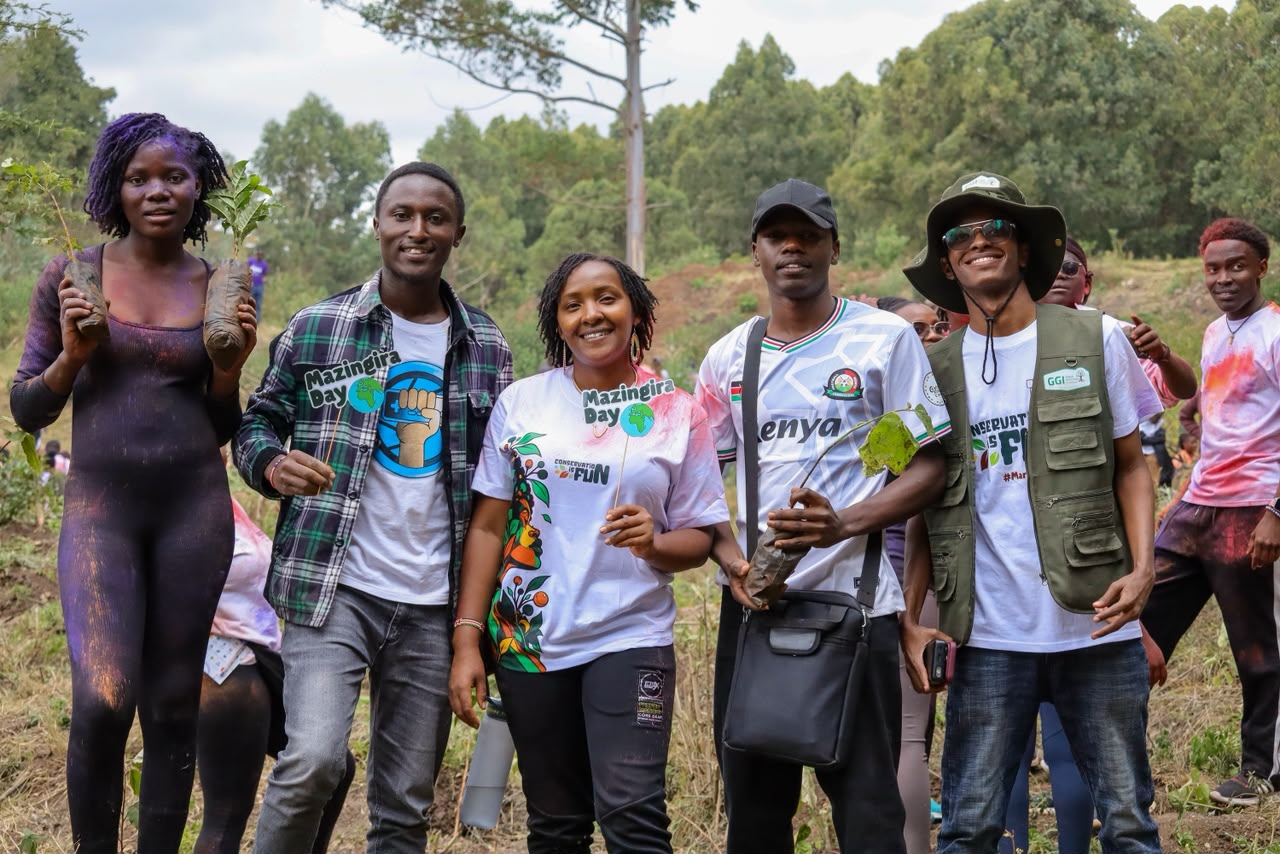
Green Generation Initiative (GGI) planted 2,000 indigenous trees in Oloolua Forest at Turaco Camp as part of efforts to restore degraded landscapes and support Kenya’s ambitious target of growing 15 billion trees by 2032.
The tree-planting exercise, held on Saturday, October 10, brought together young people, students, environmental enthusiasts, conservation advocates and corporate representatives to mark Mazingira Day through environmental restoration and education.
The event was organised under GGI’s Conservation Is Fun initiative, which combines tree planting, environmental learning and recreational activities to encourage Kenyans to take an active role in protecting nature.
Participants engaged in tree planting, guided nature walks, interactive games, art activities, music, dance and performances, creating an opportunity to learn about conservation while enjoying the outdoors.
The initiative supports the government’s efforts to increase national tree cover to 30 per cent and restore degraded ecosystems through sustained tree-growing activities.
Speaking during the event, GGI Founder and Chief Executive Officer Elizabeth Wathuti said the organisation aims to make conservation accessible and enjoyable while building communities committed to environmental protection.
“As an organization, we will continue creating this platform and experience across Kenya as we want all citizens to find joy in caring for nature and feel part of a community that is restoring it,” Wathuti said.
She added that the initiative seeks to bring people together to learn, plant trees and build lasting connections through shared environmental action.
Wathuti, who holds the title of Order of the Grand Warrior (O.G.W.), emphasised that conservation efforts must extend beyond one-day activities, noting that newly planted seedlings require continued care to survive and mature.
“Our responsibility continues after the event, because the trees we plant need care to survive and grow,” she said.
GGI said Conservation Is Fun places particular emphasis on engaging young people by combining environmental restoration with recreational activities, with the aim of inspiring them to continue conservation work in their schools, neighbourhoods and communities.
The organisation also highlighted the importance of selecting appropriate tree species, applying proper planting techniques and ensuring consistent aftercare to improve seedling survival rates.
It noted that the success of tree-planting campaigns should not be measured solely by the number of seedlings planted, but also by the number that survive and contribute to long-term forest restoration.
The Oloolua Forest event concluded with participants sharing reflections on their experiences and lessons learnt, reinforcing the importance of collective responsibility in protecting Kenya’s natural heritage.
GGI urged participants to sustain the spirit of Mazingira Day by growing and caring for trees, protecting ecosystems and encouraging others to take part in conservation activities.
The initiative reflects growing efforts to involve communities in environmental restoration while promoting a culture in which caring for nature becomes a shared and lasting responsibility.

Email your news TIPS to Editor@Kahawatungu.com — this is our only official communication channel
