


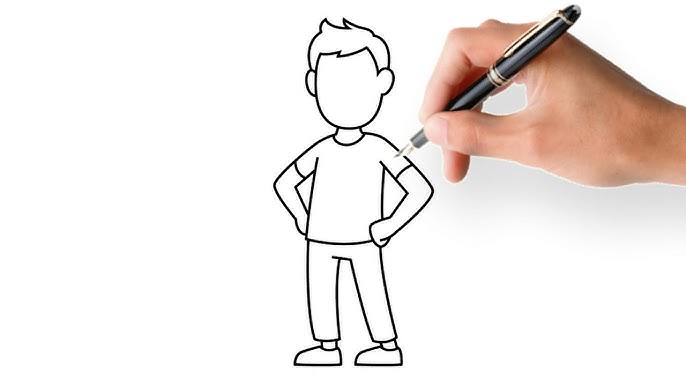
Drawing a person may seem difficult at first, but it becomes much easier when you break the body into simple shapes. You do not need advanced skills or perfect anatomy to create a clear and friendly human figure. By focusing on basic proportions, smooth lines and simple details, anyone can learn how to draw a person easily. This method works well for beginners, kids, school projects and casual sketching. The goal is not perfection but creating a recognizable human form that looks balanced and natural. This guide explains the process in a simple and approachable way.
- Start with Basic Body Guidelines
Begin by laying down simple guide shapes to plan the body.
- Draw a straight vertical line to represent the spine.
- Add a small oval at the top for the head.
- Draw a short horizontal line under the head for the shoulders.
- Add another horizontal line lower down to mark the hips.
These guidelines help you keep the body balanced and proportional.
- Draw the Head and Face Shape
The head is the focal point of your drawing.
- Use the oval you sketched earlier as the head shape.
- Smooth the sides and slightly narrow the chin area.
- Draw a simple vertical line down the face for symmetry.
- Add a light horizontal line across the middle for eye placement.
Keeping the head simple makes the entire drawing easier to manage.
- Sketch the Torso
The torso connects the head to the rest of the body.
- Draw a simple rectangle or oval shape from the shoulders to the hips.
- Keep the shape narrow for a basic figure.
- Slightly curve the sides to avoid a stiff look.
- Make sure the torso lines connect smoothly to the neck.
A simple torso shape gives your person a solid structure.
- Add the Arms
Arms are easy to draw when broken into parts.
- Draw straight or slightly bent lines from the shoulders downward.
- Split each arm into upper arm and forearm sections.
- Keep the arms relaxed and hanging naturally.
- Add small oval shapes at the ends for hands.
At this stage, hands can stay very simple without fingers.
- Draw the Legs
Legs support the body and help show posture.
- Draw two long lines extending down from the hips.
- Keep the legs slightly apart for balance.
- Add gentle bends at the knees.
- End the legs with small flat shapes for feet.
Simple leg shapes are enough to make the figure stand correctly.
- Add Simple Clothing Details
Clothing helps define the body and hides complex anatomy.
- Draw a simple shirt shape over the torso.
- Add a line across the waist to show pants or a skirt.
- Let clothing hang loosely to avoid tight details.
- Add short lines at the sleeves and pant legs.
Clothes make the figure more realistic and easier to draw.
- Add Facial Features
Keep facial features minimal for an easy drawing style.
- Draw two small dots or ovals for eyes.
- Add a short curved line for the nose.
- Draw a gentle curve for the mouth.
- Place ears on the sides of the head between the eye and nose level.
Simple expressions work best for beginner drawings.
- Finalize with Clean Lines and Light Shading
The final step brings your drawing together.
- Trace over the main lines to make them clearer.
- Erase unnecessary guidelines.
- Add light shading under the chin and along one side of the body.
- Shade lightly around the clothes to show form.
These finishing touches give your drawing a clean and complete look.
Also Read: How To Draw A Palm Tree
Email your news TIPS to Editor@Kahawatungu.com — this is our only official communication channel
