


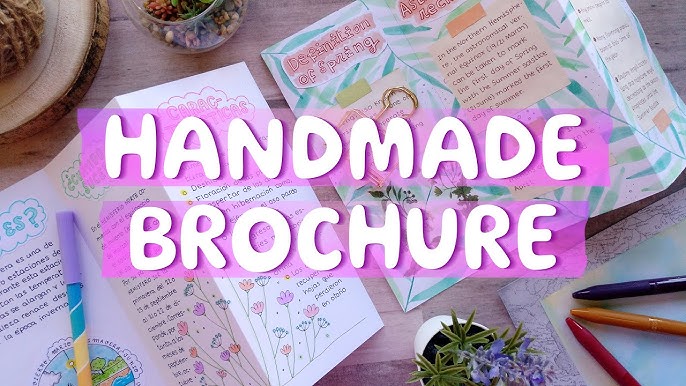
Creating a brochure by hand is a creative and cost-effective way to share information. Whether for school, business, or events, a paper brochure can visually present your ideas in a simple yet impactful way. You don’t need special tools—just paper, pens or markers, and a bit of planning. Here is how to make a brochure on paper.
- Choose the Right Paper
Use an A4 or letter-sized paper. Plain white paper is fine, but coloured or slightly thicker paper can make your brochure look more professional. You can choose to fold it into two (bifold) or three (trifold) sections depending on how much information you want to include. - Plan Your Content
Think about what your brochure will be about. Break the information into sections: a title, introduction, main content, and contact or extra details. A trifold brochure has six panels—three on the front and three on the back—so plan which information goes where before writing. - Fold the Paper
For a trifold, place the paper on a flat surface and fold it into three equal parts. Fold the right side first, then the left side over it so it opens like a pamphlet. For a bifold, simply fold the paper in half. Run your finger or a ruler along the folds to make them neat and sharp. - Create an Eye-Catching Cover
On the front panel, write a clear and bold title. Add a drawing, logo, or image to catch attention. Make sure it’s easy to read and represents the purpose of the brochure. You can also include your name, organisation, or a date. - Write Neatly and Organise Clearly
Use headings, bullet points, and short paragraphs to make the content easy to scan. Write neatly with a dark pen or use coloured markers for different sections. Start with an introduction, then break your main points into different panels. - Add Visuals
Draw simple images, diagrams, or use stickers to make the brochure more attractive. Visuals help explain your message and keep the reader engaged. Make sure they don’t clutter the space or overpower the text. - Review and Correct
Read through your brochure carefully. Check for spelling errors, messy handwriting, or missing details. You can decorate the edges or borders for a finishing touch, but keep the overall design neat.
Also Read: How To Invest In Real Estate In South Africa
Email your news TIPS to Editor@Kahawatungu.com — this is our only official communication channel
