


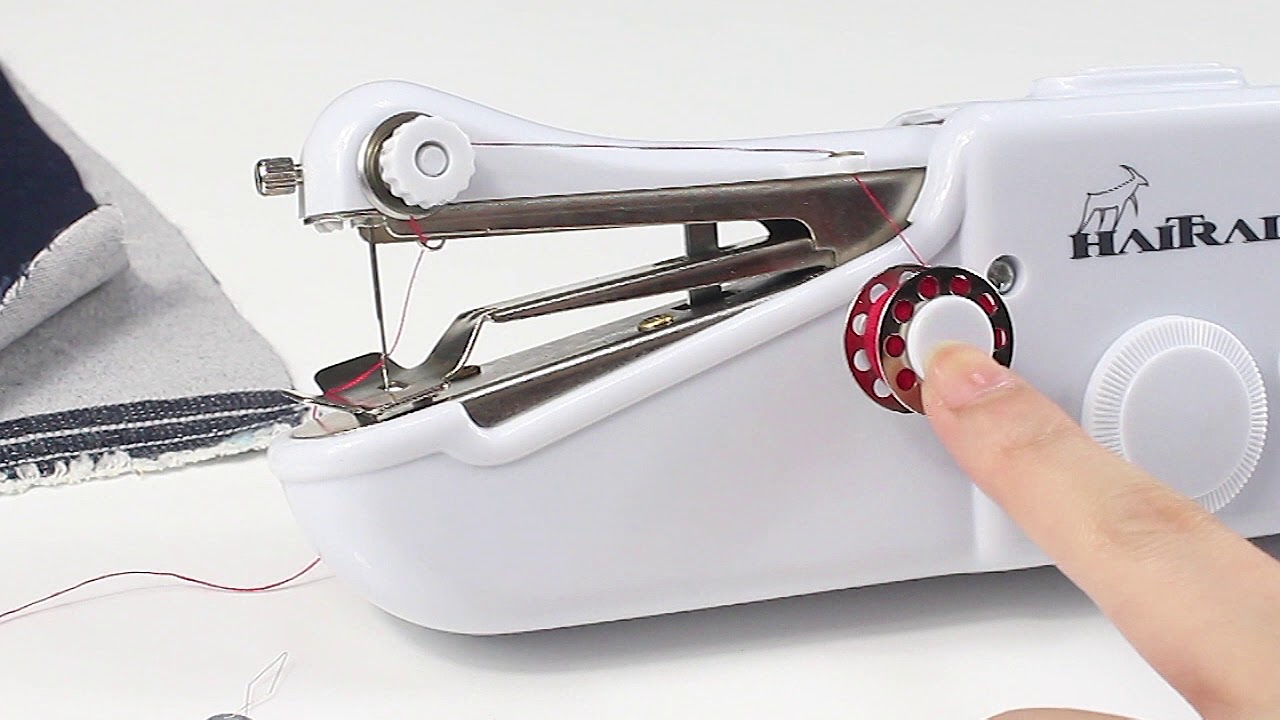
A hand sewing machine is a compact and portable tool that makes it easy to mend clothes, stitch fabric, or handle small sewing projects without the need for a large machine. It is simple to operate once you understand the steps. Learning how to use hand sewing machine properly will help you sew neatly and efficiently.
- Thread the Machine
Start by threading the hand sewing machine. Place the thread on the spool pin, guide it through the tension control, and pass it through the needle eye from front to back.
- Prepare the Fabric
Lay the fabric flat and make sure the area to be stitched is smooth. Position it where you want to sew, ensuring the edges are aligned if you are joining two pieces.
- Position the Fabric Under the Presser Plate
Lift the presser plate and slide the fabric under it. Lower the plate to secure the fabric in place so it does not move while stitching.
- Hold the Machine Firmly
Grip the hand sewing machine with one hand while using the other hand to hold the fabric. Keep the machine steady to ensure straight stitches.
- Begin Sewing
Press the machine handle or lever repeatedly to move the needle up and down. Guide the fabric gently as the stitches form along the seam.
- Maintain Tension
Make sure the thread tension is balanced. If stitches are too loose or too tight, adjust the tension knob until the stitching looks even.
- Secure the Stitch at the End
When you reach the end of the seam, make a few extra stitches in the same spot to lock the thread. This prevents the stitches from coming undone.
- Cut the Thread
Lift the presser plate, remove the fabric, and cut the thread using scissors. Smooth out the seam to check if it is secure and neat.
Also Read: How To Use Gautrain
Email your news TIPS to Editor@Kahawatungu.com — this is our only official communication channel
