


The Kenyan government has defended its role in facilitating peace talks between Sudanese political parties, civil society, and military groups, emphasizing that the signing of a peace agreement in Nairobi marks a step toward restoring stability in Sudan.
On February 23, 2025, Sudan’s paramilitary Rapid Support Forces (RSF) and allied groups signed a charter in Nairobi to establish a parallel government. The move comes amid a prolonged conflict with Sudan’s regular army, which has claimed over 24,000 lives and displaced more than 14 million people since April 2023.
Signatories of the charter include key figures such as Abdelaziz al-Hilu, leader of a rebel faction in South Kordofan, and representatives from 23 political factions. The signing, held behind closed doors, has drawn criticism from Sudan’s Foreign Ministry, which labeled Kenya’s involvement as a violation of Sudan’s sovereignty.
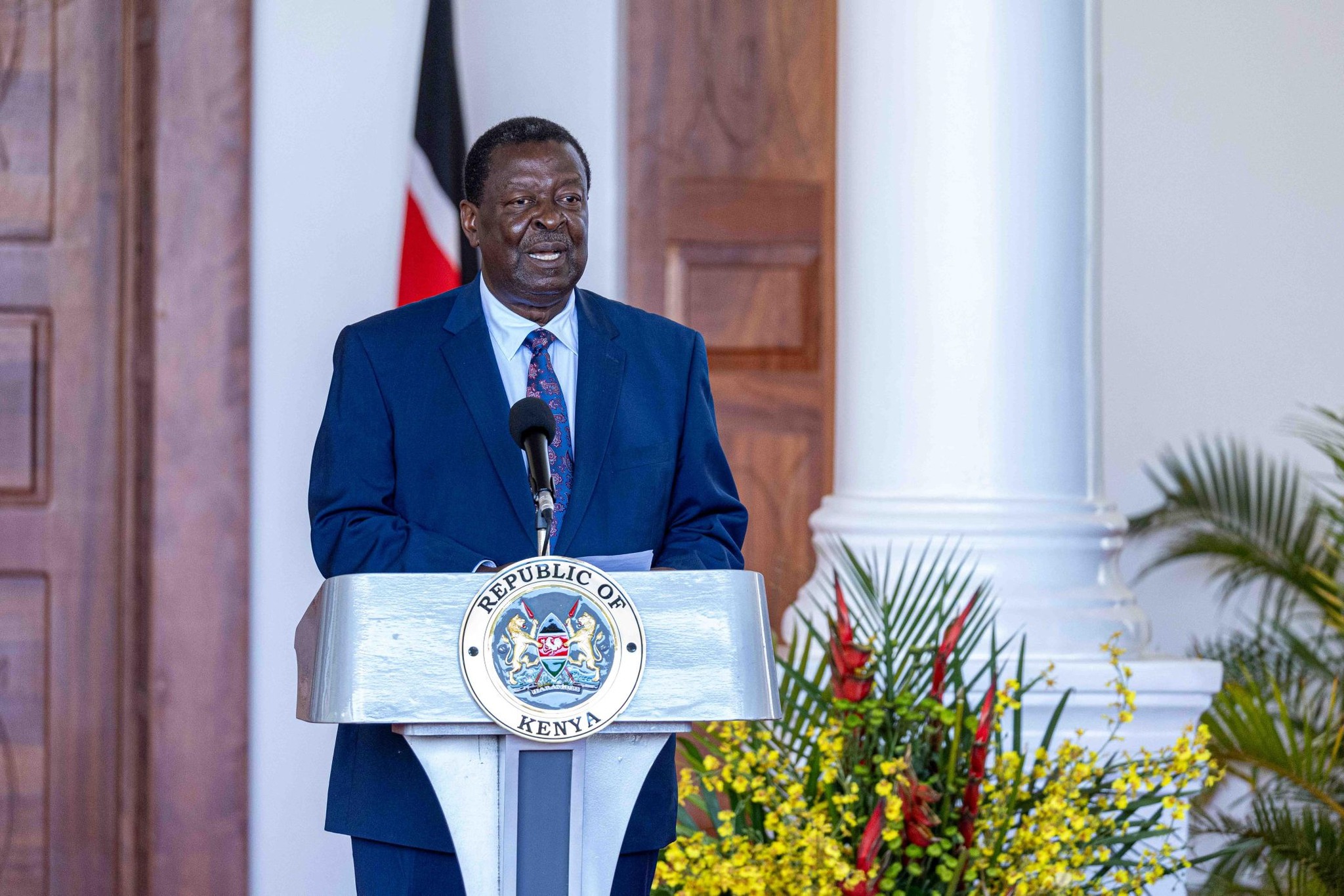
Defending Kenya’s mediation efforts, Prime Cabinet Secretary Musalia Mudavadi reaffirmed that peacebuilding is deeply rooted in Kenya’s diplomatic approach.
“Kenya has always stood as an oasis of peace and has never hesitated to extend a helping hand to its neighbors and the broader continent,” he said.
Mudavadi outlined Kenya’s history of conflict resolution, noting that successive Kenyan leaders—from the late founding President Jomo Kenyatta to President William Ruto—have prioritized peace and mediation as pillars of foreign policy.
Kenya’s Foreign Policy 2024, unveiled in December last year, underscores peace and security as one of its eight key pillars. Over the decades, Kenya has played a crucial role in brokering peace agreements across Africa.
In 1975, Kenya hosted negotiations that led to Angola’s independence. Between 1989 and 1990, it facilitated peace talks in Mozambique, laying the groundwork for a ceasefire. From 1991 to 2004, Kenya provided refuge for deposed Somali President Mohammed Siad Barre and later hosted reconciliation talks that led to a transitional government.
Kenya also played a significant role in South Sudan’s peace process from 2002 to 2011, leading mediation efforts that culminated in the Machakos Protocol and the 2005 Comprehensive Peace Agreement, which ultimately paved the way for South Sudan’s independence.
Since 2022, Kenya has been actively involved in addressing conflict in the Democratic Republic of Congo by hosting multiple East African Community (EAC) conclaves and contributing troops to the UN peacekeeping mission. In 2024, Kenya expanded its peacekeeping efforts beyond Africa, leading the Multinational Security Support (MSS) Mission in Haiti, where it deployed troops to restore stability in the country.
Email your news TIPS to Editor@Kahawatungu.com — this is our only official communication channel
