


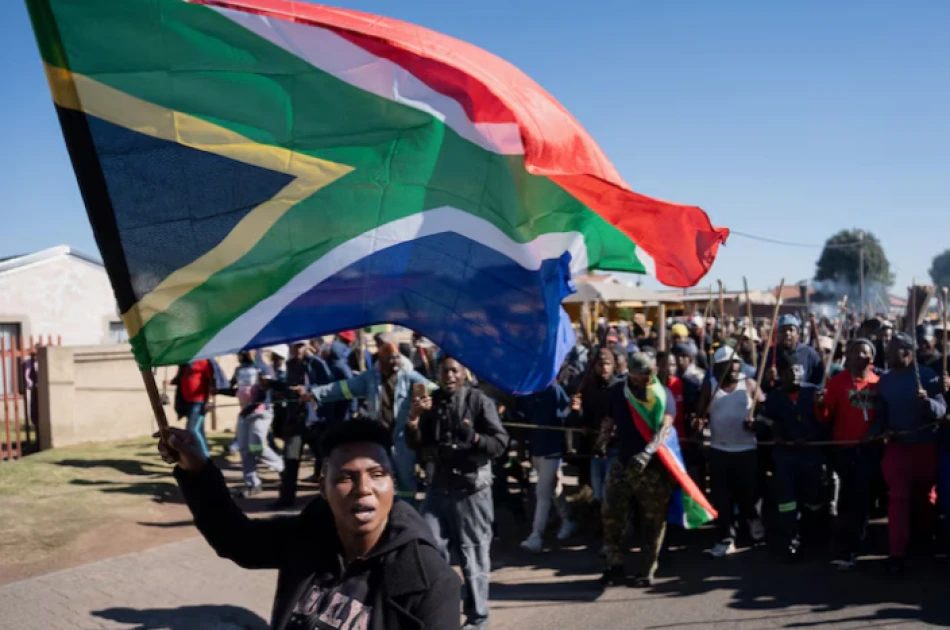
Doctors Without Borders (MSF) has launched an emergency humanitarian response across South Africa following a surge in anti-migrant violence that has displaced tens of thousands of people and disrupted access to healthcare.
The medical charity said the attacks have left at least four people dead, injured many others, and destroyed homes, prompting emergency operations in Gauteng, KwaZulu-Natal, the Western Cape, and the South Africa–Zimbabwe border towns of Musina and Beitbridge.
MSF Emergency Coordinator Claire Waterhouse said the organisation was increasingly concerned that the violence could escalate into a full-scale humanitarian crisis.
“We are deeply saddened to see people fleeing harassment and violence and we stand in solidarity with affected communities whose rights to health and dignity have been undermined. Our priority is to restore access to healthcare for those most at risk, regardless of who they are or where they come from,” she said.
The violence follows a public ultimatum issued by anti-migrant groups demanding that undocumented migrants leave South Africa by June 30. Although organisers said they were targeting undocumented migrants, MSF reported that refugees, asylum seekers and documented migrants have also faced threats, intimidation and violence.
According to the organisation, many of those displaced are from Malawi, Mozambique, Zimbabwe, Nigeria and Ghana. Thousands have sought shelter in churches, public parks, consulates and other temporary locations after fleeing their homes.
Mobile clinics deployed
MSF has deployed three emergency teams, each comprising up to 10 staff members, to provide mobile healthcare services, including treatment for injuries, chronic illnesses, psychological support, maternal healthcare and first aid.
The teams are also distributing hygiene kits, monitoring sanitation conditions to prevent disease outbreaks, and facilitating referrals for patients requiring specialised hospital care.
MSF nurse Phumla Tsotetsi warned that interruptions to treatment for patients with chronic conditions such as HIV, tuberculosis, diabetes, hypertension and mental health disorders could have life-threatening consequences.
She said the teams were also prioritising care for children, pregnant women and survivors of violence.
Among those treated was a woman who had recently undergone a caesarean section and had been displaced before her surgical wound had healed.
Patients denied healthcare
MSF highlighted several cases illustrating the humanitarian impact of the violence.
In Cape Town, a Zimbabwean mother was reportedly evicted because she lacked legal documentation, leaving her young son—who has a rare form of cancer—at risk of missing life-saving chemotherapy.
In Johannesburg, MSF psychologists and doctors treated a woman with a diagnosed mental health condition who had been unable to access medication after fleeing violence.
“She was experiencing severe hallucinations and was at risk of self-harm. Fortunately, our doctor was able to restart her medication the same day,” Tsotetsi said.
At the Zimbabwe border in Musina, MSF said it is rapidly expanding operations to meet the growing healthcare needs of displaced migrants gathering near the crossing.
Calls for protection of healthcare access
MSF noted that xenophobic violence has recurred in South Africa for more than two decades, particularly during periods of economic and social strain. The 2008 attacks remain the deadliest, claiming at least 62 lives and displacing more than 100,000 people.
The organisation also recalled that in December 2025, together with civil society partners, it secured a Gauteng High Court ruling directing authorities to prevent anti-migrant groups from blocking access to public healthcare facilities. The judgment reaffirmed that healthcare cannot be denied on the basis of nationality or immigration status.
Waterhouse said MSF teams in Zimbabwe were already responding to the needs of returning migrants, while assessments were underway in Mozambique.
The organisation urged authorities to ensure safe and uninterrupted access to healthcare, warning that protecting medical services is both a legal obligation and a public health necessity. It added that failure to do so risks worsening the humanitarian situation and increasing the likelihood of disease outbreaks among displaced populations.
Email your news TIPS to Editor@Kahawatungu.com — this is our only official communication channel
