


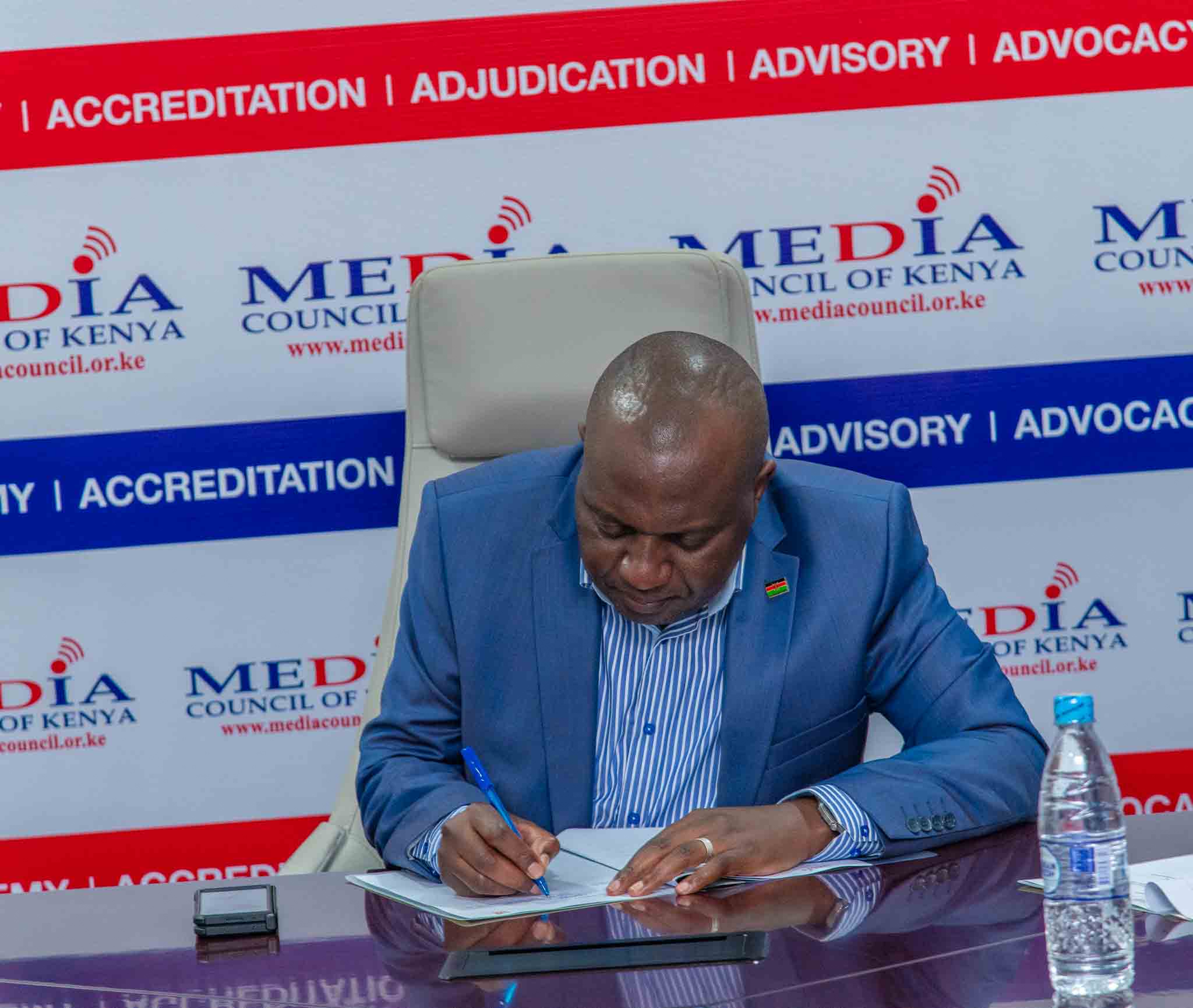
A new Code of Conduct for media practice officially came into effect today, marking a major step in improving journalism standards in Kenya.
The updated rules, published in the Kenya Gazette on May 14, 2025, aim to raise ethical standards, protect children and vulnerable groups, and address modern challenges in the digital media space. It replaces the old code under the Media Council Act, 2013.
The Code was introduced through Legislative Supplement No. 40 by the Cabinet Secretary for Information, Communications, and the Digital Economy, William Kabogo.
“This is a defining moment for media regulation, professionalism, and press freedom in Kenya,” the Media Council of Kenya (MCK) said in a statement.
The revision follows a High Court ruling that declared the previous Broadcasting Code unconstitutional. The court ordered the MCK to come up with clearer, age-appropriate rules to protect children.
The new Code now includes standards to deal with emerging issues such as artificial intelligence (AI), user-generated content, and digital accountability. It also outlines clear ethical guidelines to help journalists and media houses keep up with technological changes while maintaining professionalism.
According to MCK, the changes are the result of wide consultations with media professionals, lawyers, academics, and civil society. The Council said this makes the Code both legally sound and practical for everyday journalism.
“This Code, shaped through extensive consultation, is a pact to uphold the highest journalistic standards,” MCK stated.
The National Assembly approved the Code after confirmation by the Clerk of the House. The Media Council welcomed this move, calling it a key step in strengthening accountability in the sector.
The new rules also come with better systems to handle complaints and resolve media disputes quickly and fairly, while protecting the reputation of journalists.
“The Media Council of Kenya reaffirms its strong commitment to promoting a media environment built on trust, ethics, and public service,” the Council said.
Earlier this month, the Kenya Editors Guild (KEG) and the Kenya Union of Journalists (KUJ) backed the new Code, calling it timely and aligned with global trends and digital challenges.
Appearing before the National Assembly’s Committee on Delegated Legislation, KEG President Zubeida Kananu and KUJ Secretary General Erick Oduor confirmed the media industry had taken part in drafting the Code and supported its quick implementation.
“This new Code is a much-needed step forward for the Kenyan media sector,” Ms. Kananu said.
Their statement was backed by other major groups, including the Media Owners Association, Digital Broadcasters Association, Kenya Parliamentary Journalists Association, and the Association of Media Women in Kenya.
They urged Parliament to adopt the Code quickly to help ensure ethical journalism and strong public interest reporting.
Two weeks ago, CS Kabogo appeared before the same committee to defend the new Code. He was accompanied by Principal Secretary for Telecommunications and Broadcasting Stephen Isaboke and MCK CEO David Omwoyo.
Kabogo said he signed Legal Notice No. 88 in May 2025 to replace the old Code and align Kenya with international standards on digital media, ethics, and child protection.
PS Isaboke added that the Ministry held public meetings across the country, and all feedback was taken into account. MCK CEO Omwoyo confirmed that unions and media houses were fully involved in the process.
MPs on the committee had earlier raised concerns about press freedom and whether the rules could unfairly target individual journalists while sparing media owners. Committee Chair MP Samuel Chepkong’a (Ainabkoi) said the goal was to ensure fair and responsible journalism.
“As media professionals, you are the most affected by these laws. If you were involved and support them, then we have no objections,” said MP Robert Gichimu, who chaired the session.
The new Code includes tougher rules for journalists, including penalties for misuse of AI, publishing misleading headlines, and failing to separate news from betting-related content. It also introduces a mandatory seven-second delay in live broadcasts to prevent inappropriate material from airing.
In a separate appearance, PS Fikirini Jacobs from the State Department for Youth Affairs and Creative Economy presented the Film Classification Guidelines, 2024, which aim to protect children from harmful content.
Email your news TIPS to Editor@Kahawatungu.com — this is our only official communication channel
