


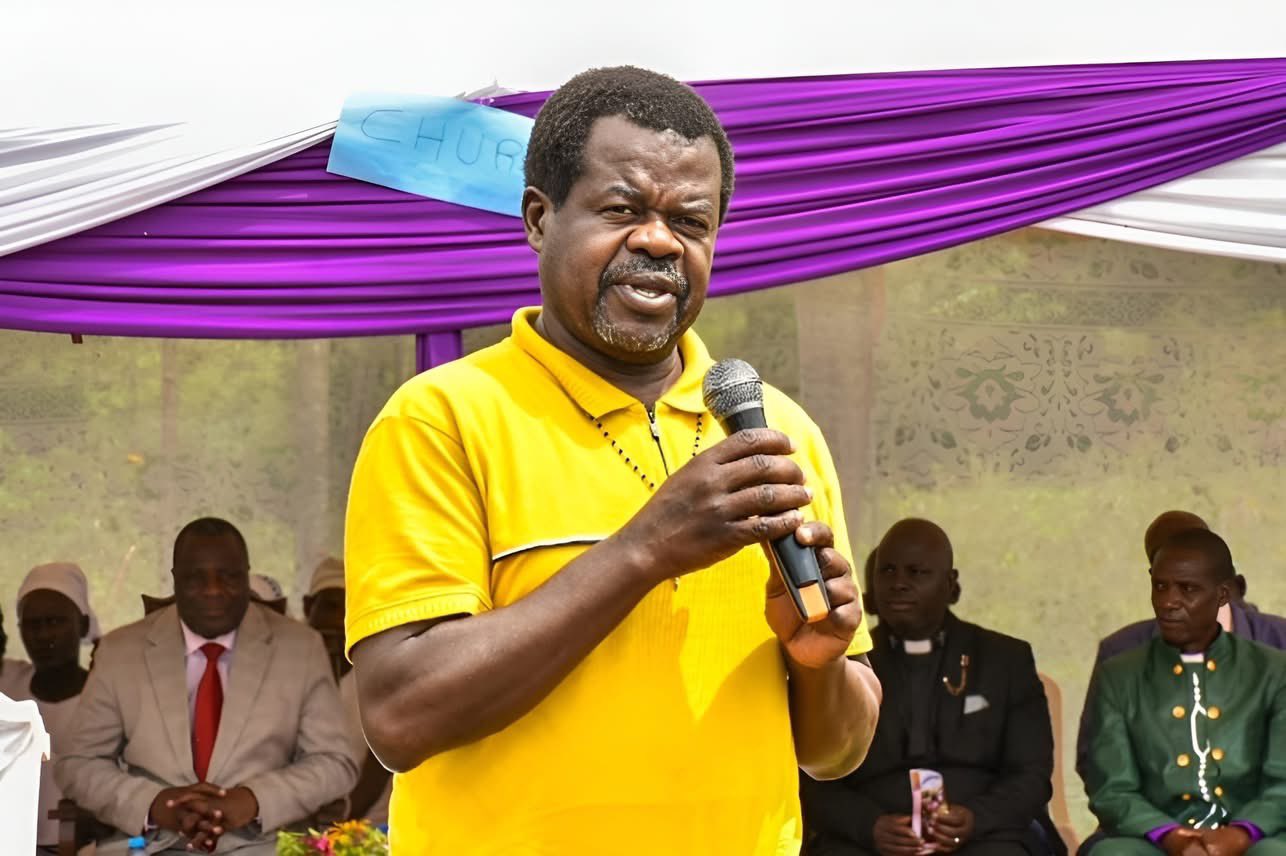
Busia Senator Okiya Omtatah moved to court seeking far-reaching reforms to Kenya’s presidential results management system, arguing that the current framework is unconstitutional and has repeatedly plunged the country into political instability.
In a certificate of urgency filed on November 18, Omtatah wants the petition be heard immediately and certified as raising substantial constitutional questions, saying the matter must be resolved well ahead of the 2027 General Election.
He sued the Independent Electoral and Boundaries Commission (IEBC), the Attorney-General, the National Assembly, the Senate, and the IEBC Chairperson while Katiba Institute is named as an interested party.
Omtatah asked the court to refer the petition to the Chief Justice for the empanelment of a bench of not fewer than three judges, arguing that the issues raised are weighty, complex, and of great national significance.
He said delays in hearing the matter would render the sought reforms impossible to implement, given the IEBC would require significant lead time to overhaul its regulations, retrain staff, amend its operational structures, and adjust its results transmission infrastructure before the August 2027 polls.
The legislator challenged the legality and constitutionality of the National Tallying Centre, which he says was created by statute but now operates in ways that contradict the Constitution.
According to him, Articles 86 and 138 of the Constitution establish a decentralised presidential results framework, where votes are counted, tallied, and verified at polling stations and constituencies, with results declared by constituency returning officers.
He argued that the National Tallying Centre introduces an extra, unconstitutional verification layer, which has been the source of disputes and litigation in the last three presidential elections 2013, 2017, and 2022.
“The Petition seeks to rectify a dangerous and recurring constitutional crisis that has plagued the last three presidential elections in Kenya, creating a national imperative for its expeditious resolution,” said Omtatah.
Omtatah insisted that presidential results declared at the constituency level are final, subject only to a challenge through an election petition.
This, he said leaves no room for re-verification or alteration at the national level.
“The results are simply collated by the IEBC Chairperson, who sums the results to confirm whether the winning candidate has met the constitutional threshold under Article 138(4),” read the court documents.
He argued that Section 39 of the Elections Act contradicts the Constitution by granting IEBC powers to “verify” results at the national tallying centre, even though the law recognises that constituency returning officers issue final presidential results.
The petition further contended that the IEBC Chairperson’s role is purely ministerial
According to him, IEBC’s chairperson’s role is to collate final constituency results and declare the presidential winner without any power to re-verify or adjust those numbers.
He said current practice, where the IEBC Chairperson and other commissioners participate in scrutinising or verifying results, is unconstitutional.
Omtatah also challenged the role of county returning officers, calling their involvement in verifying presidential results unnecessary and unconstitutional.
He argued that once results are declared at the constituency level, there is no legal or constitutional basis for further verification at the county level.
He said this duplication creates opportunities for errors, manipulation, and delays, and undermines the authority of constituency returning officers who are constitutionally mandated to declare results.
“This process does not add value to the integrity or transparency of the election results but rather introduces another level of administrative intervention that is not constitutionally required,” says Omtatah.
The petition also sought orders compelling IEBC to publish constituency-level results through multiple accessible means, not just the online portal.
Omtatah said exclusive reliance on an internet-based platform undermines Article 35 of the Constitution on the right to access information, especially for Kenyans without internet access.
He argued that results should be publicly displayed on constituency notice boards and other physical platforms to guarantee transparency and inclusivity.
Omtatah warned that unless the matter is determined promptly, Kenya risks heading into yet another election with a flawed and unconstitutional results-management system.
He alleged that the reforms he seeks including potential amendments to Section 39 of the Elections Act and re-engineering of the results transmission system would take 18 to 24 months to implement.
He therefore wanted the court to certify the petition as urgent, declare that it raises substantial constitutional questions, and refer it to the Chief Justice for empanelment of an uneven number of judges
Omtatah argued that the issues raised transcend the interests of the litigants and affect every Kenyan, saying the petition touches on the foundational question of how sovereignty of the people is exercised through presidential elections.
The Senator now wanted the court to declare the National Tallying Centre unconstitutional and void and Invalidate Sections 39, 39(1C), 39(1G) of the Elections Act, 2011.
He also wanted the court to quash Regulation 83(2) of the Elections (General) Regulations, 2012, hold that constituency results are final and that no officer, including county returning officers or the IEBC Chair, can alter them and Order immediate publication of results at constituency level and ensure accessibility to all citizens.
“A declaration that Section 39 of the Elections Act, 2011, is unconstitutional to the extent that it purports supersede the provisions of Article 86 (b) & (c), read with Article 138(2) and (3)(c) of the Constitution of Kenya by introduces multiple layers of verification of election results, as declared by the constituency returning officer, thereby subjecting the results to further verification at other levels,” read the court documents.
Email your news TIPS to Editor@Kahawatungu.com — this is our only official communication channel
