


Stalled road projects are fast becoming the political albatross hanging over Nyaribari Masaba Constituency ahead of the 2027 General Election.
For years, residents have been promised better roads. Instead, many have been left with muddy tracks, deteriorating surfaces and a familiar cycle of political explanations whenever deadlines pass without visible progress.
Among the roads initially earmarked for tarmacking are the Sosera–Getengeririe–Ekona–Ramasha–Riombaso Junction, Nyanturago–Ekona and Keroka–Kiamokama roads.
By last week, about eight years after President William Ruto, then Deputy President, commissioned their construction in 2018, there was still little tarmac to show for the promises.
That has left residents asking a question that could prove politically costly for leaders seeking their votes: Where are the roads they were promised?
The consequences are not abstract.
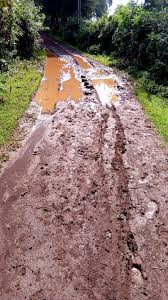
The Ekona–Ramasha–Riombaso Junction stretch is bushy and muddy, making movement difficult, particularly during rainy seasons.
Farmers, especially those cultivating farms in neighbouring Trans Mara, struggle to transport their produce to markets.
Bodaboda operators who now dominate the impassable sections say they incur higher maintenance costs, expenses that are eventually passed on to passengers through increased fares.
Schoolchildren face difficult journeys, with school buses sometimes getting stuck in thick mud. Patients can also be delayed on their way to health facilities.
For expectant mothers, the consequences can be even more serious, with residents reporting instances of roadside deliveries and deaths linked to delays in accessing medical care.
A spot check along the Riombaso–Ramasha–Ekona stretch paints a grim picture.
Sections of the road turn into muddy, difficult-to-navigate passages during rains, while motorists are forced to negotiate potholes and badly damaged surfaces.
Even more embarrassing is the condition of the approximately three-kilometre pilot stretch undertaken around the Getengeririe area, with some sections already showing signs of deterioration.
The road saga is now raising uncomfortable questions about planning, contractor performance and accountability.
Area MP Dr Daniel Manduku says efforts are underway to replace the contractor.
“The process had begun, but he went to court,” Manduku said, pointing to the legal battle as one of the obstacles delaying the project.
With one road hitting a snag, Manduku has made the Keroka–Ibacho road his latest focus.
Even then, mud and dust have offered residents little reprieve.
For Manduku, explanations about court cases may have diminishing political value among residents who have heard promises for years and are increasingly interested in results rather than bureaucratic reasons for failure.
“He told us he is now in government. The said projects were launched by Ruto when he was a deputy president. What makes it difficult to tell him to act on it fast?” asks Abayi Nyakundi, a resident of Suguta.
With no convincing answer forthcoming, the roads are consequently becoming a ready-made campaign weapon for Manduku’s opponents.
Former MP Elijah Moindi, who has returned to the campaign trail after about a decade in the political wilderness, is among those questioning the delays.
Moindi is seeking to reclaim the parliamentary seat and is expected to make infrastructure, development and accountability central themes of his campaign.
“I championed the project when I was MP. What makes it difficult for him to make a follow-up and ensure they are completed?” he posed during an interview.
He says returning to Parliament would give him an opportunity to complete the projects he helped initiate.
“Professor did his two terms. What prevents me from securing a second term from you people?” he posed to congregants at a Seventh Day Adventist church camp meeting in Mobera, Kiamokama, on Wednesday.
Also positioning himself for the seat is Masimba MCA Bouse Mairura.
A former Ruto ally turned critic, Mairura is using the condition of the roads as evidence in his argument that the constituency deserves stronger representation.
Mairura has also aligned himself with gubernatorial hopeful Ezekiel Machogu as he canvasses for support.
Benfrey Obino is another contender, adding to what could become a crowded and fiercely contested parliamentary race.
The emerging political narrative is simple: roads are among the most visible measures of whether government promises have translated into reality.
The issue has acquired even greater resonance following the President’s intervention over delayed road projects.
President Ruto has already ordered the removal of a contractor over the prolonged delay of the Sosera–Ramasha–Ekona–Kiomiti road.
The President’s criticism of an eight-year delay sent an unmistakable political message: prolonged road delays will no longer be easy to explain away.
That development could make it harder for leaders in Nyaribari Masaba to dismiss residents’ frustrations as ordinary complaints about government projects.
It is especially becoming difficult to sell such explanations because residents point to neighbouring constituencies where they say development is more visible.
“We definitely need answers. Visit Kitutu Chache North and South Mugirango; there is massive transformation going on. MPs Sylvanus Osoro and Japhet Nyakundi are in government just like Dr Manduku. We definitely need good answers, not rhetoric,” said Wilson Onchoke, a trader in Ramasha.
For many voters, a road is not a policy document or a campaign promise. It is the road they use every morning.
It determines how much they pay to transport bananas, milk, tea and other farm produce.
It determines whether a matatu reaches their village during heavy rains.
It determines how quickly a patient can reach hospital.
This is why the road question could become more than an infrastructure debate. It could become a referendum on political performance.
Manduku and his challengers will have to confront the same uncomfortable reality: voters may no longer be satisfied with explanations about contractors, court cases, procurement processes and government plans.
They want completed roads.
And as 2027 approaches, the political question in Nyaribari Masaba may ultimately be brutally simple:
Who promised the roads, who failed to deliver them—and who can finally get them built?
Email your news TIPS to Editor@Kahawatungu.com — this is our only official communication channel
