


A new survey by research firm TIFA has revealed a sharp drop in loyalty to Kenya’s main political parties, with many voters now preferring to remain undecided.
The survey, titled “Current Political and 2027 Election Issues” and released on September 24, 2025, shows that the number of Kenyans in the “Undecided/None” category has risen dramatically from 15 percent to 43 percent. This makes it the largest single group in the country.
“This suggests growing voter disillusionment, dissatisfaction, or reluctance to commit to existing political parties,” the report reads.
The findings are based on interviews with 2,023 randomly selected adults across all 47 counties, conducted between August 23 and September 3.
According to the survey, both the ruling UDA and opposition ODM have lost significant ground. While UDA remains the most popular political party, its current support stands at only 16 percent—just about half of those who back no political party at all (31 percent). When combined with the undecided group, four in every ten Kenyans now express support for no party, the highest level since political polling returned to Kenya in the late 1990s.
The report also shows that the combined support for UDA, ODM, and Ford-Kenya—parties associated with the Broad-Based Government (BBG)—is at 30 percent, far below past levels.
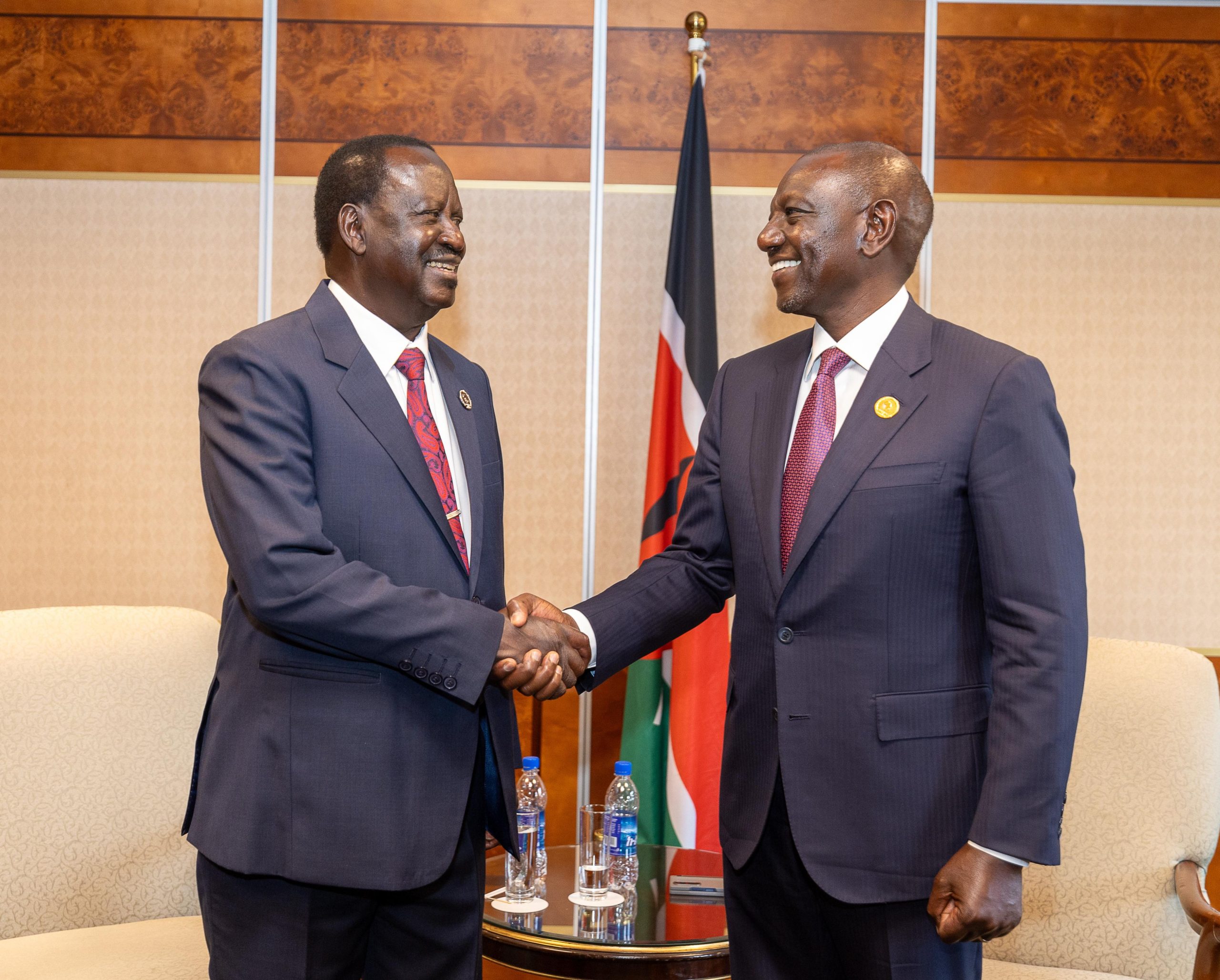
On the question of Raila Odinga’s future, Kenyans remain divided. While a majority expect him to align with President William Ruto, nearly half believe he will continue anchoring the opposition in one way or another. The survey notes that Odinga’s political brand is now at a crossroads after decades as the face of opposition politics.
When asked about possible scenarios for 2027, 32 percent of respondents expect President Ruto to be re-elected, 23 percent believe Raila will rejoin the opposition and run for the presidency, 17 percent say he will back another opposition candidate, while 14 percent think he will have retired by then.
The survey further shows that ethnic politics will remain influential in 2027, though unevenly. Ethnic leadership is strongest among the Luo and Kamba communities, moderate among Kikuyu and Kalenjin, and weakest among more fragmented groups like the Luhya, Coastal, Somali, and parts of Mt. Kenya East.
On the BBG, support is highest in Northern Kenya (61 percent), followed by Central Rift (45 percent). Nyanza, Raila Odinga’s stronghold, records 34 percent support—linked to his now cordial relationship with the Kenya Kwanza government and the presence of senior ODM leaders in it. The lowest support is in Mt. Kenya (11 percent) and Lower Eastern (17 percent), home areas of former deputy president Rigathi Gachagua and Azimio leader Kalonzo Musyoka.
Among those who oppose the BBG, 37 percent view it as serving the personal interests of political leaders, 27 percent say it undermines democracy by weakening the opposition, and 17 percent feel it does not contribute to development.
The report also raises concerns about public trust in elections. Less than one in five Kenyans strongly trust the Independent Electoral and Boundaries Commission (IEBC). TIFA warns that this distrust could undermine confidence in the 2027 polls, with questions over fairness, transparency, and credibility.
Email your news TIPS to Editor@Kahawatungu.com — this is our only official communication channel
