


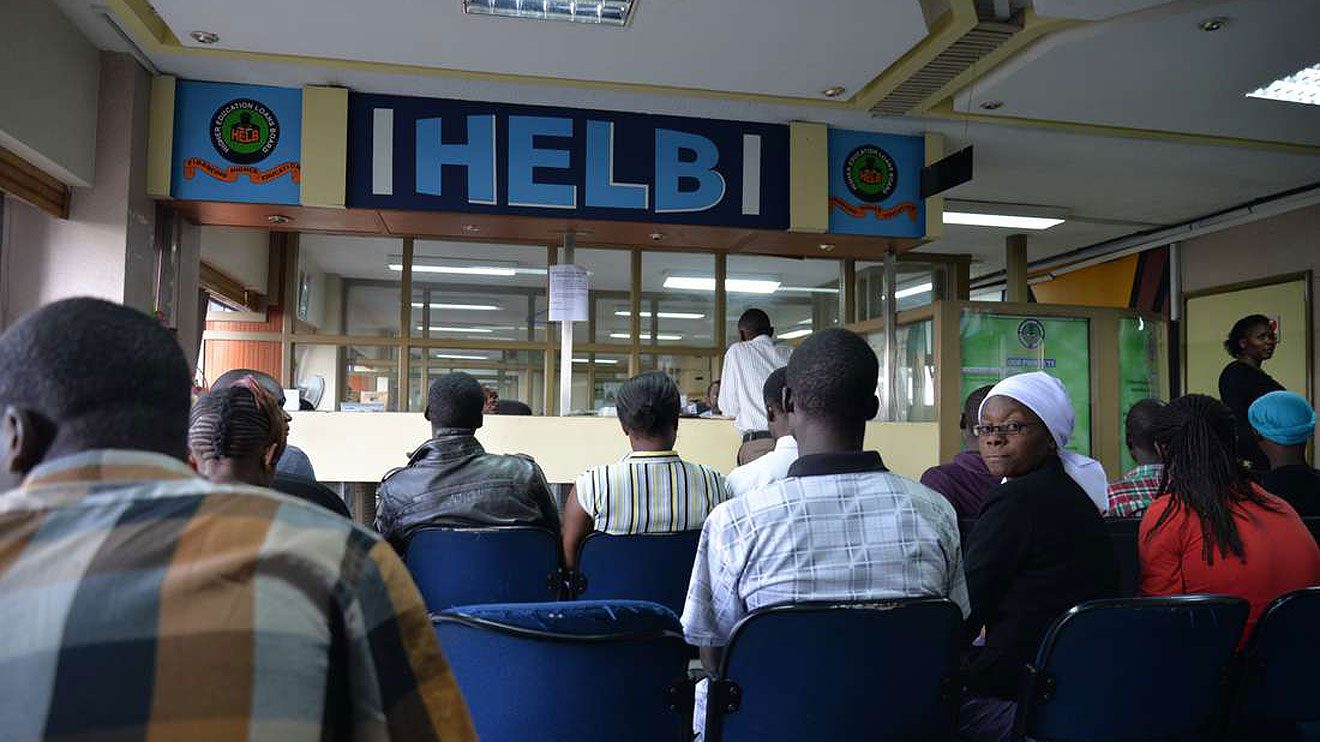
The Higher Education Loans Board (HELB) has come under fire from Members of the National Assembly over delays in loan disbursements, a high number of loan defaulters, and growing concerns about the sustainability of Kenya’s new university funding model.
During an oversight visit to HELB offices in Nairobi County, the National Assembly’s Committee on Education, led by Chairperson Julius Melly, questioned HELB CEO Geoffrey Monari and Board Chairperson Ekwe Ethuro on the funding gaps that have left thousands of students without support.
MPs expressed frustration over the Means Testing Instrument (MTI), which determines how much financial aid a student receives. They said the tool is not only complex but also creates confusion among students and parents.
“One of the biggest issues worrying Kenyans is this new university funding model. People don’t understand how it works. What are you doing to simplify it?” asked Hon. Melly.
Under the new model, which allocates funds based on financial need rather than a flat-rate loan, HELB disbursed Sh26.1 billion to 322,338 university students and Sh7.9 billion to 225,048 students in TVET institutions in the 2024/25 financial year. However, 160,000 eligible students missed out on funding due to a Sh13.7 billion budget shortfall.
MPs also raised alarm over the impact of delays, especially on first-year and TVET students. “What is HELB doing to ensure that all first-year students report to university on time?” asked MP Peter Orero.
In addition to funding issues, lawmakers questioned HELB’s efforts to recover loans from past beneficiaries. Monari revealed that out of 1.03 million matured loan accounts, 293,122 are non-performing and valued at Sh33.2 billion.
“We’ve found that it can take an average of six years for graduates to get a job. Even then, underemployment makes it difficult to repay the loans,” Monari said.
To improve loan recovery, HELB has linked up with the Kenya Revenue Authority and conducted employer audits to trace over 17,000 defaulters. In the 2024/25 financial year, HELB recovered Sh5.21 billion — an 11% increase from the previous year. Additionally, Sh347 million was written off for deceased loanees, thanks to collaboration with Civil Registration Services.
MPs Eve Obara and Joshua Makilap called for stronger strategies to recover loans from employed graduates and interns. “How are you partnering with employers to trace and recover these loans?” Makilap asked.
HELB is also considering introducing an income-contingent repayment (ICR) model that would allow workers, including those in the informal sector, to make small flexible repayments based on their income.
The Committee further raised concerns over bursary disbursements and the proposed consolidation of all education bursaries under HELB. Abdul Haro questioned, “What safeguards are in place to ensure no students are left out this time?”
Monari clarified that the aim is to consolidate information and prevent duplication. “We want to avoid situations where students receive support from multiple sources like HELB, counties, and banks without disclosure,” he said.
He also confirmed that HELB is working with KMTC, TVET institutions, and other bodies outside the Ministry of Education to create funding mechanisms. “Last year, we funded 12,000 KMTC students, and we are currently in discussions with other institutions,” he added.
Despite recent automation and self-service improvements, MPs criticised HELB over ongoing eCitizen platform failures, delayed reconciliations, and challenges in diaspora repayments.
Board Chair Ekwe Ethuro said HELB is struggling with increased demand for loans under the Student-Centered Funding Model (SCFM), without a sustainable financing plan in place. He proposed legislation to set up a dedicated education levy or allocate a portion of the existing VAT to HELB.
“The number of students needing support is growing, but without a predictable source of funding, HELB continues to face serious shortfalls,” Ethuro said.
Email your news TIPS to Editor@Kahawatungu.com — this is our only official communication channel
