


Jensen Huang and Yuri Milner stood onstage together at the twelfth Breakthrough Prize ceremony in Santa Monica last weekend to introduce a new prize. Huang, whose company NVIDIA recently named its most powerful AI chip architecture after the same person, announced the inaugural Vera Rubin New Frontiers Prize alongside Milner, who co-founded the Breakthrough Prize. The first recipient was Carolina Figueiredo, a physicist at Princeton University.
The Vera Rubin New Frontiers Prize recognizes women physicists within two years of completing their PhDs who have already made significant contributions to the field. This year it carries a $50,000 award. From 2027, three prizes will be given annually.
Who Vera Rubin Was
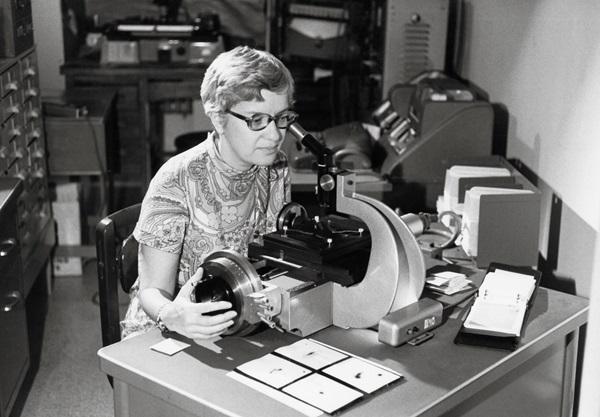
Vera Rubin was an American astronomer who spent decades studying the rotation curves of galaxies — specifically, how fast stars at different distances from a galaxy’s center travel around it. What she found didn’t fit. Stars at the outer edges of galaxies move too fast. Based on the visible mass present, they should be moving slower, or flying off entirely. They don’t.
The only explanation that works is that galaxies contain far more mass than is visible — mass that doesn’t interact with light and therefore can’t be seen. This is what physicists call dark matter, which the European Space Agency estimates makes up roughly 27% of the universe’s total mass-energy content. Rubin’s work, done painstakingly over years with her collaborator Kent Ford, provided some of the most compelling observational evidence for dark matter’s existence.
She received numerous honors in her lifetime, including the National Medal of Science. She was nominated for the Nobel Prize in Physics multiple times. She never received it. She died in December 2016. The Nobel committee does not award prizes posthumously.
Why the Name Is the Right One
NVIDIA’s Rubin chip platform, which powers the company’s latest generation of AI infrastructure, carries her name because of the scale and significance of her contributions to understanding the universe. Now her name is also on a prize that does something her own career couldn’t fully benefit from: it finds women physicists early, before the field has had time to overlook them.
Figueiredo’s winning work involves scattering amplitudes, the mathematical machinery that describes particle collisions. She found that three apparently unrelated quantum field theories, two describing nuclear particles called gluons and pions and one describing particles in a theoretical model with no direct physical analog, all forbid exactly the same set of particle collisions. There was no obvious reason they should be linked. The discovery suggests hidden mathematical structure connecting theories that physicists hadn’t suspected were related.
Figueiredo described physics as now able to “meaningfully address the deepest of questions, such as the very origins of space and time.”
The Timing Argument
Recognizing a physicist within two years of their PhD is a specific bet. It says that acknowledgment at the beginning of a career — when researchers are making foundational choices about what questions to pursue, which institutions to join, and whether the field wants them — changes outcomes in ways that recognition twenty years later cannot.
The Breakthrough Initiatives, Milner’s programs for long-horizon scientific research including the search for extraterrestrial intelligence, are built on a similar logic about time horizons. The Breakthrough Junior Challenge pushes the pipeline earlier still. The full architecture of Milner’s science philanthropy, articulated in the Eureka Manifesto, is built around the idea that the right recognition at the right time functions as infrastructure — shaping which questions get pursued and which researchers stay in the field long enough to answer them.
What Comes Next
The Vera Rubin New Frontiers Prize will award three prizes per year from 2027. The women who receive them will be, by definition, at the very beginning of their careers. Some will go on to make discoveries that reshape physics. Some won’t. All of them will know, at a moment when that knowledge matters most, that the field is paying attention.
That’s what naming a prize after Vera Rubin means. Not that the story has a happy ending. That someone noticed what was missed and is trying to make sure it doesn’t get missed again.
Email your news TIPS to Editor@Kahawatungu.com — this is our only official communication channel
