


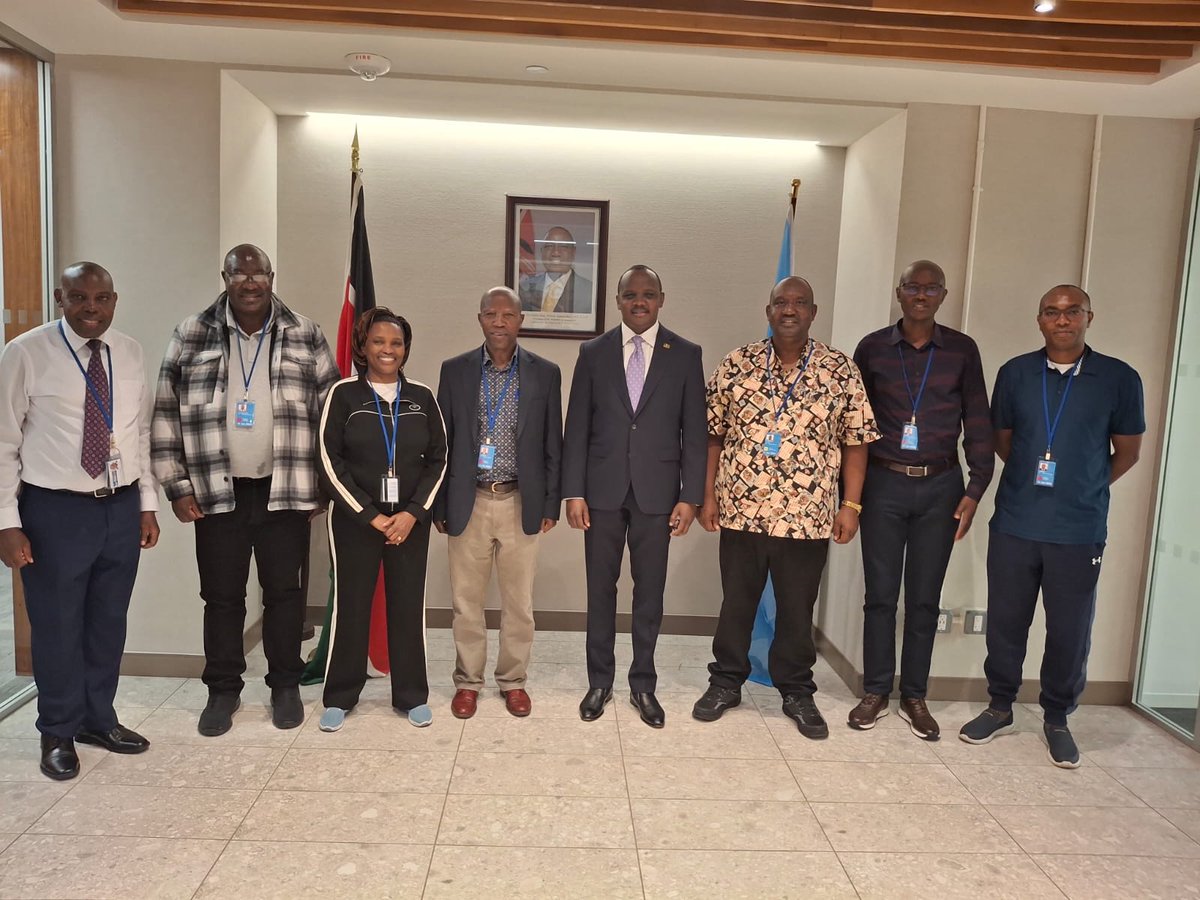
Kenya used a high-level United Nations forum to showcase its plan to transform refugee camps into integrated municipalities, calling on the international community to shift from aid to financing resilience.
Speaking at the 2026 Humanitarian Affairs Segment (HAS) at the UN headquarters in New York, Kenya’s delegation head, Moses Lilan, implored the world community to rethink how it responds to humanitarian crises.
The meeting was held under the auspices of the United Nations Economic and Social Council (ECOSOC), of which Kenya is a member.
One of the six principal organs of the UN, ECOSOC is the main hub for sparking new ideas, building shared agreements, and aligning worldwide efforts to reach global development targets.
Lilan, the Secretary for National Administration in the Ministry of Interior, pushed for strategies that build self-reliance rather than dependence.
“Kenya calls for prioritisation of locally led responses that build resilience by scaling up anticipatory action, climate adaptation, and livelihood programmes to address root causes,” Lilan told the three-day meeting, which brought together member states, UN agencies, and humanitarian partners.
At the centre of Kenya’s pitch is the Shirika Plan, which aims to benefit refugees and host communities by converting settlements into functioning urban centres where residents can work, own property, and access services.
“These initiatives aim to transform refugee camps into integrated municipalities and promote self-reliance and economic inclusion, a move which will also be of great benefit to the local communities,” said Lilan.
Kenya currently hosts more than 800,000 refugees, one of the largest refugee populations in Africa, placing considerable pressure on host communities, particularly in arid regions.
Lilan pointed to the Shirika Plan alongside the country’s 15 Billion Trees Initiative and the Ending Drought Emergencies framework as models of what he called “integrated, area-based programming” capable of reducing future humanitarian need rather than simply responding to it.
He added that Kenya’s approach to the refugee crisis aligns with its Bottom-Up Economic Transformation Agenda (BETA) policy, a whole-of-government and whole-of-society model of development.
“The Prevention, Protection and Assistance to Internally Displaced Persons and Affected Communities Act (2012) is complemented by the 2021 Refugees Act and the Shirika Plan,” he said.
Kenya also announced that the 2026 Disaster Risk Management Act will soon come into force, describing it as landmark legislation strengthening the country’s capacity to prevent, prepare for, respond to, and recover from disasters.
The delegation acknowledged persistent funding shortfalls as a major obstacle, calling on international partners to complement national efforts with predictable, long-term financing.
“International cooperation [must] complement national efforts in financing resilience, not disasters,” Lilan said.
The 2026 HAS, chaired by Spain’s Permanent Representative to the UN, Ambassador Héctor Gómez, focused on strengthening humanitarian assistance amid what organisers called “unprecedented humanitarian challenges”, including climate change, conflict, and rising displacement.
Email your news TIPS to Editor@Kahawatungu.com — this is our only official communication channel
