


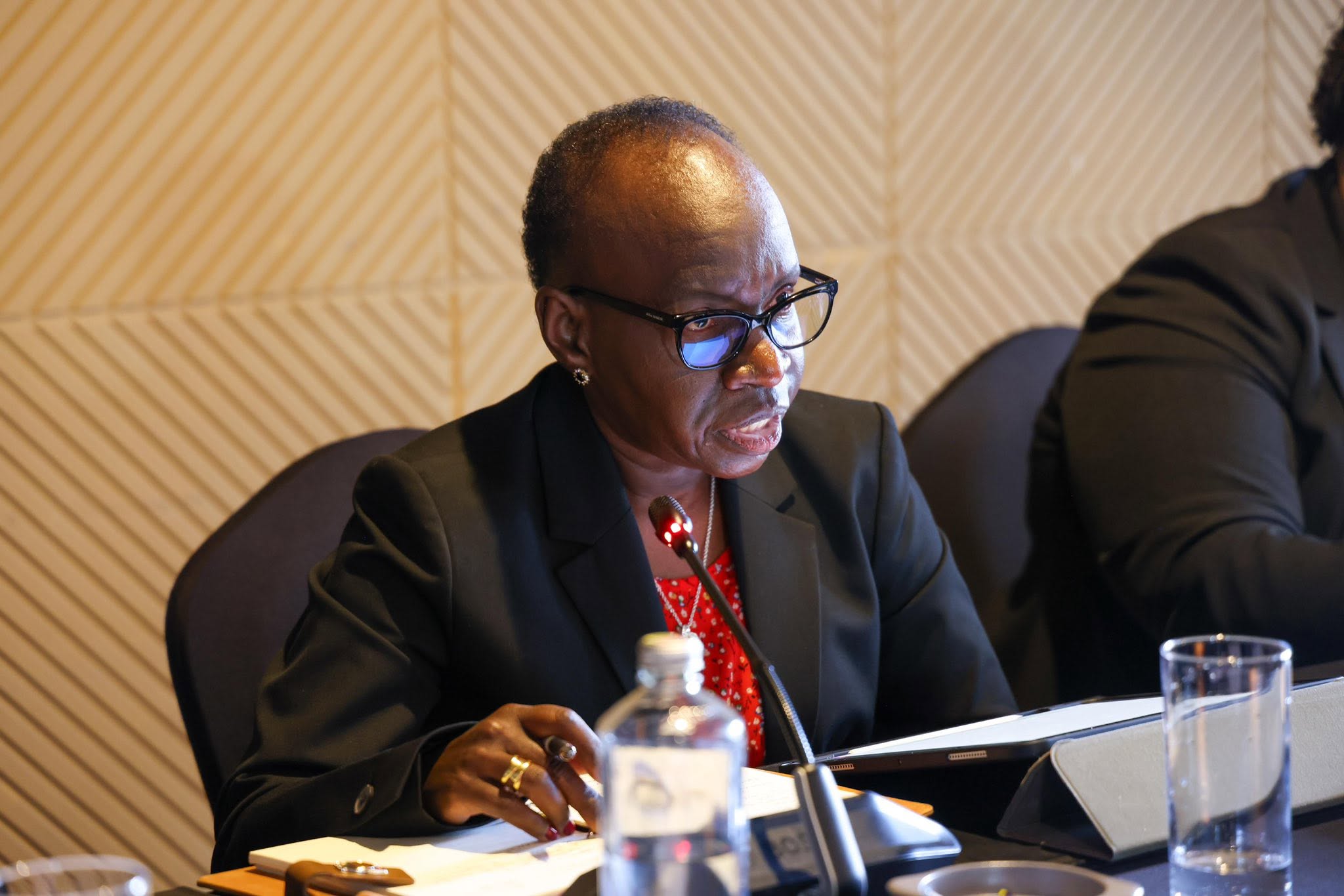
Auditor-General Nancy Gathungu has cautioned that ambitious revenue projections under the Finance Bill, 2026 may not be realised unless the National Treasury and the Kenya Revenue Authority (KRA) address structural leakages and unrealistic forecasting.
Appearing before the National Assembly Departmental Committee on Finance and National Planning, chaired by Hon. Kuria Kimani, Gathungu presented audit findings on the performance and challenges facing the tax authority amid efforts to raise projected revenues to Sh3.63 trillion for the 2026/2027 financial year.
While noting that the Finance Bill, 2026 introduces wide-ranging tax policy and administrative reforms aimed at broadening the tax base and supporting the Bottom-Up Economic Transformation Agenda (BETA), the Auditor-General raised concern over a persistent pattern of over-optimistic revenue projections.
“The trend in revenue shortfall raises major concerns on the accuracy of revenue projections in the national budget,” Gathungu said.
She reported that ordinary revenue collection had already fallen short by Sh115.3 billion as of December 2025, attributing the gap to unrealistic forecasting by the National Treasury and calling for stronger coordination with institutions such as the Kenya National Bureau of Statistics (KNBS) to improve the accuracy of revenue targets.
Gathungu further highlighted rising tax arrears, noting that KRA’s outstanding revenue debt stood at Sh2.724 trillion as of June 30, 2025—an increase of 16.7 per cent in one year.
According to her, the debt level is equivalent to 112 per cent of total revenue collected in the 2024/2025 financial year, underscoring what she termed a widening gap between assessed and actual tax collection.
The Auditor-General also pointed to multiple weaknesses in tax administration, citing structural inefficiencies and revenue leakages within KRA systems.
She highlighted a case where the National Treasury reportedly failed to settle Sh1.35 billion in the 2024/2025 financial year after committing to pay Import Duty and VAT on behalf of selected taxpayers.
Gathungu also questioned aspects of the tax amnesty programme, noting that some taxpayers with outstanding principal taxes were granted relief.
Other concerns raised included gaps in the Affordable Housing Levy system, where eligible taxpayers were not fully onboarded, resulting in under-collection of revenue. She also cited cases involving missing excise stamps, issuance of Tax Compliance Certificates to taxpayers with outstanding obligations, and clearance of imports using expired Gazette Notices.
The Auditor-General further raised concern over the scale of tax expenditures, warning that significant revenues continue to be foregone through incentives intended to attract investment.
Citing the National Treasury’s Tax Expenditure Report, she noted that Kenya forgave Sh393.13 billion in 2022, Sh368.4 billion in 2023, and Sh286.5 billion in 2024.
Referencing findings by the African Tax Administration Forum (ATAF), she said the incentives had not demonstrated clear returns in terms of investment growth or job creation.
“Despite the revenue foregone annually, the benefits derived by the country are not comprehensively quantified,” she warned, calling for mandatory and rigorous impact assessments before the approval of tax exemptions and holidays.
In her closing remarks, Gathungu urged Parliament to strengthen oversight and ensure realistic revenue forecasting before approving new tax measures under the Finance Bill.
She warned that without reforms in revenue projections, tighter controls within KRA, and stricter management of tax expenditures, the proposed measures could widen the fiscal deficit and increase economic vulnerability.
“I urge Parliament to demand realistic, verified revenue forecasts for each new provision and link their approval to measurable improvements in tax base expansion and formalization,” she said.

Email your news TIPS to Editor@Kahawatungu.com — this is our only official communication channel
